Skip to content
Garage Door Repair Line Nationwide Garage Door Dispatch (800) 555-0167
11,980 ZIPS ROUTED · 38 STATES

Garage Door Maintenance, Measurement, Not Lubrication Theatre

A real maintenance visit measures the whole load path: spring torque behaviour, cable condition at the brackets, roller and hinge wear, opener force against spec, the reversal test. Under an hour on a healthy door — and the difference between a scheduled appointment and a snapped-spring emergency the following winter. One routed call books the measured version, with the condition report included.

// SERVICE READOUT

What should you know before anyone quotes this work?

The three things that decide whether a maintenance job goes well — before price ever comes up.

Frost on a steel garage door track and roller

Fatigue runs on a schedule

Springs and cables wear by cycle count whether or not they announce it. An annual reading catches the drift about half a spring-life before failure — which converts the same replacement from an emergency call into a booked visit at standard rates.

Garage door remote with a worn button on a workbench

What owners can and cannot do

Yours: the monthly balance test, the quarterly reversal test, photo-eye cleaning, hinge and roller lubrication with door-rated product. Not yours, ever: anything touching spring tension, cable anchors or bottom brackets — that hardware is loaded even at rest.

Worn steel roller with an ovalled bearing

The paper is worth keeping

Door and opener warranties commonly condition coverage on documented maintenance, and insurers ask about reversal-test history after an incident. The service record from an annual visit is cheap evidence to have on file — and the visit usually catches the claim-generating failure first.

// HAVE READY WHEN YOU CALL

Is this the page your door needs?

Thirty seconds of triage saves a mis-routed call — match the fault, then dial.

This page, if…

Nothing is broken and you intend to keep it that way; the door passed its fifth birthday on original springs; the last service predates memory; or a warranty or insurer wants documented upkeep. Measurement territory — the visit that keeps the other pages theoretical.

A repair page, if…

Something already failed — bang, dead opener, crooked door, snapped cable. Maintenance reads wear; the repair pages handle the failure that already happened, usually same-visit, with the right parts already on the truck.

Installation, if…

The inspection you are avoiding would only confirm what you suspect: rusted panels, discontinued profile, third spring set. Measurement cannot rejuvenate a door past its structural life — the install page prices the honest fix with a written spec.

What does “measured” maintenance actually measure?

Full garage door counterbalance system in warm light

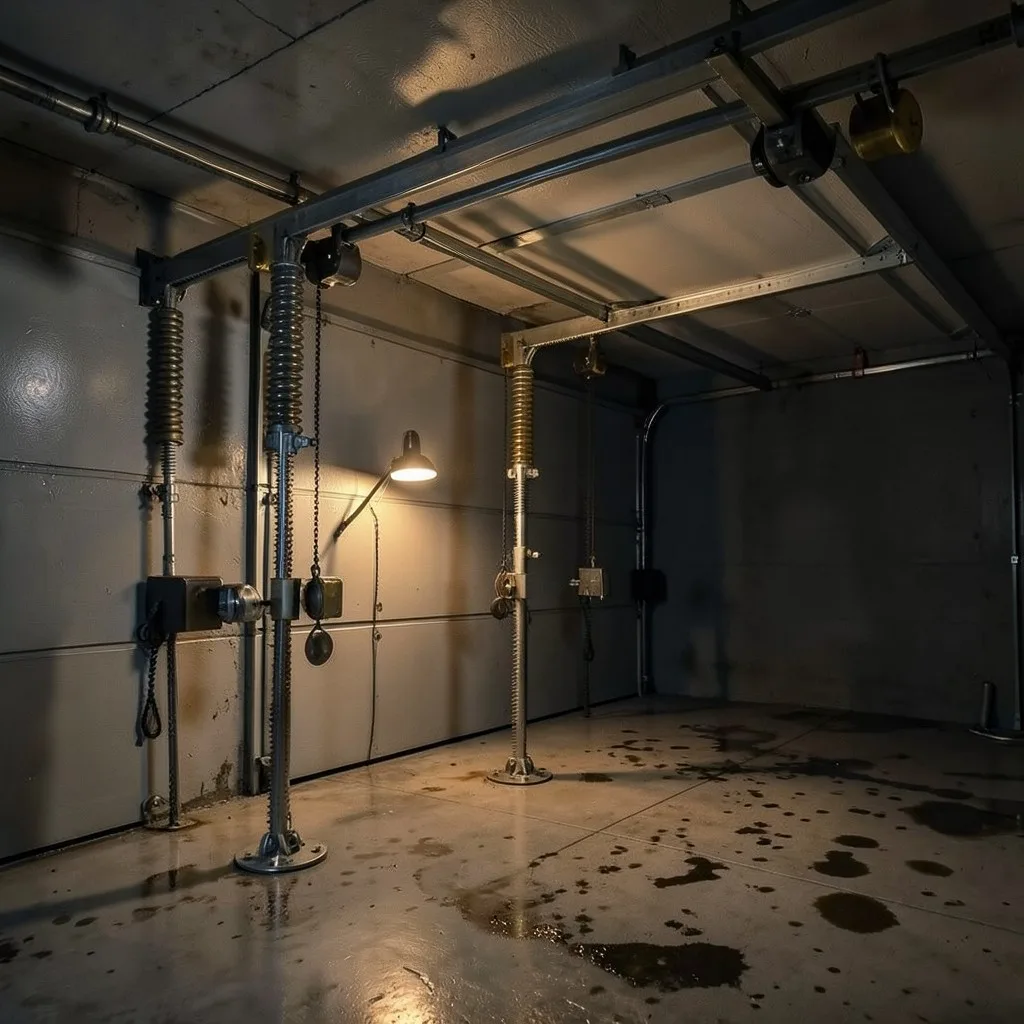
The load path, end to end. Spring condition read through balance behaviour — where the door floats, where it drifts, how much hand force the release test takes. Cable condition at the brackets and drums, where fray starts. Roller bearings and hinge knuckles, where travel noise is born. Opener closing force against spec, travel limits against the floor, the photo-eye circuit proven with the beam interrupted, reversal proven against a block.

None of that is lubrication theatre. Greasing hinges without reading spring drift misses the one number that schedules the next failure; wiping tracks with the wrong product collects grit that seizes rollers. The visit ends with a dated condition report — what is worn, what is fine, what fails next and roughly when — which is the difference between a booked appointment and a snapped spring on the coldest morning of the year.

The interval question answers itself from usage: about 1,460 cycles a year at the household average of four a day, double that for a garage that serves as the front door. Annual service fits the first pattern, semi-annual the second — and both beat the alternative schedule, which is whenever the coldest week of winter decides for you.

// TERMS THAT DECODE THE QUOTE

Balance test

Door down, release pulled, one-hand lift to half height: a balanced door floats. The single most predictive owner check in the system.

Reversal test

A board flat under the closing door must trigger immediate reverse on contact — the quarterly proof the entrapment protection works.

Force setting

The opener’s closing-force ceiling — calibrated to the minimum that completes travel, because excess force is how doors damage what they meet.

Caution band

Inspection findings that are not failures yet: measured wear with a monitoring interval attached instead of a repair bill.


How does the routed visit actually run?

The same discipline on every dispatch — city pages carry the full stage-by-stage detail with local code and climate facts wired in.

Load path measured

The counterbalance gets read, not eyeballed: where the door floats on the release, how much lift effort the balance test takes, whether the cables carry evenly at both drums, how far the rollers and hinges have worn into their travel. Fatigue drift is measurable long before it is audible — that is the entire economics of the visit.

Inspection mirror and flashlight beside door hardware

Forces calibrated

The opener side gets recalibrated to spec: closing force wound back to the minimum that completes the cycle, travel limits re-learned against the actual floor, photo eyes aligned and proven, the reversal test run against a block. Seasonal drift in these settings is silent — and it is where most safety-margin erosion hides.

Tape measure extended across a garage door opening

Lubricated correctly

Lubrication done correctly, which mostly means restraint: door-rated lithium or silicone on springs, hinges, roller bearings and the opener’s rail contact points — and tracks cleaned dry, never greased, because greased track collects the grit that seizes rollers. General-purpose penetrating oil strips what it touches; it stays in the truck.

Approved repair work in progress on the counterbalance

Dated and documented

The visit ends on paper: a dated condition report stating what was measured, what sits in the caution band, and when the next look is due. That document is the door’s service history from now on — the thing warranties condition coverage on, insurers ask about, and the next technician works twice as fast against.

Door bottom seal meeting clean concrete evenly

Ready when you are. One call, one local pro.

Describe the door, the symptom and your ZIP — routing finds the licensed contractor while you're on the line.

Call (800) 555-0167

What moves a maintenance quote up or down?

No prices on this page by design — routing pages carry the number, not the numbers. These are the real levers behind any quote, so the conversation at the door starts honest.

Visit scope chosen

A measured inspection with calibration is a different product from a lube-and-look. The report with numbers in it is what you are actually buying — insist the quote includes it, in writing.

System condition found

A door serviced on schedule breezes through; one arriving after years of neglect carries seized fasteners and drifted everything, and the catch-up labour prices in accordingly. Regular service is what keeps this line at zero.

Parts caught in the caution band

Cables showing first fray or rollers past their bearings replace cheaply during the same visit — the whole point of measuring before failing: small parts at scheduled rates instead of big ones at emergency rates.

Plan versus one-off

Recurring service agreements typically price below single visits and keep the documentation continuous — which warranties and insurers both reward when it matters.

Where does maintenance have a local page?

Every city below carries its own maintenance page — local spring-life data, code answers and the routed line. Full list on the coverage directory.

Garage Door Maintenance — straight answers

What does a pro measure that an owner cannot?

Force and calibration: opener closing force against spec, travel limits, balance point of the door under release, cable tension symmetry, and spring torque behaviour through the arc. Owner checks catch what changed; the measured visit catches what drifted. Both matter — drift is how systems fail without ever producing a symptom a homeowner would notice.

Is there a maintenance schedule the industry actually recommends?

Yes — DASMA and major manufacturers converge on monthly owner checks (balance, reversal, visual), lubrication a few times a year with door-rated product, and an annual professional service, moving to semi-annual for heavy use or harsh climate. The pattern behind the schedule: fatigue items wear by cycles, calibration drifts by season, and both are cheapest addressed on a calendar instead of at failure.

Does skipping maintenance actually void anything?

Frequently, yes. Door and opener warranties commonly condition coverage on documented periodic maintenance and correct lubrication, and insurers handling a vehicle-crush or injury claim will ask about the reversal test history. The paper from an annual service visit is cheap evidence to have on file — and the visit itself usually catches the claim-generating failure first.

What does a proper maintenance visit actually include?

The full load path, measured: spring wear and balance test, cable condition at drums and bottom brackets, roller and hinge inspection, track alignment and fastener torque, opener force and travel calibration, photo-eye alignment and reversal test, weather-seal condition, and lubrication with garage-door-rated products. Under an hour on a healthy door — and each check exists because its failure mode is expensive.

How often should a garage door be serviced?

Annually for a typical household door, twice-yearly at heavy use (six-plus cycles a day) or where winters are hard. The interval logic is fatigue-based: springs and cables wear by cycle count, and annual inspection catches drift about half a spring-life before failure. The homeowner’s monthly balance and reversal checks fill the gap between visits — neither replaces the other, and the two together cover the whole failure surface.

What lubricant is right — and what should never be used?

Garage-door-rated lithium or silicone products, applied to springs, hinges, roller bearings and the opener rail contact points. The wrong answer is general-purpose penetrating oil: it strips existing grease, attracts grit, and leaves parts drier than before within weeks. Tracks get cleaned, not lubricated — a greased track collects debris that seizes rollers.

Does maintenance actually extend spring life?

It extends system life and buys warning, which is the point. Spring fatigue itself is cycle-driven, but a balanced, lubricated door lowers peak torque on every lift — and the measured checks date the spring’s decline instead of letting it surprise you. The economic case is straightforward: the same replacement done as scheduled work versus as an emergency call, minus the collateral wear a failing spring inflicts on the opener meanwhile. The arithmetic favours the calendar every time.

What can homeowners maintain themselves safely?

The observational and low-energy layer: monthly balance test (door down, release, half-lift), quarterly reversal test with a board under the door, photo-eye cleaning and alignment, hinge and roller lubrication with the correct product, and visual checks for cable fray and coil gaps. The line not to cross: anything touching spring tension, cable anchors or bottom brackets — that hardware is loaded even at rest.

How often is maintenance actually worth it?

Annually for a typical household door; twice a year for heavy use (six-plus cycles a day) or hard-winter climates. The logic is fatigue-based: cycle wear and seasonal calibration drift are both cheapest addressed on a calendar instead of at failure — DASMA and the major manufacturers converge on the same schedule.

What does the visit cost me if nothing is wrong?

The routed call itself costs nothing and commits you to nothing — pricing comes from the licensed contractor before any work is authorised. A clean bill of health is a legitimate outcome: you get the measured baseline, the calibrations, and a dated record that the system passed.

Is the owner checklist really worth doing between visits?

It is the highest-value ten minutes in the system. The monthly balance test catches spring fatigue earlier than any calendar; the quarterly reversal test is the one safety check that matters most; the photo-eye wipe prevents the most common self-inflicted failure outright. Owner checks catch what changed — the annual measured visit catches what drifted. The system needs both.

Can maintenance actually lower what repairs cost later?

Directly, in three ways: caution-band parts get replaced at scheduled rates instead of emergency ones; collateral damage never accumulates, because a fraying cable caught early never takes the drum and bottom bracket with it; and the documented history shortens every future diagnostic visit. The visit does not make hardware immortal — it makes every failure cheaper, calmer and scheduled.