Skip to content
Garage Door Repair Line Nationwide Garage Door Dispatch (800) 555-0167
11,980 ZIPS ROUTED · 38 STATES

Garage Door Opener Repair, Diagnosis Before Replacement

Most opener failures are one worn part, not a dead unit: the sacrificial drive gear, drifted photo eyes, a tired remote battery, a board that needs re-pairing. The routed visit works the diagnostic chain from cheap to expensive — and quotes replacement only when parts support or safety compliance has genuinely ended.

// SERVICE READOUT

What should you know before anyone quotes this work?

The three things that decide whether a opener repair job goes well — before price ever comes up.

Nylon gear shavings dusted over an opener housing

The gear that saves the motor

The nylon main gear is designed to strip before the motor burns — white shavings inside the cover are its signature. A bench swap restores drive in under an hour. The follow-up matters more: gears usually strip fighting a heavy door, so the spring balance gets checked in the same visit.

Photo-eye safety sensor with indicator lamp glowing

The eyes are not optional

Since 1993, UL 325 has required entrapment protection on every automatic residential opener — the photo-eye pair. A pro realigns or replaces faulty eyes; nobody legitimate wires around them. An opener old enough to predate them belongs in the replacement conversation on safety grounds alone.

Unlit opener motor head hanging from its rail

When replacement is honest

Three triggers: no photo eyes (pre-1993), no parts support from the manufacturer, or a repair quote crossing half the cost of a comparable new unit installed. Anything else repairs. Where state law adds requirements — like California’s battery-backup statute — the new unit must comply from day one.

// HAVE READY WHEN YOU CALL

Is this the page your door needs?

Thirty seconds of triage saves a mis-routed call — match the fault, then dial.

This page, if…

The motor runs without moving the door, all inputs died at once, the range collapsed to a few feet, the lights blink a repeating code, or the door closes and pops back open. Electronics, drive train and safety circuit — opener territory.

The spring page, if…

The opener strains against a door that got heavy overnight or quits a few inches up. Pull the release and lift by hand: a door that fights you has a counterbalance problem wearing an opener costume.

Installation, if…

The unit predates photo eyes entirely, or the manufacturer no longer ships boards and the quote proves it. At that point the honest conversation is a compliant new unit, priced as an install.

What is the opener actually responsible for?

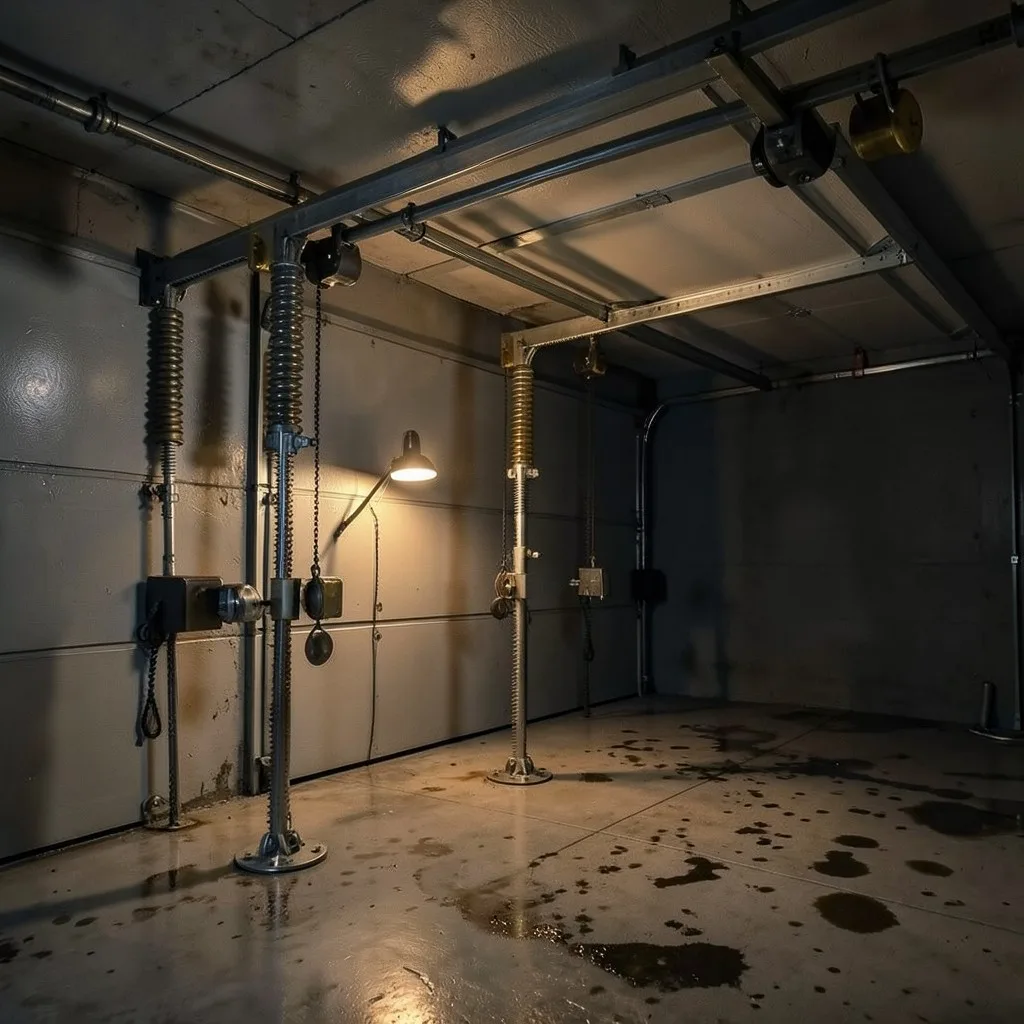
Full garage door counterbalance system in warm light

Less than most people think. The opener contributes roughly one arm’s worth of force — the springs carry the door’s weight. What the opener really owns is control: travel limits that stop the door exactly at the floor and header, a force ceiling that keeps it gentle, a safety circuit that reverses on contact or a broken beam, and the radio side — remotes, keypads, pairing memory.

That division of labour is the diagnostic key. A door that got heavy is a spring problem wearing an opener costume; a door that reverses at the floor is a safety circuit doing its job against a fault; a motor that hums without motion has lost its gear. The routed visit works those systems in order, which is why most opener calls end in a part, not a replacement unit.

The practical upshot for owners: openers reward ten-second checks. Both eye indicators steady, remote battery fresh, lock switch off, antenna wire hanging free — those four resolve a startling share of “dead opener” mornings without a visit. When they don’t, the blink code plus the brand name is the most useful sentence you can bring to the routed call.

// TERMS THAT DECODE THE QUOTE

UL 325

The federal safety standard requiring entrapment protection — in practice the photo-eye pair — on every automatic residential opener since 1993.

Drive gear

The sacrificial nylon gear coupling motor to drive — designed to strip before the motor burns, announced by white shavings in the housing.

Travel limits

The stored positions telling the opener where the floor and full-open are — drift here causes slamming, gaps and phantom reversals.


How does the routed visit actually run?

The same discipline on every dispatch — city pages carry the full stage-by-stage detail with local code and climate facts wired in.

Codes read first

Modern openers publish their own diagnosis as blink codes on the main light or a status LED — brand-specific patterns that name the failing subsystem outright. Reading them first prunes the fault tree to a branch or two before the cover ever comes off, which is why the brand name and flash count shorten every opener call.

Work journal and pencil on a garage workbench

Drive train inspected

Cover off: gear teeth inspected for the shavings that announce a stripped drive, chain or belt tension checked against spec, trolley engagement verified along the rail. This mechanical layer owns most “dead opener” calls, and its parts — gear kits, belts, trolleys — ride on a properly stocked truck as a matter of course.

Opener drive gear disassembled on a bench

Safety circuit proven

The safety circuit gets proven, not assumed: photo eyes aligned until both indicators hold steady, wiring checked at the staples where it fails, then the reversal test run against a physical obstruction on the floor. An opener that will not reverse on contact does not get handed back — that test is the entire point of the system.

Replacement hardware aligned during repair

Force and travel calibrated

Travel limits re-learned so the door seals without straining, closing force dialed to the minimum that completes the cycle, remotes and keypads re-paired. Calibration is the anti-callback step: excessive force is how doors damage what they meet, and drifted limits are how openers grind their own gears back into failure.

Door balanced at half height after calibration

Ready when you are. One call, one local pro.

Describe the door, the symptom and your ZIP — routing finds the licensed contractor while you're on the line.

Call (800) 555-0167

What moves a opener repair quote up or down?

No prices on this page by design — routing pages carry the number, not the numbers. These are the real levers behind any quote, so the conversation at the door starts honest.

Which subsystem failed

Radio faults (batteries, pairing, receivers) price lowest, drive-train parts (gears, belts, trolleys) in the middle, logic boards at the top. The blink code usually names the bracket before anyone arrives — one more reason the flash count belongs in the routed call.

Parts support status

Openers with living parts catalogues repair cheaply for decades. Once a manufacturer stops shipping boards, every electronic fault becomes a replacement conversation — age matters less than support.

Compliance obligations

A pre-1993 unit without photo eyes retires on safety grounds regardless of condition, and states like California add battery-backup requirements to any newly installed unit. Compliance is part of the quote, not an extra.

The door behind the opener

An opener straining against an unbalanced door will eat its new gear too. If the balance test fails, the honest quote covers the spring side first — that sequencing protects the repair.

Where does opener repair have a local page?

Every city below carries its own opener repair page — local spring-life data, code answers and the routed line. Full list on the coverage directory.

Garage Door Opener Repair — straight answers

Does a stronger motor fix a struggling opener?

No — and the belief causes real damage. Residential openers contribute modest force by design; the springs carry the weight. An opener straining against a heavy door signals counterbalance failure, and installing a bigger motor just moves the failure downstream to gears, brackets and panels while defeating the force limits that make the system safe. Fix the weight problem and the existing opener is usually fine.

Why did the keypad and remotes all stop working at once?

All inputs dead at once points at the receiver or its power, not at three coincidental failures: a lock/vacation switch engaged on the wall console, a wiped pairing memory after a power event, or a failing receiver board. The wall button usually still works because it is wired. Re-pairing takes minutes when the receiver is healthy; a board that will not hold codes is a bench diagnosis.

Is a smart opener upgrade worth it during a repair?

Sometimes — and the honest version depends on what is failing. If the logic board is already the failed part on an aging unit, stepping to a current model with app control, battery backup and rolling-code security often beats sourcing an obsolete board. If the fault is a gear or an eye on an otherwise healthy opener, the repair wins and the smart features can wait. The math changes where state law requires battery backup on any newly installed unit.

Why does the opener hum but not move the door?

The motor is running with nothing attached to the load — almost always a stripped main drive gear. The gear is nylon by design, a sacrificial part meant to fail before the motor burns out, and it announces itself with white shavings inside the cover. It is a standard bench repair. The follow-up question matters more: gears usually strip because the door got heavy, so a balance check on the springs belongs to the same visit.

What do the blinking lights on the opener mean?

Modern openers self-diagnose through blink codes — a repeating flash count on the main light or a status LED. The mapping is brand-specific, but across brands the most common codes point at the photo eyes: obstructed, misaligned, or wiring-faulted. Count the flashes before calling; with the brand name, that count often tells the dispatcher exactly which part belongs on the truck.

Are the photo eyes required, or can they be bypassed?

Required — and permanently. Since 1993, federal safety rules (UL 325) have required automatic residential openers to carry an entrapment-protection system, which in practice means the photo-eye pair. Bypassing them removes the mechanism that stops a closing door meeting a child or pet. A pro will realign or replace faulty eyes but will not hard-wire around them; an opener old enough to predate them belongs in the replacement conversation on safety grounds alone.

When is opener replacement smarter than repair?

Three triggers: the unit predates 1993 and lacks entrapment protection; the manufacturer no longer supplies boards or gears; or the repair quote crosses roughly half the installed cost of a comparable new unit. Otherwise repair wins — gears, eyes, remotes and travel modules are all serviceable. Where state rules impose requirements on newly installed openers, the replacement quote should address compliance explicitly before the swap.

Why does the remote work from the driveway but not from the street?

Collapsed radio range, and the cause is usually inside the garage: LED bulbs with noisy ballasts installed in or near the opener head are the modern classic, alongside a coiled-up antenna wire or a fading remote battery. Swap the battery, let the antenna wire hang free, and test with the LED bulb removed — that sequence solves a surprising share of range complaints before a receiver board is blamed. If range stays short after all three, the receiver itself is fading — a bench diagnosis worth booking rather than living around.

Is it worth repairing an older opener?

If it has photo eyes and the manufacturer still ships parts — usually yes, decisively. Gears, sensors, remotes and travel modules are all serviceable at a fraction of replacement cost. The genuine end of the road is a pre-1993 unit without entrapment protection or a board nobody stocks anymore.

What should I check before calling?

Three fast things: the remote battery, the lock/vacation switch on the wall console, and whether both photo-eye indicator lights are steady. Those three resolve a surprising share of "dead opener" calls free. If they check out, note the brand and the blink pattern — both shorten the routed visit.

Why did the opener break the same week as the spring?

Because one failure caused the other. An opener straining against a fading spring runs months of overload before something gives — usually the drive gear — so the two failures arrive as a pair more often than chance would allow. It is also why a competent opener repair always includes the balance test: fix the gear without the weight problem and the new gear inherits the old schedule.