The car hit the door — is that an off-track repair or something bigger?
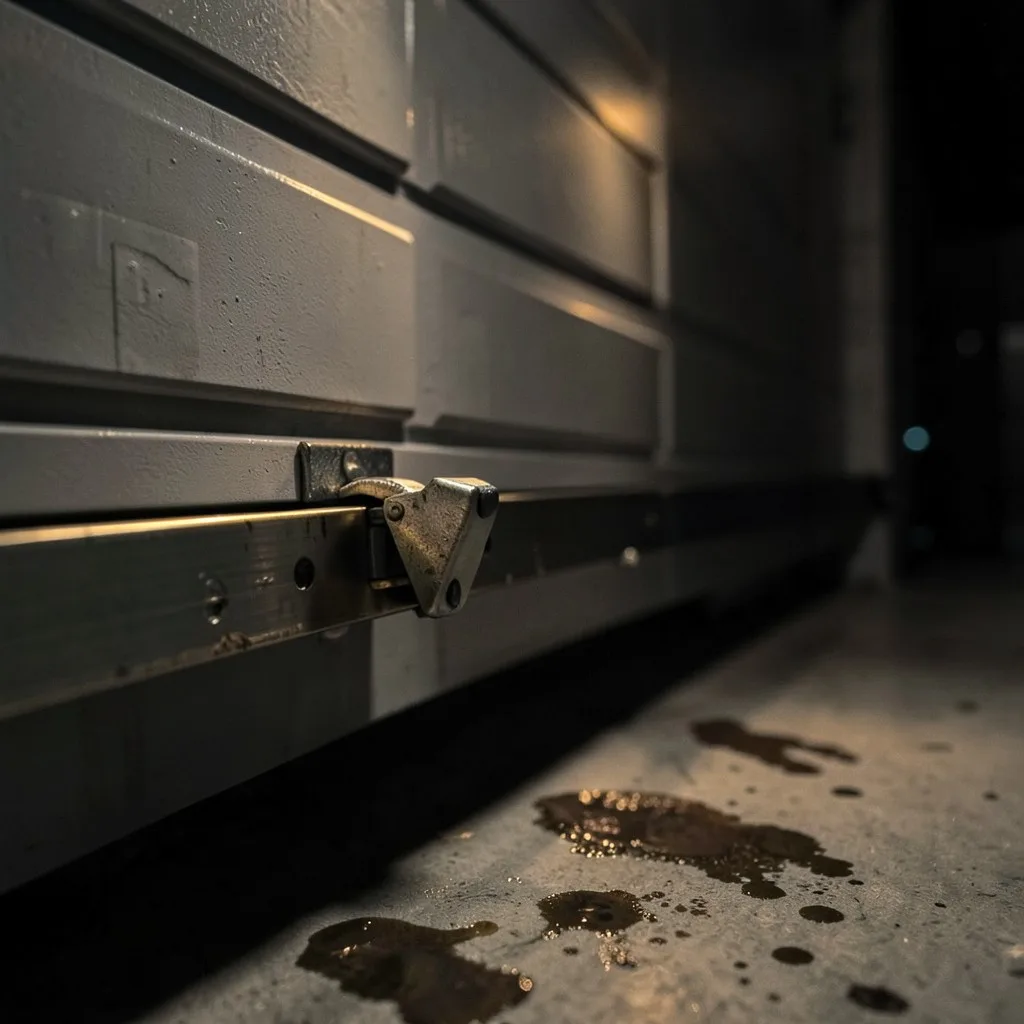
It is an inspection first, because impact damage travels. The visible fault may be a jumped roller or creased rail, but the force went through panels into hinges, rollers, track anchors and sometimes the jamb framing — a door that folded around a bumper often has damage two components away from the dent. A proper assessment prices the honest scope before any re-seat: sometimes it is an hour of track work, sometimes the impact wrote off a panel, and pretending otherwise just phases the discovery.
Can bent track be straightened, or does it need replacement?
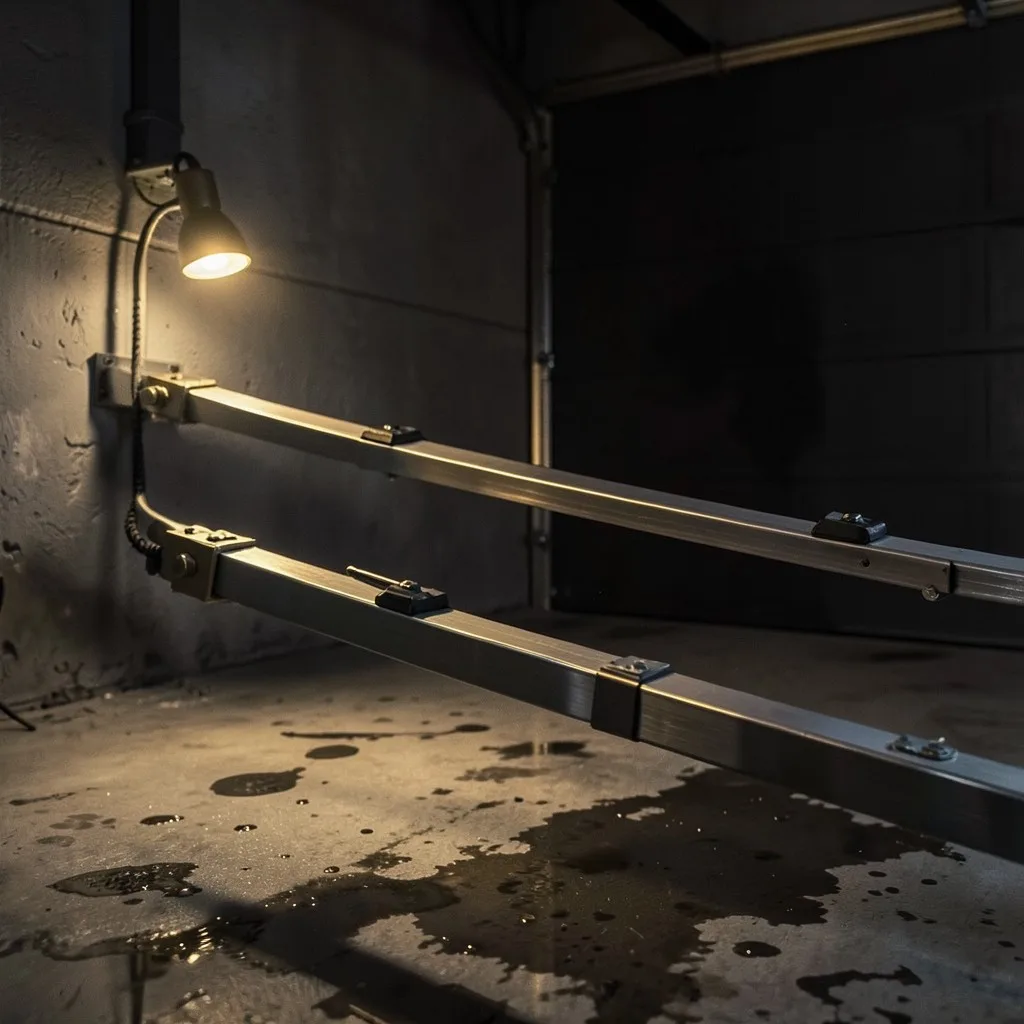
Minor lips and dents get dressed with proper forming tools; genuinely bent sections get replaced, and that is the better news than it sounds. Track is inexpensive roll-formed steel sold by the section — swapping a damaged run costs far less than the panel and roller damage a “straightened” kink causes over the following year. What matters more than the steel is the re-alignment: gauge, plumb and parallel re-set to the door, which is the measured part of the visit.
Why does one side of the door drop before a track jump?
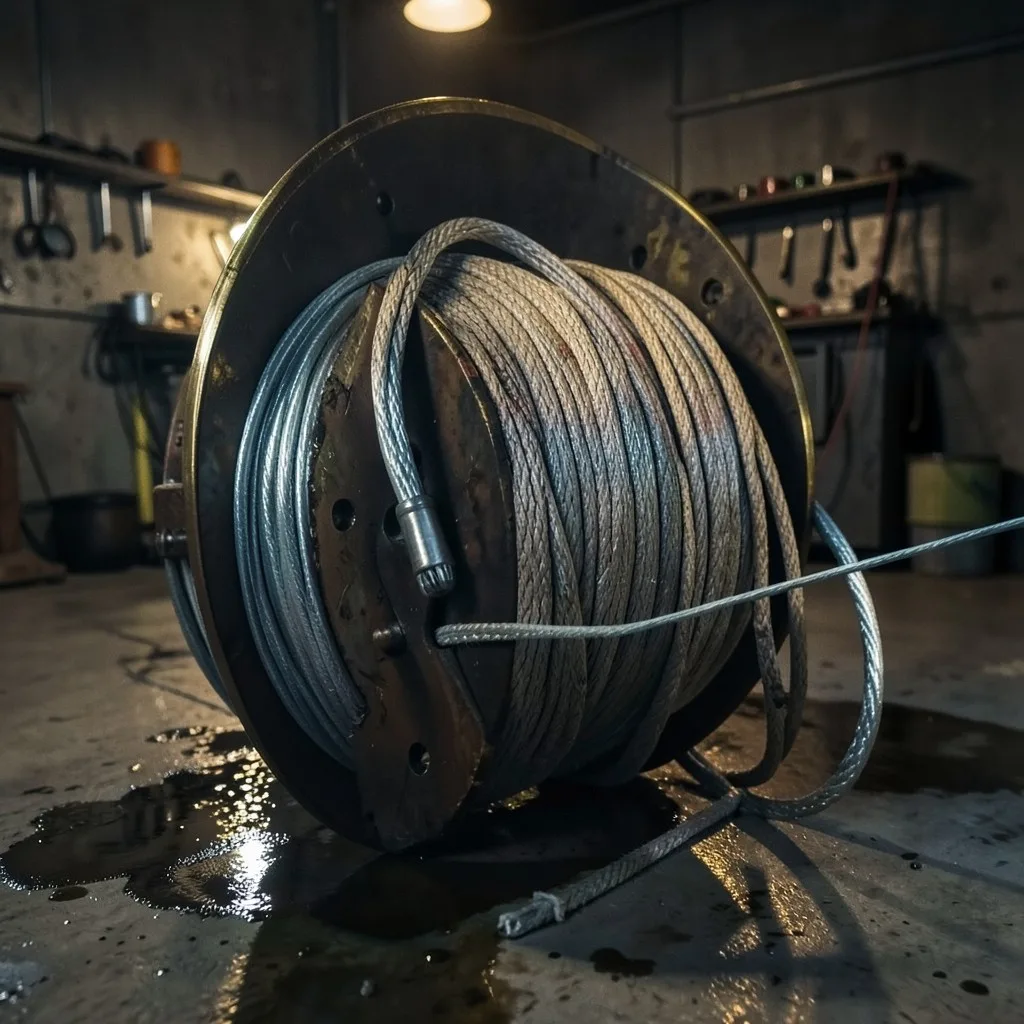
That sag is the pre-jump warning: one side is lifting later or lower than the other because a cable has stretched, a drum has slipped, or the track on that side has drifted out of gauge. The racking loads the rollers diagonally — exactly the direction the rail cannot hold them — and a jump follows within cycles. A door that sits visibly crooked is a stop-and-call fault; the repair at that stage is cables and alignment, not the full recovery job.
Is an off-track door dangerous just sitting there?
Treat it as suspended load, because that is what it is. The door may look stable wedged in its opening, but its weight is distributed across hardware that was never meant to hold it — a few rollers, a racked rail, a binding hinge line — and the wound springs are still applying force through the cables. Doors in this state can shift or drop when disturbed. Keep people, pets and vehicles out of the opening, do not operate the opener, and leave the release cord alone until a pro has the door secured.
How long do garage door springs last in Colton?
Longer than most of the country: 10–13 years, because San Bernardino County’s 2,129 annual heating degree days impose almost no freeze-thaw stress. Springs here die of cycle count. At four openings a day a 10,000-cycle set runs about seven years; lighter use stretches toward the top of the range.
What garage door problems are most common in Colton homes?
With 52% of Colton homes built before 1980 and the 1980s the dominant era, original and second-generation hardware failures lead: fatigued springs, stretched cables, seized steel rollers, and openers due safety-generation upgrades. Whole-load-path inspections pay off in this cohort — parts age together.
Does CA law require a battery backup on my new garage door opener?
Yes. Under California’s SB-969 (Health & Safety Code §§ 19890-19892), any powered residential garage door opener sold or installed from July 1, 2019 onward must include battery backup capable of working the door when the grid is down. Selling or installing a non-compliant unit carries a four-figure civil penalty per opener — and a replacement door may not legally be connected to a non-compliant opener. For Colton homeowners this makes the opener question part of every door quote.
Do I need a permit for garage door work in Colton?
For repairs, generally no; for installation, often yes. Door installation is frequently permitted work in California: any change to the structural opening triggers a permit everywhere, and a number of cities permit even like-for-like replacements. The local building department's answer is the one that counts — confirm before the door is ordered. Component repair is different: Like-for-like component repair (springs, cables, rollers, opener swap) generally does not require a permit in most California jurisdictions. When in doubt, the San Bernardino County building department’s answer is the one that counts.
How does the call routing actually work?
This site is a referral service, not a contractor. The number routes your call through eLocal’s network to an independent licensed contractor covering Colton — matched on your ZIP and the work you describe. The call is free, you are never obligated to book, and the contractor you speak with is the business that would do the work.
What will I be asked when I call?
Four things move the call fastest: your ZIP, the door type (sectional or one-piece, single or double), the opener brand, and the symptom in a sentence. With those, dispatch can route to a contractor whose truck stock matches the likely failure — often turning a diagnostic visit into a same-visit repair.
How fast can a pro actually get there?
Response windows are set by the contractor’s live board, not by marketing copy: acute failures get priority and often same-day response in Colton; planned work books like any trade visit. The honest window comes on the call — and declining it costs nothing.


 DIAGNOSE