Skip to content
Garage Door Repair Line Nationwide Garage Door Dispatch (800) 555-0167
ZIP 92014 · DEL MAR, CA

Del Mar Garage Door Installation — Built for San Diego County

Installing a garage door in Del Mar is a measured, quoted, often permitted job: opening measured, door ordered to spec, old hardware torn out, new tracks and springs set, then a balance and safety test. A licensed San Diego County contractor also confirms permit and code requirements before work starts.

74% of Del Mar homes were built before 1980, which is why worn springs and first-generation openers dominate local service calls. A licensed local pro is one routed call away.

// CITY DATA FEED

// FOUR ANSWERS, FASTER DISPATCH

How long do springs really last in Del Mar?

The dial below is Del Mar specific — rated cycles, real household usage, and the San Diego County climate load, combined into the band local doors actually achieve. Check it against your door age before anything fails.

10–13 yrs typical spring life · Del Mar

// THE CYCLE GAUGE · DEL MAR

The dial reads cycles, not birthdays: 10,000 is the standard rating, and four openings a day spends about 1,460 a year. Factor in the mild climate over San Diego County (2,018 degree days/yr) and local sets realistically deliver 10–13 years — with the failure count peaking each December. Past the bright arc at ~72% of rating, breakage risk climbs steeply.

What does compliant garage door work look like in San Diego County?

Before any quote is signed in Del Mar, three legal layers apply: the state statute on openers, the licensing classification for the trade, and San Diego County permitting practice. All three are sourced below, straight from the issuing authorities.

Residential garage door exterior at dusk

SB-969 battery-backup law

Since July 1, 2019, every automatic residential garage door opener sold or installed in California must have a battery backup that operates the door during a power outage. Selling or installing a non-compliant opener carries a four-figure civil penalty per unit (§ 19892), and a replacement residential garage door may not be connected to a non-compliant opener.

Contractor licensing

In California, the trade has its own licence: CSLB classification D-28, Doors, Gates and Activating Devices. Once a job's combined labour and materials pass the minor-work exemption line — which realistic spring, opener and door jobs do — an unlicensed operator is working illegally.

Permits in San Diego County

Door installation is frequently permitted work in California: any change to the structural opening triggers a permit everywhere, and a number of cities permit even like-for-like replacements. The local building department's answer is the one that counts — confirm before the door is ordered. Like-for-like component repair (springs, cables, rollers, opener swap) generally does not require a permit in most California jurisdictions.

Wildfire-zone construction

California maps Fire Hazard Severity Zones, and inside them the wildland-urban interface building standards govern exterior assemblies — garage doors included — for ember and flame resistance. If the address sits in a mapped zone, the replacement door's materials should be confirmed against the WUI listing.

Wind rating

Wind design in California is mostly unexceptional — ASCE 7 puts typical Risk Category II homes at roughly 91-96 mph ultimate design speed — but the map carries Special Wind Regions in mountain and pass terrain where local authorities can demand more.

What is your garage door symptom telling you?

Before dialing, find your symptom below — knowing the likely cause shortens the call and puts the right parts on the truck the first time.

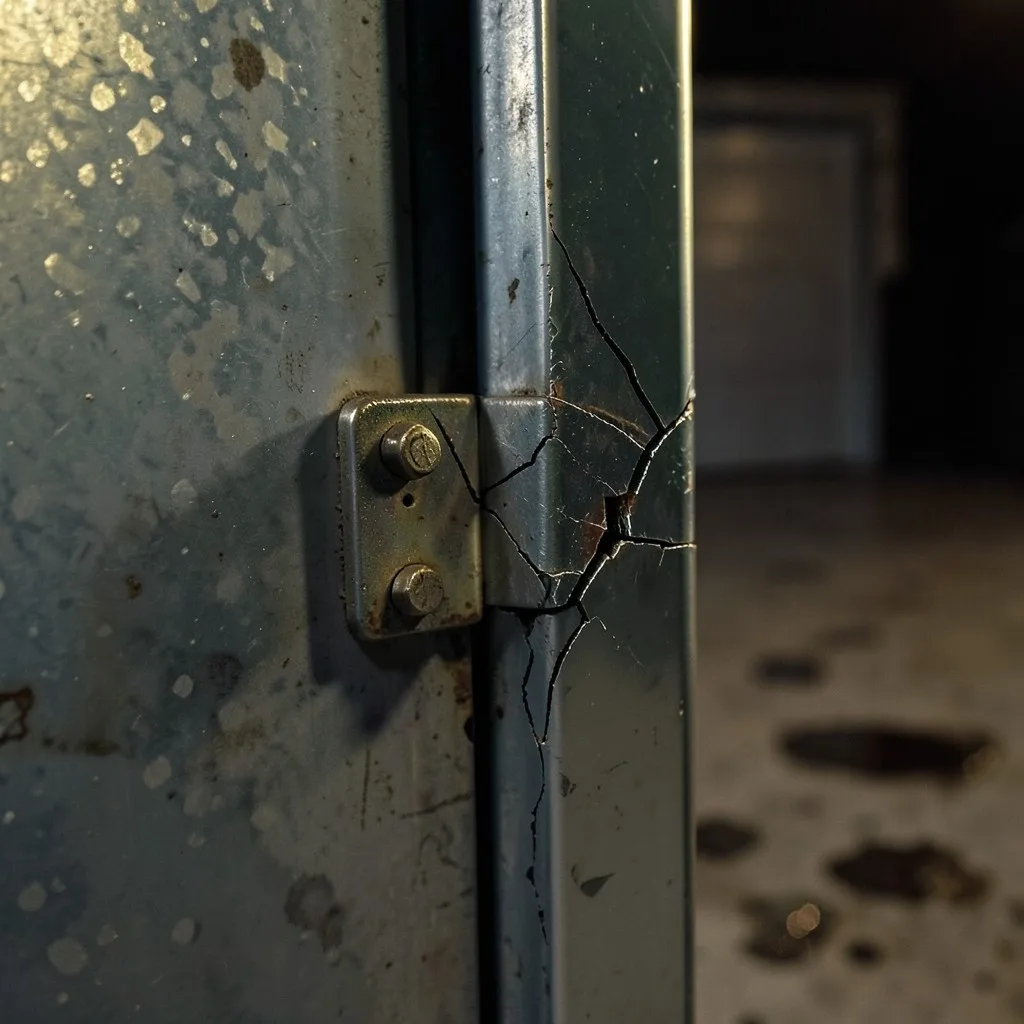
Cracked hinge at a garage door panel joint BOOK SOON

Panels cracked, delaminating or rusted through

Structural end-of-life. Panel skins that have split or rusted through no longer carry load as designed, and section joints hinge on compromised steel. Past two or three failed panels, replacement beats repair on both cost and safety — and buys current insulation values against 2,018 degree days a year.

Crushed bottom weather seal with light leaking beneath the door DIAGNOSE

Daylight visible around the closed door

Perimeter seal failure or a door no longer square to its opening. Weather seal is replaceable; a racked door or settled framing is a measurement question. In an insulated garage, that gap line is also a heating-cost line — one reason replacement quotes here should state R-value.

Unlit opener motor head hanging from its rail DIAGNOSE

Remote range has collapsed to a few feet

Usually electronic, occasionally trivial: remote battery, the antenna wire coiled behind the motor head, or RF noise from recently added LED lighting. If fresh batteries and the antenna check do not restore range, the receiver board is fading — a bench diagnosis for a pro.

Frost on a steel garage door track and roller DIAGNOSE

New noises in cold weather

Winter noise is load talking: stiffened springs deliver less assist on cold mornings, so every worn bearing and dry hinge becomes audible under the extra strain. In this climate the complaint season runs into December — and a door that got loud in the cold is a door due a tune-up.

Snapped torsion spring with a visible gap between coil halves STOP & CALL

Loud bang from the garage, door now immovable

Classic torsion spring failure — the bang is the spring letting go, and the door instantly becomes dead weight the opener cannot and should not lift. Do not pull the red release with the door up. Springs here last roughly 10–13 years, and the failure clusters around December.

Cable drum with wraps jumped out of their grooves BOOK SOON

Starts to rise, quits a few inches up, backs down

The opener is hitting its force limit — usually because a spring has weakened or failed and the motor is suddenly lifting real weight. Sometimes it is only a drifted force setting, but a door that got heavy overnight is a counterbalance problem, not an opener problem.

Garage door remote with a worn button on a workbench DIAGNOSE

Door works by remote but not the wall button (or vice versa)

This splits the diagnosis cleanly. Working remote + dead wall button points to the low-voltage wire run; working button + dead remote points to pairing or the receiver board. Either way the motor and drive are healthy — a short, cheap visit for a pro with a meter.

Nylon gear shavings dusted over an opener housing BOOK SOON

Opener runs but the door does not move

The drive has disconnected from the door: a stripped main gear (white shavings under the cover), a broken trolley, or the release cord left in bypass. Gears strip most often on doors whose springs weakened first — the motor was quietly lifting extra weight for months.

Photo-eye safety sensor with indicator lamp glowing DIAGNOSE

Door closes, then immediately reopens

The safety circuit is doing its job against a fault: photo eyes knocked out of line (a broom or bumper is the usual culprit), sun glare on a sensor, or a binding door tripping the force limit near the floor. All three are quick finds for a pro; the eyes you can check yourself.

Found your symptom? End it today.

Planning the install is the moment compliance is cheap. A licensed San Diego County pro prices the door and the code answer together. Free to call, free to decline — if no San Diego County pro fits your window, you owe nothing.

Call (800) 555-0167

What happens after you call about installation in Del Mar?

Here is the sequence a licensed San Diego County pro actually follows on this job — so you know what a competent visit looks like before anyone arrives.

Measurement and specification

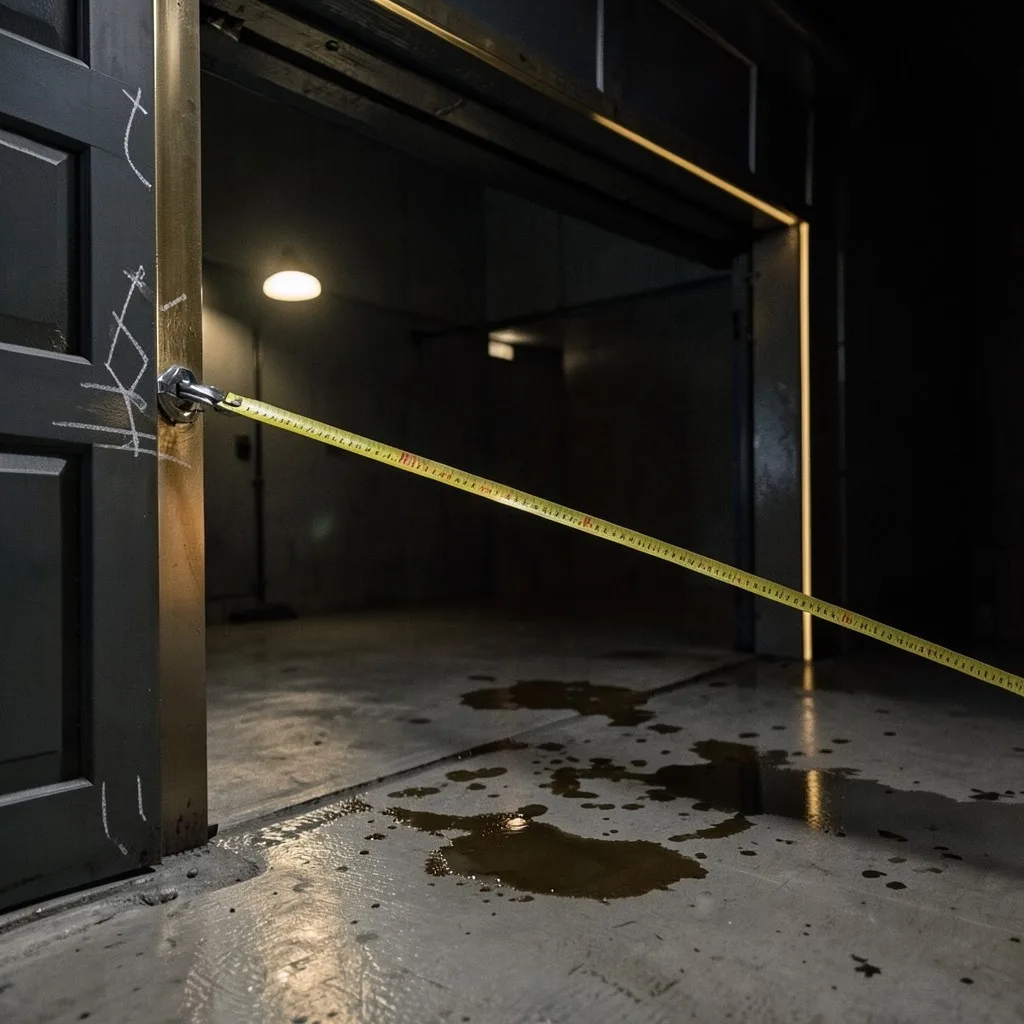
First visit is tape-measure work: the opening in three places each direction, headroom for the track radius, backroom for the rails, jamb condition for the fixings. From that comes a written specification — panel construction, R-value, spring rating, operator — sized to this door, not a catalogue default.

Tape measure clamped across a door opening

The permit question, answered

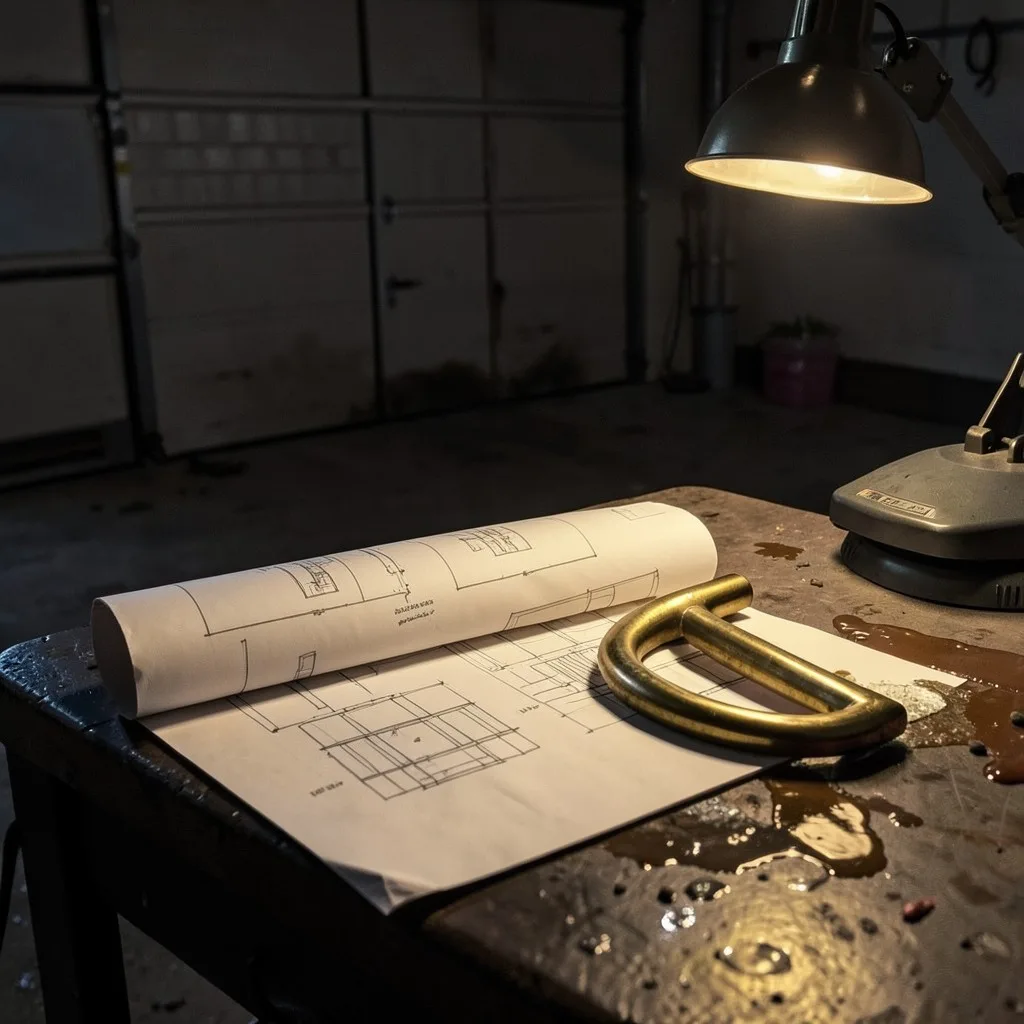
The contractor resolves three code questions up front: does this jurisdiction permit the replacement, does the opening change trigger structural review, and what does state law require of the opener being connected. Getting those answers first is the difference between an installation and a liability.

Rolled drawings and hardware sample on a workbench

Tear-out and installation

Install day sequences hazard first: old counterbalance de-tensioned with winding bars, then tear-out, then the new system built plumb and level from the opening outward. Springs wound to the measured weight and cables set under even tension finish the mechanical day.

New track and spring hardware being set

Commissioning and code close-out

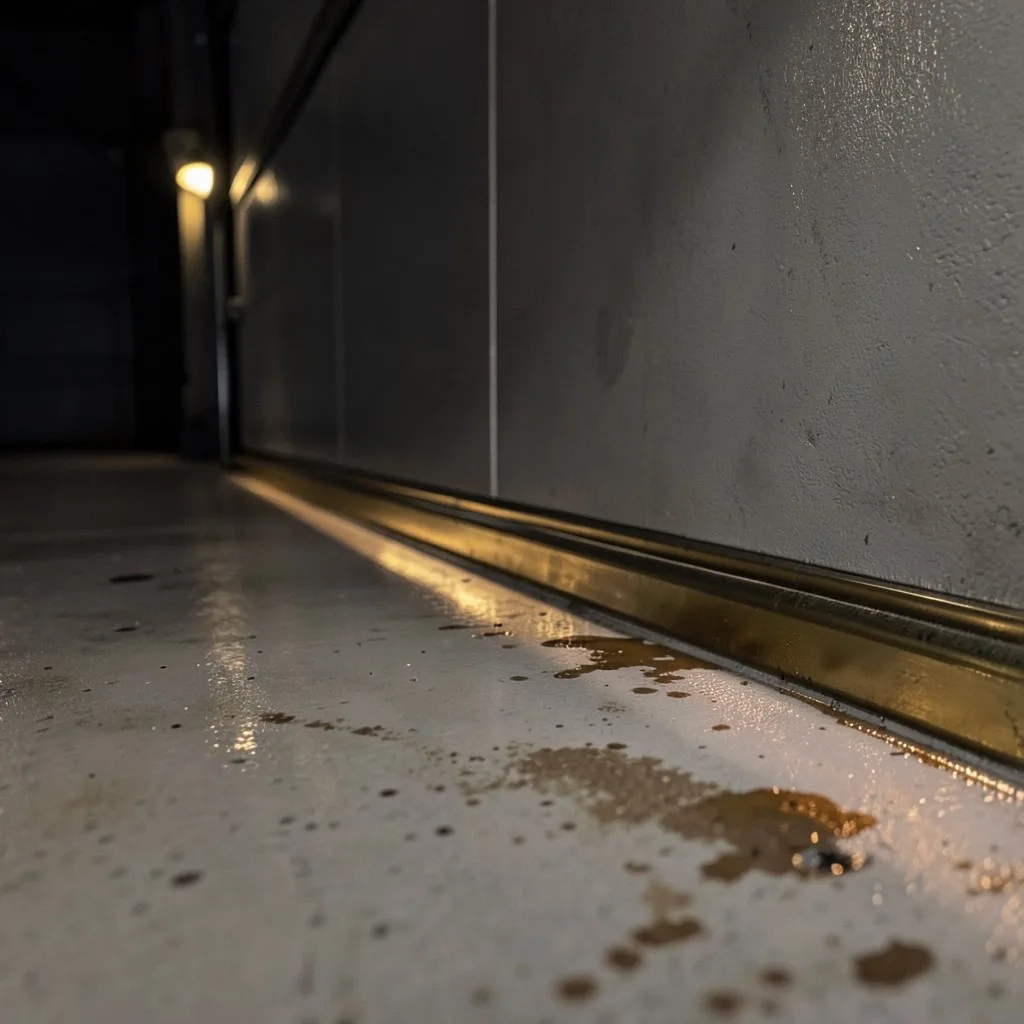
Commissioning proves the install: balance test with the opener released, force and travel calibration, reversal test against an obstruction, seal check around the perimeter. Where a permit was pulled, the final inspection closes it out — and the paperwork stays with the house. You should end the day with a door that passes every test in front of you.

Finished door seal line at the concrete

Where is the DIY line on a garage door?

Garage doors injure thousands of people a year, almost always at the same two components. These are the checks you can do and the ones you must not.

SAFE — DO Test the reversal system quarterly: a board flat under the closing door must trigger reverse on contact. If it does not, stop using the opener until adjusted.
SAFE — DO Run the manual balance check monthly — door down, release pulled, one-hand lift to half height. Drift from “holds steady” is your early warning.
SAFE — DO Wipe the photo-eye lenses and confirm both indicator lights are steady every few months. Misaligned eyes are the most common self-inflicted “broken door”.
PRO-ONLY — DO NOT An opener will happily drive a jammed door into wreckage — bent rails, folded panels, sheared hinges. Crooked, binding or half-off its track means power off and hands off until it is secured.
PRO-ONLY — DO NOT The manual release exists for outages, used with the door DOWN. Pulled mid-travel on a failed spring, it hands hundreds of pounds to gravity with nothing underneath but whatever was underneath.
PRO-ONLY — DO NOT Never detach or handle the lift cables — they are under the springs’ full tension at the bottom brackets, and the bottom bracket bolts are the trap most DIYers do not see.

When do garage doors fail in Del Mar?

The local climate writes a failure calendar for every door in San Diego County. Here is what it says.

Frost crystals on a torsion spring in a cold garage

Dec – Feb

Cool season

The gentle local winter still concentrates wear: December carries the highest heating load of the year, and tired springs feel it first.

Meltwater droplets on a garage door track in spring light

Mar – May

Spring

Track and roller season: winter’s accumulated drift shows up as noise and bind once doors start cycling more. The cheapest month to book the inspection the winter earned.

Opener motor head in warm dusty summer light

Jun – Aug

Summer

Heat is electronics season: opener logic boards and photo eyes fail more in hot garages, and sun angle glare starts tripping sensors on west-facing openings.

Garage at autumn dusk with toolbox staged for a tune-up

Sep – Nov

Fall

The maintenance window. Servicing before the December load peak is how San Diego County doors skip the emergency-call season entirely.

Why do two installation quotes differ in Del Mar?

The quote you get will vary on a handful of real factors. Knowing them keeps the conversation honest.

Timing

After-hours and same-day dispatch carry premiums everywhere; a fault caught early books at standard rates.

Which component failed

The failed part sets the baseline: a sensor realignment and a full spring pair replacement are different classes of job.

Door size and weight

Weight drives spec: heavier doors take higher-torque springs and longer install time. Measured weight, not door width alone, is what a pro specs from.

Cycle rating of replacement springs

Spring quotes should state cycles, not just “new springs”. The rating decides whether you buy 10 years or double that.

How do you vet a garage door contractor in California?

Garage door repair has a documented bait-and-switch problem nationally. Here is how to vet whoever shows up — including anyone this line routes to you.

Red flags that end the visit

Immediate full-door replacement pressure on a repairable fault, refusal to state spring ratings, cash-only pricing, no licence number on the vehicle or invoice — any one of these is reason to stop.

Trade-practice alignment

DASMA and IDA — the door and dealer associations — publish the safety and installation practices this page describes. Contractors who reference them tend to follow them.

The cycle-rating question

One question separates parts-savvy pros from van stock: “what cycle rating are these springs?” Insist the answer — and the rating — appears on the invoice.

Written scope before work

No work without a written scope. The documented bait pattern in this industry is a low phone quote that triples at the door — paper is the antidote.

Licence — verify it, don’t ask about it

Run the licence number through the CA licensing board’s public lookup. A legitimate contractor volunteers the number; a toll-free dispatcher cannot.

Garage Door Installation in Del Mar — the questions that matter

How long does a garage door installation take?

The on-site work is typically four to six hours for a single door with a same-size opening — tear-out, new track and springs, sections, opener connection and safety tests. The calendar time is dominated by the door order: stock profiles arrive in days, custom sizes, insulation packages and wind-rated assemblies in weeks. A resized opening adds framing work and usually a permit inspection to the schedule.

How should a homeowner prepare for install day?

Clear a working corridor: vehicles out, both sides of the opening empty a car-length deep, track path and ceiling rail clear of storage, and an outlet accessible for the crew. Confirm who is home to approve the final walk-through, and keep pets away from the work zone — de-tensioning old springs is the one genuinely hazardous hour of the day. Everything else is the crew’s problem, which is the point of hiring one.

What is the real difference between builder-grade and upgraded doors?

Steel gauge, insulation, and hardware rating — the three things you cannot see from the driveway. Builder-grade means the thinnest practical skin, hollow or minimally filled panels, 10,000-cycle springs and standard rollers. One tier up buys thicker steel that resists denting, foam that stiffens the panel and quiets the drive, and hardware with real fatigue margin. The visible style costs little; the invisible spec is where quotes genuinely differ.

Can a new door go in the existing tracks?

No — and any installer proposing it is cutting a corner that matters. Track is engineered to the door: radius, gauge, and spacing married to panel thickness and weight. Reusing old track under a new door voids listings, misaligns rollers, and puts a fresh warranty on hardware with fifteen years of wear. Doors ship as systems; they get installed as systems.

How long do garage door springs last in Del Mar?

Longer than most of the country: 10–13 years, because San Diego County’s 2,018 annual heating degree days impose almost no freeze-thaw stress. Springs here die of cycle count. At four openings a day a 10,000-cycle set runs about seven years; lighter use stretches toward the top of the range.

What garage door problems are most common in Del Mar homes?

With 74% of Del Mar homes built before 1980 and the 1970s the dominant era, original and second-generation hardware failures lead: fatigued springs, stretched cables, seized steel rollers, and openers due safety-generation upgrades. Whole-load-path inspections pay off in this cohort — parts age together.

Does CA law require a battery backup on my new garage door opener?

Yes. Under California’s SB-969 (Health & Safety Code §§ 19890-19892), any powered residential garage door opener sold or installed from July 1, 2019 onward must include battery backup capable of working the door when the grid is down. Selling or installing a non-compliant unit carries a four-figure civil penalty per opener — and a replacement door may not legally be connected to a non-compliant opener. For Del Mar homeowners this makes the opener question part of every door quote.

Do I need a permit for garage door work in Del Mar?

For repairs, generally no; for installation, often yes. Door installation is frequently permitted work in California: any change to the structural opening triggers a permit everywhere, and a number of cities permit even like-for-like replacements. The local building department's answer is the one that counts — confirm before the door is ordered. Component repair is different: Like-for-like component repair (springs, cables, rollers, opener swap) generally does not require a permit in most California jurisdictions. When in doubt, the San Diego County building department’s answer is the one that counts.

How does the call routing actually work?

Think of the number as a switchboard with one job: putting you on the phone with an independent licensed contractor who actually covers Del Mar. This site publishes the local facts and takes a network referral fee when calls connect — the work, the pricing and the relationship are entirely between you and the contractor.

What will I be asked when I call?

Four things move the call fastest: your ZIP, the door type (sectional or one-piece, single or double), the opener brand, and the symptom in a sentence. With those, dispatch can route to a contractor whose truck stock matches the likely failure — often turning a diagnostic visit into a same-visit repair.

How fast can a pro actually get there?

Same-day dispatch is common in Del Mar for morning calls on acute failures — stuck doors and snapped springs get priority. Scheduled work (installs, maintenance, commercial scopes) books by appointment. The routed contractor quotes their real window on the call; nothing here promises times the local schedule cannot keep.


Where else does this coverage reach?

If the diagnosis above did not match your symptom, the related pages below cover the other failure modes seen across San Diego County.

// BEFORE YOU DIAL

The routing line will confirm your ZIP, the door type, and two workable time windows — have all three ready and the call runs under three minutes.