Can a garage door with a broken spring be opened at all?
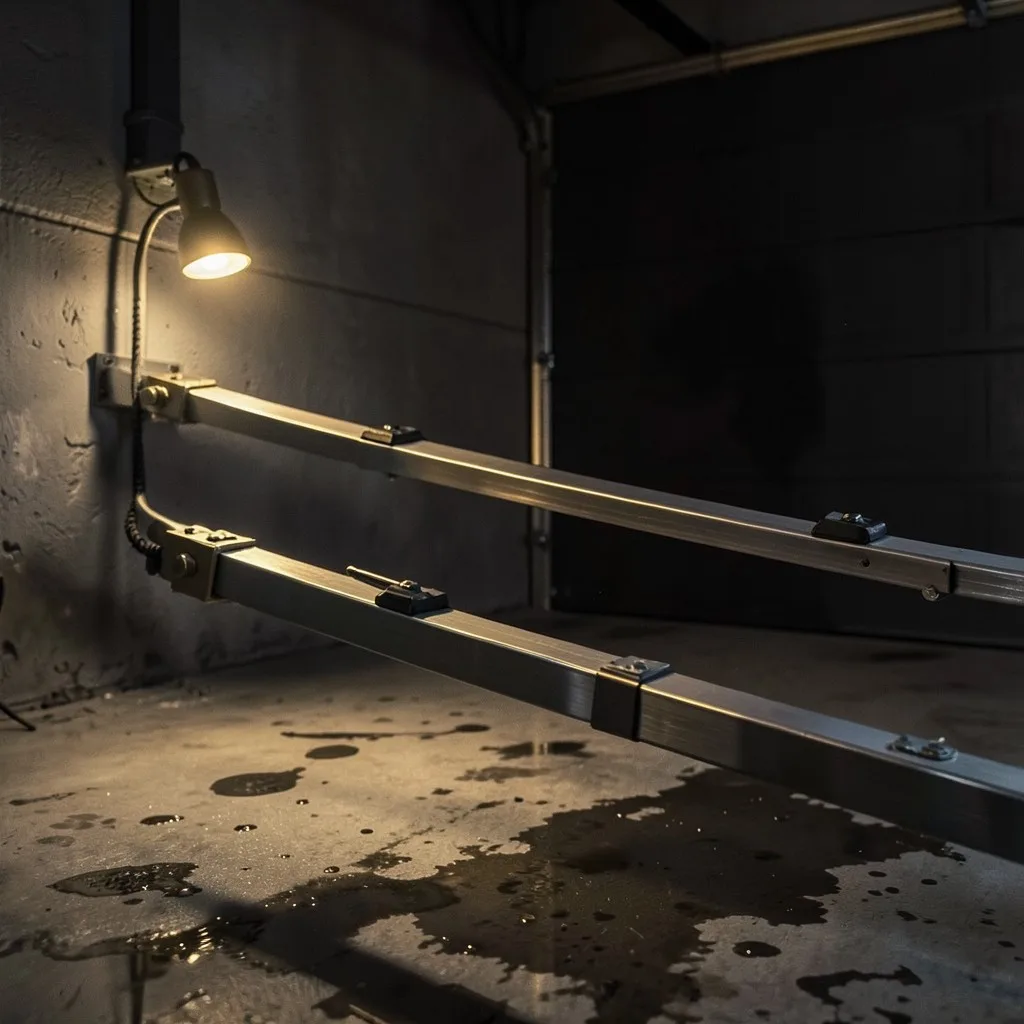
Physically yes, safely no. The spring exists because the door itself can weigh 150–300 pounds; with the counterbalance gone, that full weight is on whatever lifts it. Two adults can raise a spring-dead door in a genuine emergency — car trapped, medical need — using rigid props and never body parts under the door. Outside an emergency, wait for the pro: the off-balance lift is how tracks bend and hands get caught.
What does a torsion spring’s cycle rating actually mean?
One cycle is one full open-and-close. Standard residential springs are rated 10,000 cycles; upgrades run 15,000 to 25,000 and beyond. The rating is a fatigue-life estimate for the wire at its working torque — not a warranty, but a good actuarial figure. At four cycles a day, 10,000 cycles is roughly seven years of service. Any quote for spring replacement should state the rating; the difference between tiers is modest against the labour cost of the visit.
Why did the spring break in cold weather?
Steel loses ductility as temperature drops, and micro-cracks that were stable all summer propagate under cold-morning load. Meanwhile thickened lubricant and stiffer hardware raise the torque demand on every lift. The combination makes the first sustained cold snap the classic spring-failure window — a pattern visible in service data everywhere winters are real, and the reason pre-winter inspections exist.
What is the difference between torsion and extension springs?
Torsion springs mount on a shaft above the door and counterbalance by twisting; extension springs stretch along the horizontal tracks and counterbalance by extending. Torsion is the modern standard — smoother, longer-lived, and contained on its shaft when it breaks. Extension systems, common on older and lighter doors, require safety cables threaded through each spring so a failure doesn’t whip hardware across the garage. Conversions from extension to torsion are a routine upgrade during replacement.
How long do garage door springs last in Fair Oaks?
Longer than most of the country: 10–13 years, because Sacramento County’s 2,404 annual heating degree days impose almost no freeze-thaw stress. Springs here die of cycle count. At four openings a day a 10,000-cycle set runs about seven years; lighter use stretches toward the top of the range.
What garage door problems are most common in Fair Oaks homes?
With 59% of Fair Oaks homes built before 1980 and the 1970s the dominant era, original and second-generation hardware failures lead: fatigued springs, stretched cables, seized steel rollers, and openers due safety-generation upgrades. Whole-load-path inspections pay off in this cohort — parts age together.
Does CA law require a battery backup on my new garage door opener?
Yes. Under California’s SB-969 (Health & Safety Code §§ 19890-19892), any powered residential garage door opener sold or installed from July 1, 2019 onward must include battery backup capable of working the door when the grid is down. Selling or installing a non-compliant unit carries a four-figure civil penalty per opener — and a replacement door may not legally be connected to a non-compliant opener. For Fair Oaks homeowners this makes the opener question part of every door quote.
Do I need a permit for garage door work in Fair Oaks?
For repairs, generally no; for installation, often yes. Expect the permit question on any California install: altering the opening is permitted work in every jurisdiction, and some cities extend the requirement to same-size swaps. A licensed contractor checks with the building department first rather than assuming. Component repair is different: Repairs that replace parts in kind (springs, cables, rollers, openers) typically fall outside permit requirements in California cities. When in doubt, the Sacramento County building department’s answer is the one that counts.
How does the call routing actually work?
One number, one hop: your call is routed to an independent, licensed garage door contractor serving Fair Oaks — selected by ZIP across the 1 covered code(s) here. This site does not perform work or take a cut of your bill; it is compensated by the network when a call connects. Booking decisions stay entirely yours.
What will I be asked when I call?
Expect the practical minimum: ZIP code, what kind of door, what it is doing, and when someone can look at it. The more precisely you can name the symptom — “bang, then dead weight” beats “broken” — the better the parts loadout that arrives in Fair Oaks.
How fast can a pro actually get there?
Response windows are set by the contractor’s live board, not by marketing copy: acute failures get priority and often same-day response in Fair Oaks; planned work books like any trade visit. The honest window comes on the call — and declining it costs nothing.


 STOP & CALL