What does a pro measure that an owner cannot?
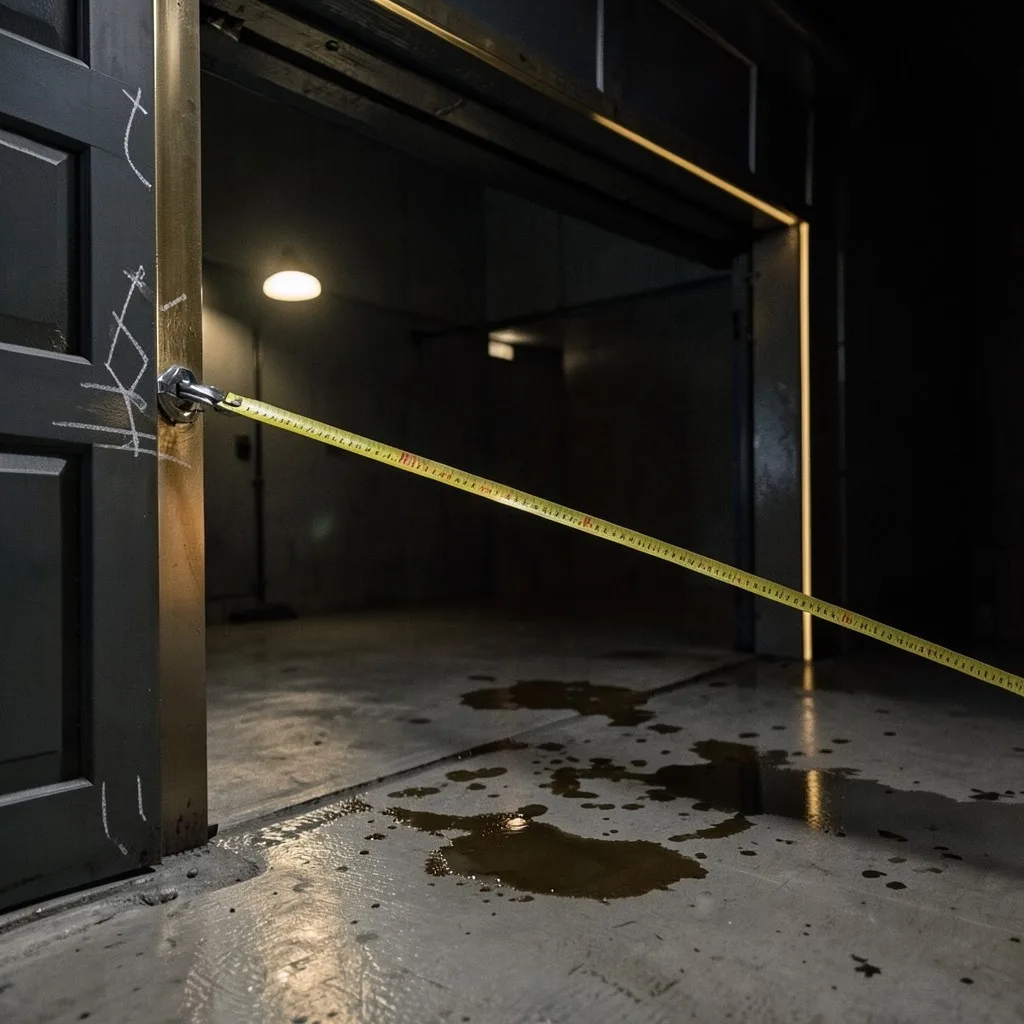
Force and calibration: opener closing force against spec, travel limits, balance point of the door under release, cable tension symmetry, and spring torque behaviour through the arc. Owner checks catch what changed; the measured visit catches what drifted. Both matter — drift is how systems fail without ever producing a symptom a homeowner would notice.
Is there a maintenance schedule the industry actually recommends?
Yes — DASMA and major manufacturers converge on monthly owner checks (balance, reversal, visual), lubrication a few times a year with door-rated product, and an annual professional service, moving to semi-annual for heavy use or harsh climate. The pattern behind the schedule: fatigue items wear by cycles, calibration drifts by season, and both are cheapest addressed on a calendar instead of at failure.
Does skipping maintenance actually void anything?
Frequently, yes. Door and opener warranties commonly condition coverage on documented periodic maintenance and correct lubrication, and insurers handling a vehicle-crush or injury claim will ask about the reversal test history. The paper from an annual service visit is cheap evidence to have on file — and the visit itself usually catches the claim-generating failure first.
What does a proper maintenance visit actually include?
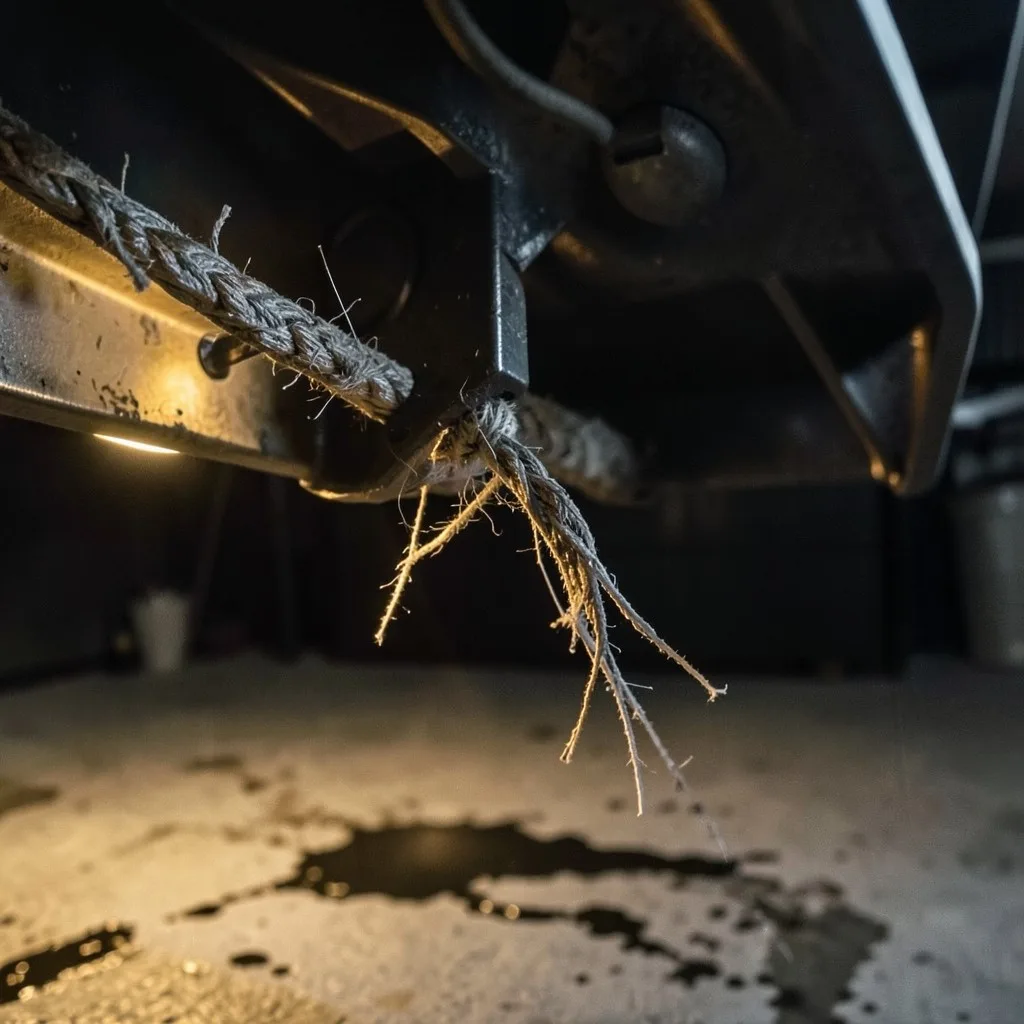
The full load path, measured: spring wear and balance test, cable condition at drums and bottom brackets, roller and hinge inspection, track alignment and fastener torque, opener force and travel calibration, photo-eye alignment and reversal test, weather-seal condition, and lubrication with garage-door-rated products. Under an hour on a healthy door — and each check exists because its failure mode is expensive.
How long do garage door springs last in Gold Run?
Expect 8 to 10 years from a standard 10,000-cycle set — the bottom of the national range. Placer County logs about 4,586 heating degree days a year, and hard winters both stiffen spring steel and concentrate failures into the cold months, with December the peak locally. Higher-cycle springs (15,000–25,000) stretch the window proportionally.
What garage door problems are most common in Gold Run homes?
In Gold Run’s comparatively young housing stock the pattern is cycle-limit failures: builder-spec springs aging out in year 8-plus, sensor and logic-board faults, and impact damage. Rust and legacy-hardware calls are rare; specification quality is the local variable that matters.
Does CA law require a battery backup on my new garage door opener?
It does — across California, Gold Run included. SB-969 has required battery backup on every automatic residential opener sold or installed in the state since July 1, 2019, with a civil penalty per non-compliant unit (Health & Safety Code §§ 19890-19892). The law also blocks connecting a replacement door to a non-compliant opener, which is why installation quotes in Placer County must address the opener even when only the door is changing.
Do I need a permit for garage door work in Gold Run?
It depends on the work. Expect the permit question on any California install: altering the opening is permitted work in every jurisdiction, and some cities extend the requirement to same-size swaps. A licensed contractor checks with the building department first rather than assuming. Repairs that replace parts in kind (springs, cables, rollers, openers) typically fall outside permit requirements in California cities. The reliable answer comes from the Placer County building authority — a licensed contractor confirms before ordering a door rather than assuming.
How does the call routing actually work?
One number, one hop: your call is routed to an independent, licensed garage door contractor serving Gold Run — selected by ZIP across the 1 covered code(s) here. This site does not perform work or take a cut of your bill; it is compensated by the network when a call connects. Booking decisions stay entirely yours.
What will I be asked when I call?
Expect the practical minimum: ZIP code, what kind of door, what it is doing, and when someone can look at it. The more precisely you can name the symptom — “bang, then dead weight” beats “broken” — the better the parts loadout that arrives in Gold Run.
How fast can a pro actually get there?
It depends on the day’s board: acute failures called in early often see a truck the same day in Placer County, while planned work books days out. You will get the contractor’s honest window on the phone — and if nobody can fit the job, the call simply ends there, no obligation.


 DIAGNOSE