Skip to content
Garage Door Repair Line Nationwide Garage Door Dispatch (800) 555-0167
ZIP 90650 +2 · LOS ANGELES COUNTY

Garage Door Repair for Norwalk — Los Angeles County, CA

Garage door repair in Norwalk, CA is handled by licensed local contractors reached through this free call-routing service. Typical jobs — broken springs, failed openers, off-track doors — are diagnosed on site. In Los Angeles County, torsion springs last roughly 10–13 years, and 84% of local homes predate 1980.

Around 64% of Norwalk homes went up before 1960, and many still run doors and openers several generations old. When one lets go, this page routes your call to a licensed Los Angeles County pro — and lays out the local facts first.

// CITY DATA FEED

// BEFORE YOU DIAL, GATHER

How many cycles are left in a Norwalk spring?

A torsion spring fails on a schedule set by cycle count and climate — and both numbers for Norwalk are on this dial. If the door is on its original set and older than the low end of the band, it is inside the failure window now.

10–13 yrs typical spring life · Norwalk

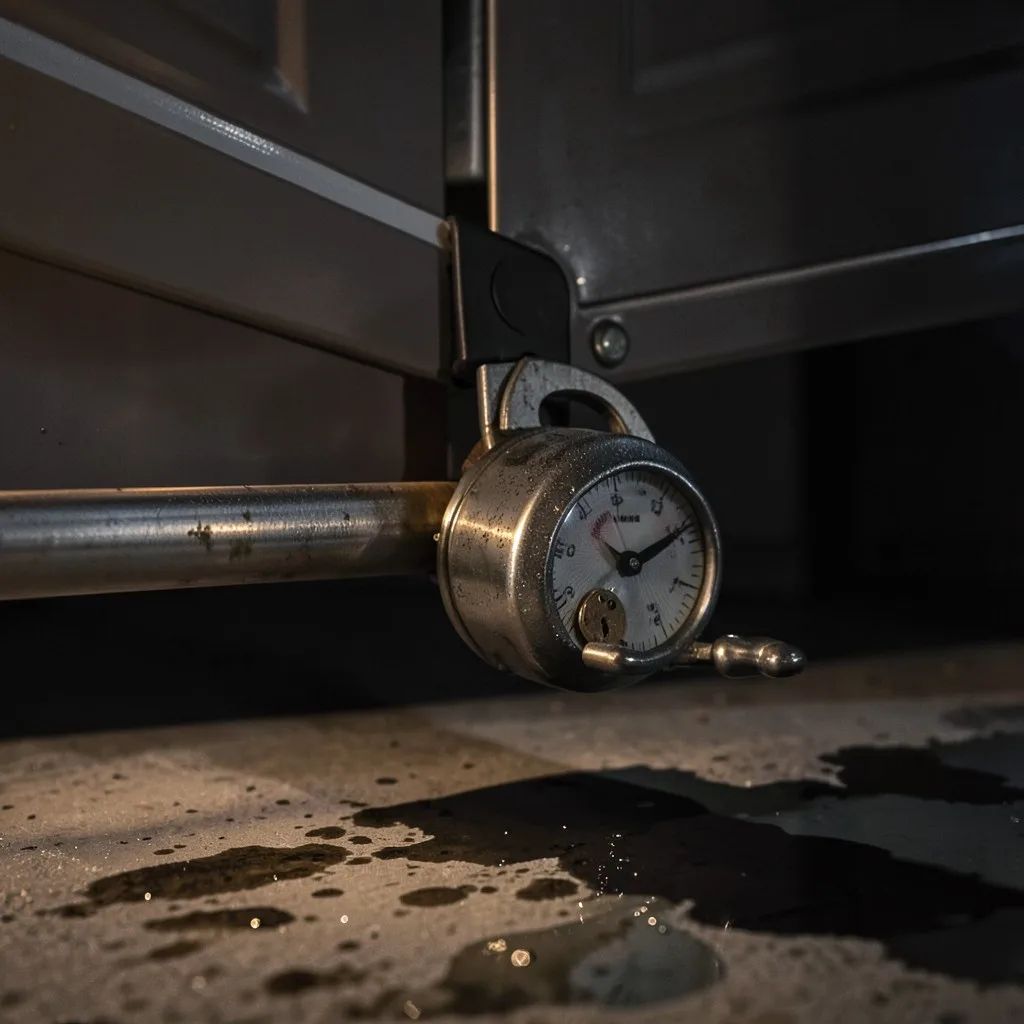
// THE CYCLE GAUGE · NORWALK

The dial reads cycles, not birthdays: 10,000 is the standard rating, and four openings a day spends about 1,460 a year. Factor in the mild climate over Los Angeles County (2,346 degree days/yr) and local sets realistically deliver 10–13 years — with the failure count peaking each December. Past the bright arc at ~72% of rating, breakage risk climbs steeply.

What do CA law and Los Angeles County rules require?

Three rules shape this work in Norwalk: state opener law, contractor licensing, and the local permit line. Each is verifiable at the cited source — and each is something a routed contractor should answer without being asked.

Residential garage door exterior at dusk

SB-969 battery-backup law

Since July 1, 2019, every automatic residential garage door opener sold or installed in California must have a battery backup that operates the door during a power outage. Selling or installing a non-compliant opener carries a four-figure civil penalty per unit (§ 19892), and a replacement residential garage door may not be connected to a non-compliant opener.

Contractor licensing

The Contractors State License Board issues a dedicated D-28 classification (Doors, Gates and Activating Devices) for this work. Practically every real repair or replacement exceeds the state's minor-work exemption, so the licence question applies to essentially every visit — and the board's public lookup settles it in two minutes.

Permits in Los Angeles County

Door installation is frequently permitted work in California: any change to the structural opening triggers a permit everywhere, and a number of cities permit even like-for-like replacements. The local building department's answer is the one that counts — confirm before the door is ordered. Component-level work — spring pairs, cables, rollers, a straight opener swap — is generally exempt from permitting across California jurisdictions.

Wildfire-zone construction

In California's designated Fire Hazard Severity Zones, exterior construction — garage doors included — falls under the state's wildland-urban interface (WUI) building standards for ember and flame resistance. Homes in mapped zones should confirm listed materials at replacement time.

Wind rating

Most of California uses standard ASCE 7 basic design wind speeds (roughly 91-96 mph ultimate for Risk Category II homes), with locally mapped Special Wind Regions in mountain and pass areas where jurisdictions may require higher ratings.

What is your garage door symptom telling you?

Match what the door is doing to its likely cause — each row below is drawn from what licensed pros actually find behind that symptom in 1950s-era housing.

Unlit opener motor head hanging from its rail DIAGNOSE

Remote range has collapsed to a few feet

Radio range collapses for pedestrian reasons: a coin cell at end of life, an antenna wire tucked behind the chassis, or RF hash from new LED bulbs sitting inches from the receiver. Exhaust those three before any board gets blamed — most range tickets close at the first one.

Frost on a steel garage door track and roller DIAGNOSE

New noises in cold weather

Cold changes the mechanics: steel springs stiffen, lubricants thicken, and rollers with worn bearings complain first thing in the morning. With 2,346 heating degree days a year here, seasonal noise is the door’s early-warning system — worth an inspection before December, when failures peak.

Sectional door sitting crooked in its opening with slack cable STOP & CALL

Door is crooked in the opening, one side high

A cable has come off its drum or snapped on one side, so the door is lifting unevenly — and the remaining cable plus the tracks are carrying loads they were not designed for. Stop using the door; a cocked door can jump the tracks entirely and wedge or fall.

Crushed bottom weather seal with light leaking beneath the door BOOK SOON

Door slams the last foot instead of settling

Fading springs. As torsion springs wear, they lose the stored torque that eases the door down, and gravity wins the final section of travel. With local spring life at 10–13 years, a slamming 1950s-era door is typically running on its original set — inspection-due.

Photo-eye safety sensor with indicator lamp glowing DIAGNOSE

Door closes, then immediately reopens

The safety circuit is doing its job against a fault: photo eyes knocked out of line (a broom or bumper is the usual culprit), sun glare on a sensor, or a binding door tripping the force limit near the floor. All three are quick finds for a pro; the eyes you can check yourself.

Worn steel roller with an ovalled bearing BOOK SOON

Metal-on-metal noise as the door moves

Grinding is friction announcing an address: an ovalled bearing dragging its stem, a rail nudged off plumb by a bumper tap, or panels rubbing the stop moulding. Wear compounds quickly once metal rides metal — the noisy phase is the affordable phase.

Garage door remote with a worn button on a workbench DIAGNOSE

Door works by remote but not the wall button (or vice versa)

A wiring or pairing fault, not a mechanical one: wall-button circuits fail at the staples and splices, remotes fail at batteries and pairing. Whichever input still works proves the opener itself is fine — the fix is tracing the dead input, not replacing the unit.

Nylon gear shavings dusted over an opener housing BOOK SOON

Opener runs but the door does not move

The drive has disconnected from the door: a stripped main gear (white shavings under the cover), a broken trolley, or the release cord left in bypass. Gears strip most often on doors whose springs weakened first — the motor was quietly lifting extra weight for months.

Snapped torsion spring with a visible gap between coil halves STOP & CALL

Loud bang from the garage, door now immovable

That crack was stored torque escaping: a fatigued coil parting at its weakest point. Whatever lifted the panels a minute ago no longer exists, so nothing — motor included — should be asked to raise them. Around Norwalk, sets give out near the 10–13 year mark, December being the cruellest stretch.

Found your symptom? End it today.

One call gets licensed Los Angeles County eyes on it. No obligation. If nobody in Norwalk can take the job today, the call ends there.

Call (800) 555-0167

Where is the DIY line on a garage door?

Most of a garage door is safe to inspect and touch. Two parts of it are not. Here is exactly where that line sits.

SAFE — DO Walk the system with your eyes only: fraying strands at the bottom brackets, a daylight gap in a spring coil, rollers sliding rather than turning. Photograph anything that changed since last month — the picture shortens the service call.
SAFE — DO Wipe the photo-eye lenses and confirm both indicator lights are steady every few months. Misaligned eyes are the most common self-inflicted “broken door”.
SAFE — DO Test balance monthly: pull the release with the door DOWN, lift halfway, let go. A balanced door stays put; a heavy one has fading springs.
PRO-ONLY — DO NOT The coiled steel over the opening holds enough energy to break bones after months of sitting still. No video makes winding-bar work safe for a first-timer; every serious garage door injury statistic starts here.
PRO-ONLY — DO NOT Leave the cables and bottom brackets alone. Both are loaded by the springs even when the door looks at rest; removing the wrong bolt releases that load into the room.
PRO-ONLY — DO NOT Do not pull the emergency release with the door open — a spring-dead door will free-fall. Release only with the door fully closed.

Which months are hardest on Norwalk doors?

Failures in Norwalk are not evenly distributed across the calendar — the climate loads the dice. Here is the local pattern, month by month.

Frost crystals on a torsion spring in a cold garage

Dec – Feb

Cool season

Even in a mild winter, Norwalk sees its modest failure peak now — cool mornings stiffen aging springs, and December is the month local hardware works hardest.

Meltwater droplets on a garage door track in spring light

Mar – May

Spring

Post-winter reckoning — doors that groaned through the cold get diagnosed now. Roller and hinge wear from the heavy season surfaces as travel noise.

Opener motor head in warm dusty summer light

Jun – Aug

Summer

Peak season for opener faults — board failures and sensor glare rise with garage temperatures. Mechanical hardware coasts; the electronics do not.

Garage at autumn dusk with toolbox staged for a tune-up

Sep – Nov

Fall

Book tune-ups now: the pre-winter service visit catches the springs and cables that would otherwise fail in the December cluster.

When does replacement beat another repair?

Whether to fix the door or replace it is a numbers question, not a sales question. These are the numbers.

FactorPoints to repairPoints to replace
Door ageUnder ~15 years: hardware is standard, panels matchable, repair is the default.Past ~20–25 years: parts scarcity and accumulated wear tip the math — most 1950s-era originals in Norwalk are past this line.
Spring historyFirst spring failure at 10–13 years is normal service, not a verdict on the door.Third spring set means the whole load path has logged the same cycles — everything else is due too.
Panel conditionA single dented section in a current profile swaps economically.Rust-through, several bad sections, or a profile nobody stocks — panel sourcing alone approaches new-door territory.
Opener generationAnything built after 1993 with working entrapment protection is fair game for repair.Openers predating the 1993 entrapment rules belong out of service whatever their mechanical condition.
Operating costWell-maintained, adequately insulated: the running cost argument is already won.Uninsulated panels on a heated garage fight 2,346 heating degree days a year; the insulation upgrade is the payback case.
Aged door panel meeting a new insulated steel panel

Which factors move a repair quote up or down?

No prices on this page by design — this line routes calls, it does not sell work. What follows is what actually moves the number a local pro will quote.

Door size and weight

Double doors need heavier springs and more of the crew’s time than singles; wood and insulated doors weigh more than builder-grade steel.

Which component failed

Springs, openers, cables, panels and track all carry different parts-and-labour weights — the symptom decides the band before anyone quotes.

Access and condition

Neglect compounds the bill: seized fasteners add labour hours, a bent rail adds parts, and improvised past fixes add undoing time. The system’s arrival condition is priced in whether the invoice itemises it or not.

Cycle rating of replacement springs

Fatigue rating is the quiet variable: a 25,000-cycle set costs modestly more than 10,000 and buys more than double the calendar. The quote that names the number is the quote taking your money seriously.

How do you check a California contractor before saying yes?

Trust is checkable in CA. These are the specific verifications a Norwalk homeowner can run before authorising work.

Written scope before work

No work without a written scope. The documented bait pattern in this industry is a low phone quote that triples at the door — paper is the antidote.

The cycle-rating question

Springs are sold by fatigue life — ten, fifteen, twenty-five thousand cycles. A contractor who cannot state the number on the truck is installing mystery steel; make the rating a line item or make another call.

Insurance and workers’ comp

Request the COI and read the dates. A crew without current liability and workers’-comp cover transfers its risk to your homeowner’s policy the moment a winding bar slips.

Licence — verify it, don’t ask about it

Two minutes on the CA board site turns a claim into a record: classification, status, bond history. Do it before anyone climbs a ladder — the lookup is public precisely because this trade attracts pretenders.

Trade-practice alignment

Mention DASMA and watch the reaction: technicians who train on the industry standards recognise the name instantly. Blankness is not disqualifying, but familiarity is a genuinely good sign.

Garage door repair in Norwalk — the questions that matter

What is R-value and does it matter on a garage door?

R-value measures insulation resistance — higher means less heat transfer through the panels. It matters in proportion to what is behind and above the garage: a conditioned room over the garage or a workshop behind it makes double-digit R-value worthwhile; a detached shell garage does not. Insulated doors are also stiffer and quieter, which is why the spec question deserves a real answer rather than a default.

Should the opener be replaced with the door?

Not automatically, but the install visit is the cheapest moment to do it. The decision hinges on the opener’s age and safety compliance: pre-1993 units without photo eyes should go regardless, and older units may lack the force capacity for a heavier insulated replacement door. A healthy, compliant opener carries over — a competent installer tests it against the new door’s weight rather than quoting a bundle reflexively.

Does a stronger motor fix a struggling opener?

No — and the belief causes real damage. Residential openers contribute modest force by design; the springs carry the weight. An opener straining against a heavy door signals counterbalance failure, and installing a bigger motor just moves the failure downstream to gears, brackets and panels while defeating the force limits that make the system safe. Fix the weight problem and the existing opener is usually fine.

Why does one side of the door drop before a track jump?

That sag is the pre-jump warning: one side is lifting later or lower than the other because a cable has stretched, a drum has slipped, or the track on that side has drifted out of gauge. The racking loads the rollers diagonally — exactly the direction the rail cannot hold them — and a jump follows within cycles. A door that sits visibly crooked is a stop-and-call fault; the repair at that stage is cables and alignment, not the full recovery job.

How long do garage door springs last in Norwalk?

Longer than most of the country: 10–13 years, because Los Angeles County’s 2,346 annual heating degree days impose almost no freeze-thaw stress. Springs here die of cycle count. At four openings a day a 10,000-cycle set runs about seven years; lighter use stretches toward the top of the range.

What garage door problems are most common in Norwalk homes?

Age-related structural wear leads: 64% of Norwalk housing predates 1960, so calls skew to worn tracks, obsolete one-piece and early sectional hardware, and openers several safety-generations old. Any opener without photo eyes fails the post-1993 federal safety bar and belongs in the replacement column regardless of whether it runs.

Does CA law require a battery backup on my new garage door opener?

Yes. Under California’s SB-969 (Health & Safety Code §§ 19890-19892), any powered residential garage door opener sold or installed from July 1, 2019 onward must include battery backup capable of working the door when the grid is down. Selling or installing a non-compliant unit carries a four-figure civil penalty per opener — and a replacement door may not legally be connected to a non-compliant opener. For Norwalk homeowners this makes the opener question part of every door quote.

Do I need a permit for garage door work in Norwalk?

For repairs, generally no; for installation, often yes. Door installation is frequently permitted work in California: any change to the structural opening triggers a permit everywhere, and a number of cities permit even like-for-like replacements. The local building department's answer is the one that counts — confirm before the door is ordered. Component repair is different: Component-level work — spring pairs, cables, rollers, a straight opener swap — is generally exempt from permitting across California jurisdictions. When in doubt, the Los Angeles County building department’s answer is the one that counts.

How does the call routing actually work?

Think of the number as a switchboard with one job: putting you on the phone with an independent licensed contractor who actually covers Norwalk. This site publishes the local facts and takes a network referral fee when calls connect — the work, the pricing and the relationship are entirely between you and the contractor.

What will I be asked when I call?

Four things move the call fastest: your ZIP, the door type (sectional or one-piece, single or double), the opener brand, and the symptom in a sentence. With those, dispatch can route to a contractor whose truck stock matches the likely failure — often turning a diagnostic visit into a same-visit repair.

How fast can a pro actually get there?

It depends on the day’s board: acute failures called in early often see a truck the same day in Los Angeles County, while planned work books days out. You will get the contractor’s honest window on the phone — and if nobody can fit the job, the call simply ends there, no obligation.


// BEFORE YOU DIAL

Expect three questions on the routed call: your ZIP, what kind of door, and when a pro can be there. Answers ready = connected faster.