How dangerous is a torsion spring, really?
Genuinely dangerous — not liability-boilerplate dangerous. A wound residential spring stores serious mechanical energy held back by two set screws; release it wrong and the winding bar, the cone, or the spring itself moves faster than a hand can. Emergency departments see the results every winter: fractures, amputated fingers, facial injuries. Every safe procedure exists downstream of this fact, and so does the licensing.
What decides the size of a replacement spring?
Four measurements: wire diameter, inside diameter, overall length, and wind direction — all matched to the door’s actual weight, which a pro measures rather than guesses. A spring that is close-but-wrong leaves the door heavy at the floor or slamming at the top, and works the opener against the imbalance every cycle. This is why the same door width can take dozens of different spring specs, and why truck stock depth matters.
What is the difference between torsion and extension springs?
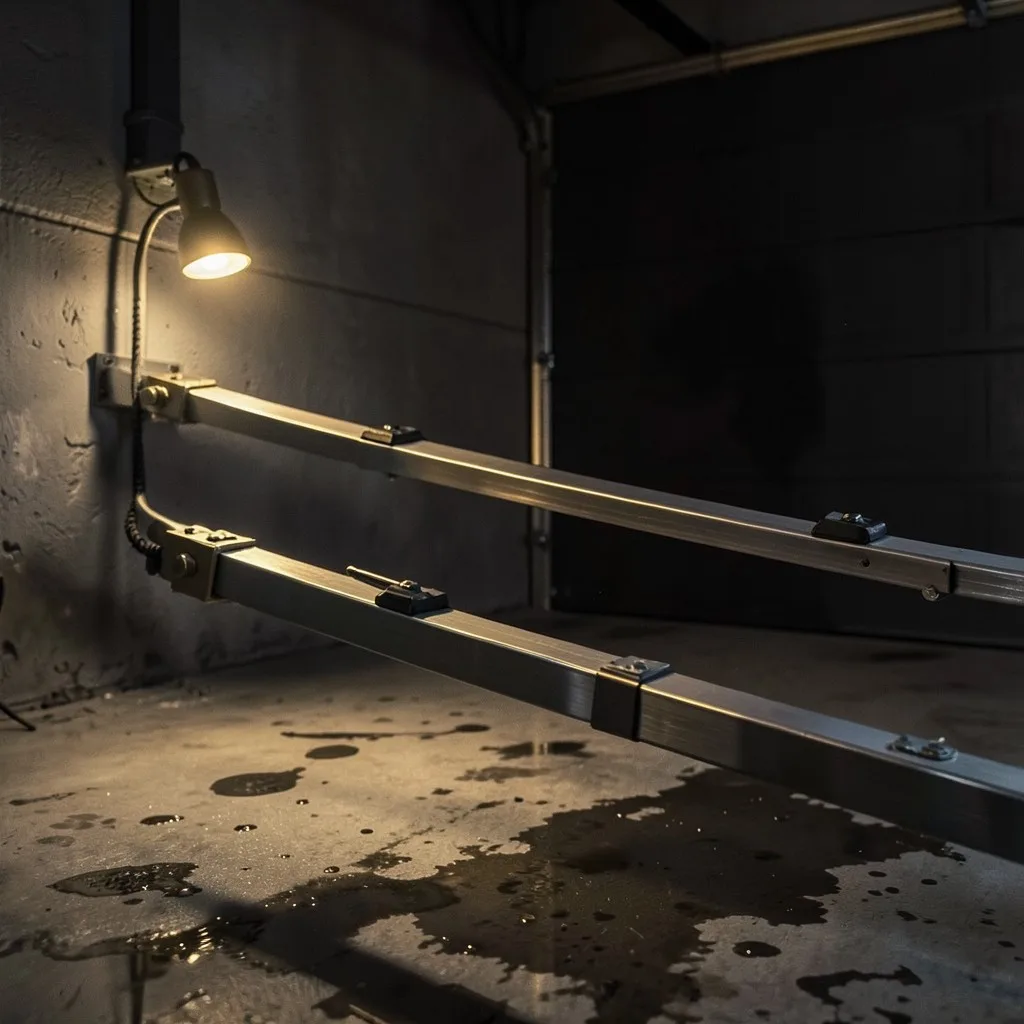
Torsion springs mount on a shaft above the door and counterbalance by twisting; extension springs stretch along the horizontal tracks and counterbalance by extending. Torsion is the modern standard — smoother, longer-lived, and contained on its shaft when it breaks. Extension systems, common on older and lighter doors, require safety cables threaded through each spring so a failure doesn’t whip hardware across the garage. Conversions from extension to torsion are a routine upgrade during replacement.
Why did the spring break in cold weather?
Steel loses ductility as temperature drops, and micro-cracks that were stable all summer propagate under cold-morning load. Meanwhile thickened lubricant and stiffer hardware raise the torque demand on every lift. The combination makes the first sustained cold snap the classic spring-failure window — a pattern visible in service data everywhere winters are real, and the reason pre-winter inspections exist.
How long do garage door springs last in Pacifica?
Pacifica’s mild climate is easy on spring steel: 10 to 13 years from a standard set is typical, the top of the national range. With only 2,997 heating degree days a year in San Mateo County, cycle count — not weather — is what retires springs here, so heavy daily use is the number to watch.
What garage door problems are most common in Pacifica homes?
The 1960s-era build wave dominates Pacifica, and its doors are on second or third spring sets: expect spring fatigue, drive-gear failures on aging openers, and roller wear. 81% of local homes predate 1980, which is why pros here check the whole system, not just the reported part.
Does CA law require a battery backup on my new garage door opener?
It does — across California, Pacifica included. SB-969 has required battery backup on every automatic residential opener sold or installed in the state since July 1, 2019, with a civil penalty per non-compliant unit (Health & Safety Code §§ 19890-19892). The law also blocks connecting a replacement door to a non-compliant opener, which is why installation quotes in San Mateo County must address the opener even when only the door is changing.
Do I need a permit for garage door work in Pacifica?
It depends on the work. Replacing or installing a garage door commonly requires a building permit in California jurisdictions — always when the structural opening changes, and many cities require one for like-size replacement as well. Verify with the city or county building department before work begins. Component-level work — spring pairs, cables, rollers, a straight opener swap — is generally exempt from permitting across California jurisdictions. The reliable answer comes from the San Mateo County building authority — a licensed contractor confirms before ordering a door rather than assuming.
How does the call routing actually work?
Think of the number as a switchboard with one job: putting you on the phone with an independent licensed contractor who actually covers Pacifica. This site publishes the local facts and takes a network referral fee when calls connect — the work, the pricing and the relationship are entirely between you and the contractor.
What will I be asked when I call?
Have four answers ready and the call is short: where (ZIP), what (door type, single or double), which (opener brand), and how it is failing. Precision on the fourth answer is what loads the right parts — the difference between diagnosis day and repair day.
How fast can a pro actually get there?
It depends on the day’s board: acute failures called in early often see a truck the same day in San Mateo County, while planned work books days out. You will get the contractor’s honest window on the phone — and if nobody can fit the job, the call simply ends there, no obligation.


 STOP & CALL