What decides the size of a replacement spring?
Four measurements: wire diameter, inside diameter, overall length, and wind direction — all matched to the door’s actual weight, which a pro measures rather than guesses. A spring that is close-but-wrong leaves the door heavy at the floor or slamming at the top, and works the opener against the imbalance every cycle. This is why the same door width can take dozens of different spring specs, and why truck stock depth matters.
How dangerous is a torsion spring, really?
Genuinely dangerous — not liability-boilerplate dangerous. A wound residential spring stores serious mechanical energy held back by two set screws; release it wrong and the winding bar, the cone, or the spring itself moves faster than a hand can. Emergency departments see the results every winter: fractures, amputated fingers, facial injuries. Every safe procedure exists downstream of this fact, and so does the licensing.
Why do garage door springs have to be replaced in pairs?
On a two-spring door, both springs have identical cycle counts — when one breaks, the survivor is at the same point in its fatigue life and statistically fails within months. Replacing the pair also keeps the winding balanced across the shaft, so the door lifts evenly instead of racking toward the older spring’s side. Single-spring replacement on a paired door is a known repeat-call generator, which is why reputable contractors quote pairs by default.
The door has two springs and only one broke — what now?
Both get replaced, and it is not an upsell. Springs on the same shaft have identical cycle histories: the survivor is as fatigued as the one that failed, and mixing a new spring with a spent one unbalances the winding across the shaft. The labour is the visit itself — the second spring adds a part, not an appointment. One-spring quotes on two-spring doors are how repeat calls get manufactured.
How long do garage door springs last in Pinole?
Longer than most of the country: 10–13 years, because Contra Costa County’s 2,550 annual heating degree days impose almost no freeze-thaw stress. Springs here die of cycle count. At four openings a day a 10,000-cycle set runs about seven years; lighter use stretches toward the top of the range.
What garage door problems are most common in Pinole homes?
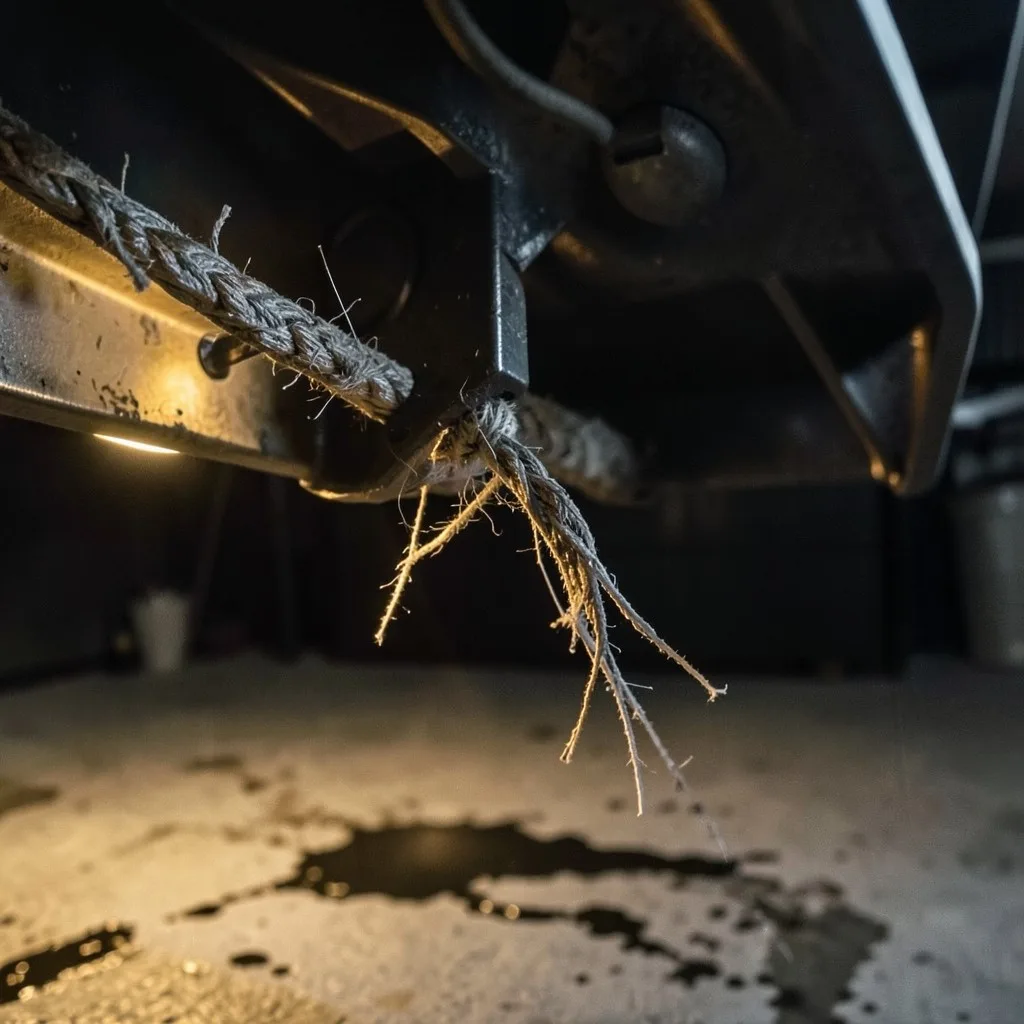
With 69% of Pinole homes built before 1980 and the 1960s the dominant era, original and second-generation hardware failures lead: fatigued springs, stretched cables, seized steel rollers, and openers due safety-generation upgrades. Whole-load-path inspections pay off in this cohort — parts age together.
Does CA law require a battery backup on my new garage door opener?
Yes. Under California’s SB-969 (Health & Safety Code §§ 19890-19892), any powered residential garage door opener sold or installed from July 1, 2019 onward must include battery backup capable of working the door when the grid is down. Selling or installing a non-compliant unit carries a four-figure civil penalty per opener — and a replacement door may not legally be connected to a non-compliant opener. For Pinole homeowners this makes the opener question part of every door quote.
Do I need a permit for garage door work in Pinole?
For repairs, generally no; for installation, often yes. Door installation is frequently permitted work in California: any change to the structural opening triggers a permit everywhere, and a number of cities permit even like-for-like replacements. The local building department's answer is the one that counts — confirm before the door is ordered. Component repair is different: Like-for-like component repair (springs, cables, rollers, opener swap) generally does not require a permit in most California jurisdictions. When in doubt, the Contra Costa County building department’s answer is the one that counts.
How does the call routing actually work?
Think of the number as a switchboard with one job: putting you on the phone with an independent licensed contractor who actually covers Pinole. This site publishes the local facts and takes a network referral fee when calls connect — the work, the pricing and the relationship are entirely between you and the contractor.
What will I be asked when I call?
Expect the practical minimum: ZIP code, what kind of door, what it is doing, and when someone can look at it. The more precisely you can name the symptom — “bang, then dead weight” beats “broken” — the better the parts loadout that arrives in Pinole.
How fast can a pro actually get there?
Response windows are set by the contractor’s live board, not by marketing copy: acute failures get priority and often same-day response in Pinole; planned work books like any trade visit. The honest window comes on the call — and declining it costs nothing.


 STOP & CALL