Skip to content
Garage Door Repair Line Nationwide Garage Door Dispatch (800) 555-0167
ZIP 92064 +1 · POWAY, CA

Garage Door Opener Repair in Poway, CA (San Diego County)

In Poway, opener faults resolve at the bench more often than the bin: gears, eyes, remotes and boards are all serviceable parts. A licensed San Diego County pro reads the fault codes, works the diagnostic chain, and quotes replacement only when parts support or safety compliance has genuinely ended.

In Poway, the dominant housing era is the 1970s — doors from that build wave are now on second or third springs. One call here reaches a licensed San Diego County pro.

// LOCAL READOUT

// FOUR ANSWERS, FASTER DISPATCH

How many cycles are left in a Poway spring?

A torsion spring fails on a schedule set by cycle count and climate — and both numbers for Poway are on this dial. If the door is on its original set and older than the low end of the band, it is inside the failure window now.

10–13 yrs typical spring life · Poway

// THE CYCLE GAUGE · POWAY

A standard torsion spring is rated 10,000 open-close cycles. A household averaging 4 cycles a day consumes about 1,460 cycles a year — and in San Diego County's mild climate (2,018 heating degree days/yr), real spring life lands at 10–13 years, with failures clustering around December. The bright arc is the failure band: past ~72% of rated cycles, breakage risk climbs steeply.

What do CA law and San Diego County rules require?

Before any quote is signed in Poway, three legal layers apply: the state statute on openers, the licensing classification for the trade, and San Diego County permitting practice. All three are sourced below, straight from the issuing authorities.

Residential garage door exterior at dusk

SB-969 battery-backup law

Since July 1, 2019, every automatic residential garage door opener sold or installed in California must have a battery backup that operates the door during a power outage. Selling or installing a non-compliant opener carries a four-figure civil penalty per unit (§ 19892), and a replacement residential garage door may not be connected to a non-compliant opener.

Contractor licensing

California licenses garage door work under the CSLB D-28 'Doors, Gates and Activating Devices' limited specialty classification. Any job above the state's minor-work exemption threshold requires a CSLB-licensed contractor — and nearly every spring, opener or door replacement clears that threshold.

Permits in San Diego County

Door installation is frequently permitted work in California: any change to the structural opening triggers a permit everywhere, and a number of cities permit even like-for-like replacements. The local building department's answer is the one that counts — confirm before the door is ordered. Like-for-like component repair (springs, cables, rollers, opener swap) generally does not require a permit in most California jurisdictions.

Wildfire-zone construction

Homes in California's mapped fire-hazard zones answer to the WUI construction standards: exterior components, garage doors among them, must meet ember- and flame-resistance requirements. Zone status is worth checking before any door is specified.

Wind rating

California's baseline wind design sits at roughly 91-96 mph ultimate (ASCE 7, Risk Category II), with the exception of mapped Special Wind Regions along mountains and passes, where jurisdictions may impose higher door ratings.

What is your garage door symptom telling you?

Match what the door is doing to its likely cause — each row below is drawn from what licensed pros actually find behind that symptom in 1970s-era housing.

Photo-eye safety sensor with indicator lamp glowing DIAGNOSE

Opener light blinks a repeating pattern

Count the flashes before you call: openers publish their own diagnosis as a repeating blink pattern, brand-specific but consistent. Reported with the brand name, that count often converts a diagnostic visit into a one-trip repair with the part already aboard.

Nylon gear shavings dusted over an opener housing BOOK SOON

White plastic shavings under the motor head

Stripped main drive gear — the nylon gear sheds visible shavings as it fails, usually after months of lifting a door whose springs were quietly dying. The gear kit is a standard repair; the spring balance check afterwards is what stops the repeat.

Frost on a steel garage door track and roller DIAGNOSE

Winter mornings made the door loud

Cold mornings raise the effort budget: steel stiffens, grease thickens, and every marginal bearing becomes audible under the extra draw. Treat December squeaks as scheduling advice — the 2,018 degree-day season is exactly when marginal hardware stops being marginal.

Unlit opener motor head hanging from its rail DIAGNOSE

Clicker only works from right at the door

Radio range collapses for pedestrian reasons: a coin cell at end of life, an antenna wire tucked behind the chassis, or RF hash from new LED bulbs sitting inches from the receiver. Exhaust those three before any board gets blamed — most range tickets close at the first one.

Worn steel roller with an ovalled bearing BOOK SOON

Grinding or scraping during travel

Usually a roller or track fault: rollers past their service life stop spinning and start scraping, and a track knocked out of plumb rubs the door edge. In Poway’s older stock the original steel rollers are often decades past their intended life — a full roller swap is routine.

Roller hanging out of a bent track, panel edge dropped DIAGNOSE

Reaches the floor and pops straight back up

Reversal logic firing: misaligned or obstructed photo eyes, or a closing-force limit set too low for a door that has stiffened. Check the small lights on both eye sensors first — a steady pair means aligned, a blinking one means the beam is broken or drifted.

Crushed bottom weather seal with light leaking beneath the door BOOK SOON

Drops hard through the final stretch of travel

The counterbalance is no longer matching the door through the bottom of travel — springs at end-of-life have lost torque, or the cables have stretched enough to change the geometry. The slam accelerates wear on every panel joint and is usually the last warning before a spring lets go.

Sectional door sitting crooked in its opening with slack cable STOP & CALL

One side hangs higher — the door sits cocked

A cable has come off its drum or snapped on one side, so the door is lifting unevenly — and the remaining cable plus the tracks are carrying loads they were not designed for. Stop using the door; a cocked door can jump the tracks entirely and wedge or fall.

Cable drum with wraps jumped out of their grooves BOOK SOON

Door lifts a few inches, stops, reverses

The opener is hitting its force limit — usually because a spring has weakened or failed and the motor is suddenly lifting real weight. Sometimes it is only a drifted force setting, but a door that got heavy overnight is a counterbalance problem, not an opener problem.

Found your symptom? End it today.

An opener that struggles is straining the whole system. A licensed San Diego County pro can usually fix it in one visit — call while it still moves. No obligation. If nobody in Poway can take the job today, the call ends there.

Call (800) 555-0167

What happens after you call about opener repair in Poway?

Here is the sequence a licensed San Diego County pro actually follows on this job — so you know what a competent visit looks like before anyone arrives.

Symptom triage on the phone

Opener faults telegraph their cause: a unit that hums but does not move is usually a stripped drive gear; one that clicks and flashes is safety-eye alignment; one that is simply dead is power or board. The symptoms you describe route the call to a licensed San Diego County pro with the likely parts — gear kits, photo eyes, boards for the common brands — already on the truck.

Work journal and pencil on a garage workbench

Bench diagnosis at the door

Diagnosis proceeds from cheap to expensive: power and codes first, drive train second, safety circuit third, board last. That ordering is why honest opener calls resolve small — most faults live in the first two stops, and a San Diego County pro who works the sequence rarely needs the big-ticket ending.

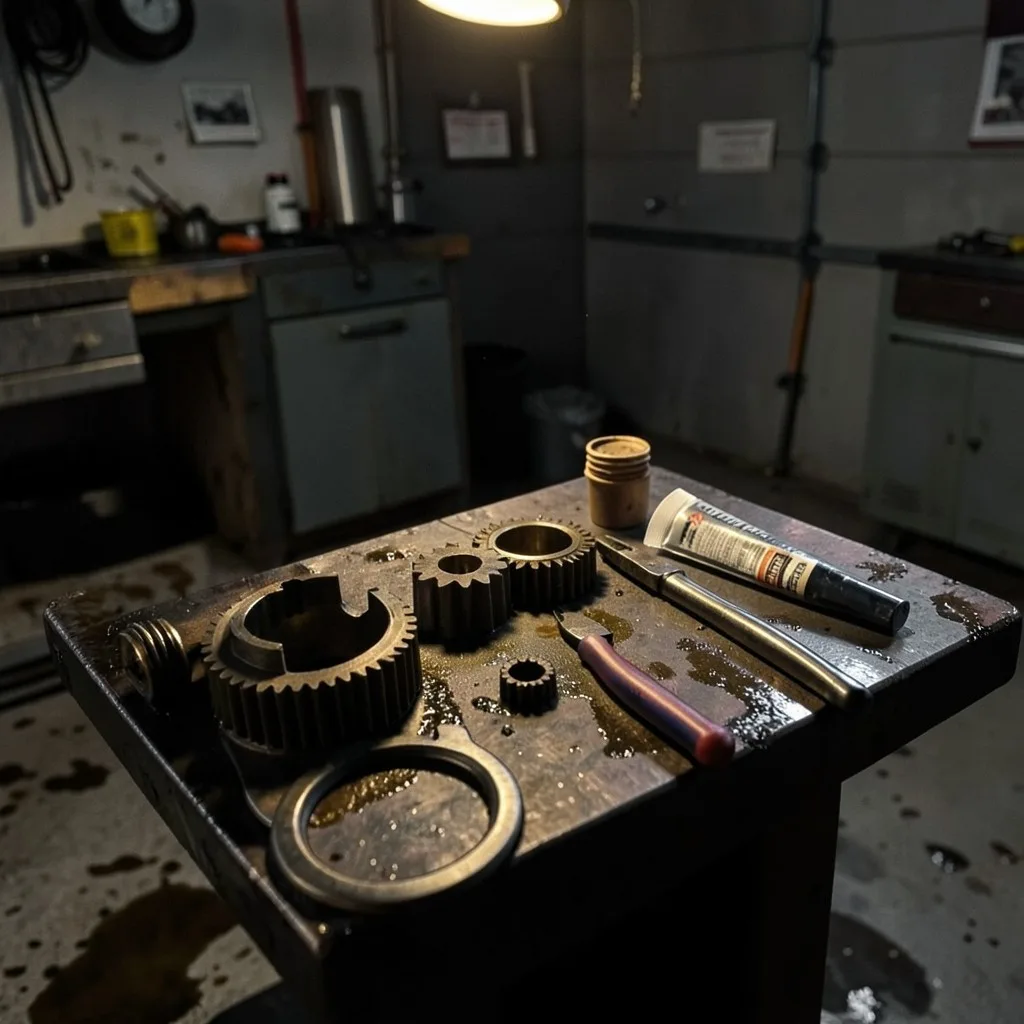
Opener drive gear disassembled on a bench

Repair — or an honest replace call

A straight shop answer: gears, eyes, remotes, boards — repairable. A pre-1993 unit with no safety eyes, or a unit whose manufacturer no longer ships boards — replaceable, and the pro should say why in one sentence. Replacement quotes come with the code question already answered for CA, so the install is compliant on day one.

Replacement hardware aligned during repair

Calibration and safety verification

Handback is a checklist, not a wave: limits set so the door seals without straining, force dialed to the minimum that moves the door, photo eyes aligned and verified, remotes and keypad re-paired. The pro demonstrates the reversal test in front of you — it is the one check worth watching.

Door balanced at half height after calibration

Where is the DIY line on a garage door?

Most of a garage door is safe to inspect and touch. Two parts of it are not. Here is exactly where that line sits.

SAFE — DO Once a month, disconnect the trolley with the door closed and raise it halfway by hand. Stationary means the counterbalance is earning its keep; sagging or fighting back means the springs are spending their last cycles.
SAFE — DO Quarterly, put a scrap of lumber under the door and close it. No reversal on contact means the safety system has failed — a service call, not a someday item.
SAFE — DO Visually inspect monthly from the floor: cable condition at the bottom brackets, spring coil gaps, roller wear. Look, do not touch — and note changes for the pro.
PRO-ONLY — DO NOT Do not pull the emergency release with the door open — a spring-dead door will free-fall. Release only with the door fully closed.
PRO-ONLY — DO NOT Do not run the opener against a door that visibly binds or sits crooked — the motor will convert a cheap cable repair into bent track and damaged panels.
PRO-ONLY — DO NOT The coiled steel over the opening holds enough energy to break bones after months of sitting still. No video makes winding-bar work safe for a first-timer; every serious garage door injury statistic starts here.

What does Poway’s failure calendar look like?

The local climate writes a failure calendar for every door in San Diego County. Here is what it says.

Frost crystals on a torsion spring in a cold garage

Dec – Feb

Cool season

Even in a mild winter, Poway sees its modest failure peak now — cool mornings stiffen aging springs, and December is the month local hardware works hardest.

Meltwater droplets on a garage door track in spring light

Mar – May

Spring

Post-winter reckoning — doors that groaned through the cold get diagnosed now. Roller and hinge wear from the heavy season surfaces as travel noise.

Opener motor head in warm dusty summer light

Jun – Aug

Summer

Peak season for opener faults — board failures and sensor glare rise with garage temperatures. Mechanical hardware coasts; the electronics do not.

Garage at autumn dusk with toolbox staged for a tune-up

Sep – Nov

Fall

Book tune-ups now: the pre-winter service visit catches the springs and cables that would otherwise fail in the December cluster.

Which door and opener types do routed pros service?

Coverage spans the full residential range found in 1970s-era and newer Poway homes:

Should you repair the door or replace it?

The honest framework: repair wins early in a door’s life, replacement wins late — and the crossover has real markers. Here is how a straight contractor calls it.

FactorPoints to repairPoints to replace
Door ageYounger than ~15 years, the math favours fixing: standard hardware, available panels.At 20–25+ years the replacement column wins on parts alone — a large share of Poway originals from the 1970s qualify.
Spring historyOne spring replacement inside the 10–13 year window says nothing bad about the door itself.By the third set of springs, the surrounding hardware has aged in parallel; piecemeal repair stops paying.
Panel conditionIsolated panel damage with a matching profile available: fix it.Multiple failed panels, rust-through, or a discontinued profile: replacement panels often cost most of a new door.
Opener generationPost-1993 units with photo eyes: repair freely, parts permitting.No photo eyes means no federal safety compliance — pre-1993 units retire on principle, running or not.
Operating costWell-maintained, adequately insulated: the running cost argument is already won.An uninsulated door on a conditioned garage leaks against 2,018 heating degree days a year — replacement R-value has a payback here.
Aged door panel meeting a new insulated steel panel

Why do two opener repair quotes differ in Poway?

What drives the cost of this work — the factors, not the figures. For researched ranges, see the cost guides.

Access and condition

A door maintained on schedule quotes lower than one arriving with rusted fasteners and a bent track from months of binding.

Cycle rating of replacement springs

Fatigue rating is the quiet variable: a 25,000-cycle set costs modestly more than 10,000 and buys more than double the calendar. The quote that names the number is the quote taking your money seriously.

Door size and weight

Double doors need heavier springs and more of the crew’s time than singles; wood and insulated doors weigh more than builder-grade steel.

Which component failed

Component class is the first sort: eyes and remotes at the light end, spring pairs and panel work at the heavy end, opener replacement in between. Everything after refines within the class.

Which verifications protect you from the bait-and-switch vans?

Trust is checkable in CA. These are the specific verifications a Poway homeowner can run before authorising work.

Insurance and workers’ comp

Request the COI and read the dates. A crew without current liability and workers’-comp cover transfers its risk to your homeowner’s policy the moment a winding bar slips.

Licence — verify it, don’t ask about it

Look the contractor up on the state licensing board’s site before work is authorised. In CA, garage door work falls under a specific contractor classification — the lookup takes two minutes and is free.

Written scope before work

Get the scope in writing before authorisation — parts, ratings, labour. Verbal “while we’re here” additions are the mechanism behind most complaint-board stories in this trade.

The cycle-rating question

One question separates parts-savvy pros from van stock: “what cycle rating are these springs?” Insist the answer — and the rating — appears on the invoice.

Trade-practice alignment

Ask whether the work follows DASMA guidance (the industry’s technical standards body). The answer is less important than whether the question lands as familiar.

Garage Door Opener Repair in Poway — the questions that matter

Is a smart opener upgrade worth it during a repair?

Sometimes — and the honest version depends on what is failing. If the logic board is already the failed part on an aging unit, stepping to a current model with app control, battery backup and rolling-code security often beats sourcing an obsolete board. If the fault is a gear or an eye on an otherwise healthy opener, the repair wins and the smart features can wait. The math changes where state law requires battery backup on any newly installed unit.

Why does the opener hum but not move the door?

The motor is running with nothing attached to the load — almost always a stripped main drive gear. The gear is nylon by design, a sacrificial part meant to fail before the motor burns out, and it announces itself with white shavings inside the cover. It is a standard bench repair. The follow-up question matters more: gears usually strip because the door got heavy, so a balance check on the springs belongs to the same visit.

Does a stronger motor fix a struggling opener?

No — and the belief causes real damage. Residential openers contribute modest force by design; the springs carry the weight. An opener straining against a heavy door signals counterbalance failure, and installing a bigger motor just moves the failure downstream to gears, brackets and panels while defeating the force limits that make the system safe. Fix the weight problem and the existing opener is usually fine.

Why did the keypad and remotes all stop working at once?

All inputs dead at once points at the receiver or its power, not at three coincidental failures: a lock/vacation switch engaged on the wall console, a wiped pairing memory after a power event, or a failing receiver board. The wall button usually still works because it is wired. Re-pairing takes minutes when the receiver is healthy; a board that will not hold codes is a bench diagnosis.

How long do garage door springs last in Poway?

Poway’s mild climate is easy on spring steel: 10 to 13 years from a standard set is typical, the top of the national range. With only 2,018 heating degree days a year in San Diego County, cycle count — not weather — is what retires springs here, so heavy daily use is the number to watch.

What garage door problems are most common in Poway homes?

The 1970s-era build wave dominates Poway, and its doors are on second or third spring sets: expect spring fatigue, drive-gear failures on aging openers, and roller wear. 57% of local homes predate 1980, which is why pros here check the whole system, not just the reported part.

Does CA law require a battery backup on my new garage door opener?

It does — across California, Poway included. SB-969 has required battery backup on every automatic residential opener sold or installed in the state since July 1, 2019, with a civil penalty per non-compliant unit (Health & Safety Code §§ 19890-19892). The law also blocks connecting a replacement door to a non-compliant opener, which is why installation quotes in San Diego County must address the opener even when only the door is changing.

Do I need a permit for garage door work in Poway?

It depends on the work. Door installation is frequently permitted work in California: any change to the structural opening triggers a permit everywhere, and a number of cities permit even like-for-like replacements. The local building department's answer is the one that counts — confirm before the door is ordered. Like-for-like component repair (springs, cables, rollers, opener swap) generally does not require a permit in most California jurisdictions. The reliable answer comes from the San Diego County building authority — a licensed contractor confirms before ordering a door rather than assuming.

How does the call routing actually work?

Think of the number as a switchboard with one job: putting you on the phone with an independent licensed contractor who actually covers Poway. This site publishes the local facts and takes a network referral fee when calls connect — the work, the pricing and the relationship are entirely between you and the contractor.

What will I be asked when I call?

Expect the practical minimum: ZIP code, what kind of door, what it is doing, and when someone can look at it. The more precisely you can name the symptom — “bang, then dead weight” beats “broken” — the better the parts loadout that arrives in Poway.

How fast can a pro actually get there?

It depends on the day’s board: acute failures called in early often see a truck the same day in San Diego County, while planned work books days out. You will get the contractor’s honest window on the phone — and if nobody can fit the job, the call simply ends there, no obligation.


Which nearby cities carry the same routed line?

The same routed call covers every service below — pick the page that matches what your door is doing.

// BEFORE YOU DIAL

Expect three questions on the routed call: your ZIP, what kind of door, and when a pro can be there. Answers ready = connected faster.