Will the door be weaker after it has jumped the track once?
Not if the recovery was done as a system. Steel rails re-gauged to spec, sound anchors, fresh rollers where the old ones contributed, and a verified balance leave the door mechanically indistinguishable from before the event. What creates repeat offenders is partial recovery: the roller pushed back into a rail that is still spread, the cause never named. Ask the tech what caused the jump — a confident answer is the difference between a repair and a rehearsal.
How long does an off-track recovery actually take?
A clean jump — rollers out, track sound, cause identified — re-seats in one to two hours including the cause correction and the balance test afterward. Add time when the event bent track sections (swap and re-gauge), damaged rollers (replace the set, not the one), or ran under power long enough to crease a panel edge. The one version that never happens fast is the door that kept being cycled after the jump; every extra command adds a line to the scope.
The car hit the door — is that an off-track repair or something bigger?
It is an inspection first, because impact damage travels. The visible fault may be a jumped roller or creased rail, but the force went through panels into hinges, rollers, track anchors and sometimes the jamb framing — a door that folded around a bumper often has damage two components away from the dent. A proper assessment prices the honest scope before any re-seat: sometimes it is an hour of track work, sometimes the impact wrote off a panel, and pretending otherwise just phases the discovery.
Can bent track be straightened, or does it need replacement?
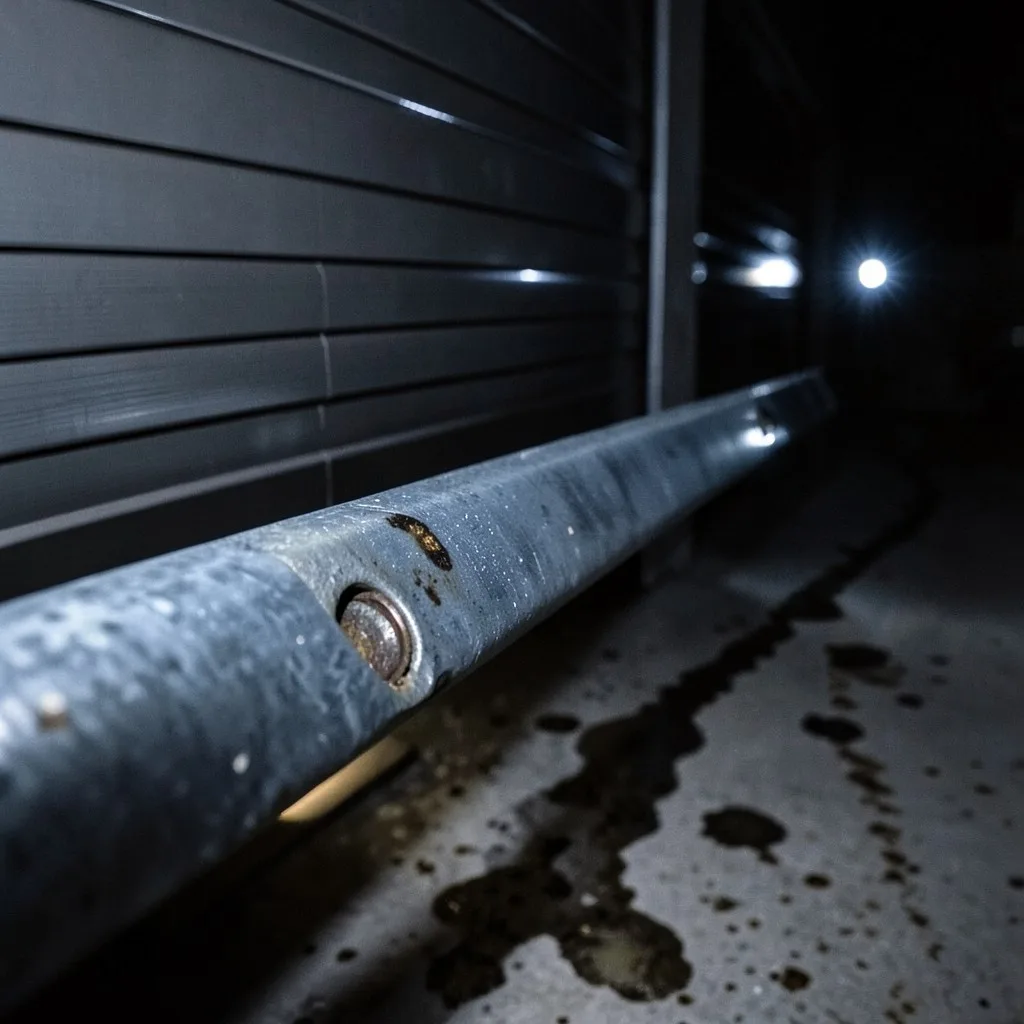
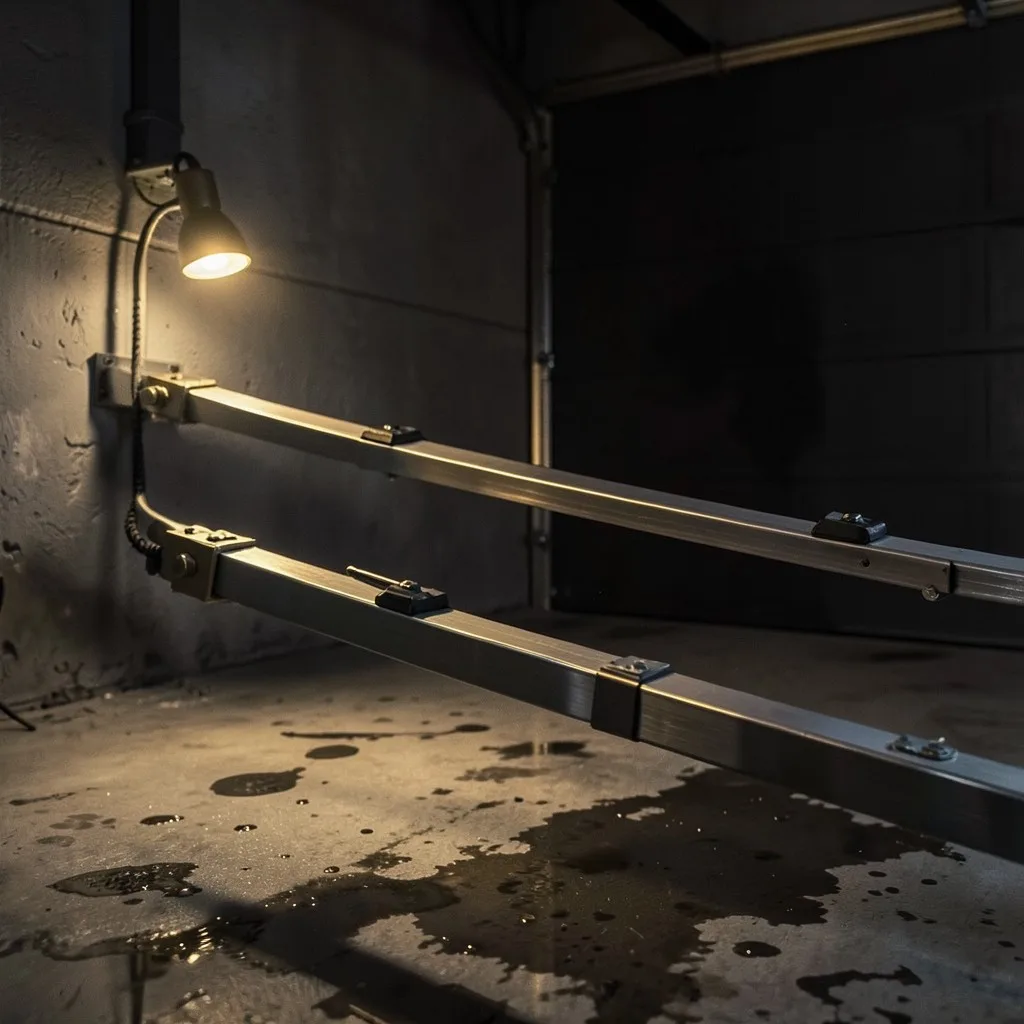
Minor lips and dents get dressed with proper forming tools; genuinely bent sections get replaced, and that is the better news than it sounds. Track is inexpensive roll-formed steel sold by the section — swapping a damaged run costs far less than the panel and roller damage a “straightened” kink causes over the following year. What matters more than the steel is the re-alignment: gauge, plumb and parallel re-set to the door, which is the measured part of the visit.
How long do garage door springs last in Rancho Palos Verdes?
Longer than most of the country: 10–13 years, because Los Angeles County’s 2,346 annual heating degree days impose almost no freeze-thaw stress. Springs here die of cycle count. At four openings a day a 10,000-cycle set runs about seven years; lighter use stretches toward the top of the range.
What garage door problems are most common in Rancho Palos Verdes homes?
With 85% of Rancho Palos Verdes homes built before 1980 and the 1960s the dominant era, original and second-generation hardware failures lead: fatigued springs, stretched cables, seized steel rollers, and openers due safety-generation upgrades. Whole-load-path inspections pay off in this cohort — parts age together.
Does CA law require a battery backup on my new garage door opener?
Yes. Under California’s SB-969 (Health & Safety Code §§ 19890-19892), any powered residential garage door opener sold or installed from July 1, 2019 onward must include battery backup capable of working the door when the grid is down. Selling or installing a non-compliant unit carries a four-figure civil penalty per opener — and a replacement door may not legally be connected to a non-compliant opener. For Rancho Palos Verdes homeowners this makes the opener question part of every door quote.
Do I need a permit for garage door work in Rancho Palos Verdes?
For repairs, generally no; for installation, often yes. Door installation is frequently permitted work in California: any change to the structural opening triggers a permit everywhere, and a number of cities permit even like-for-like replacements. The local building department's answer is the one that counts — confirm before the door is ordered. Component repair is different: Like-for-like component repair (springs, cables, rollers, opener swap) generally does not require a permit in most California jurisdictions. When in doubt, the Los Angeles County building department’s answer is the one that counts.
How does the call routing actually work?
One number, one hop: your call is routed to an independent, licensed garage door contractor serving Rancho Palos Verdes — selected by ZIP across the 1 covered code(s) here. This site does not perform work or take a cut of your bill; it is compensated by the network when a call connects. Booking decisions stay entirely yours.
What will I be asked when I call?
Four things move the call fastest: your ZIP, the door type (sectional or one-piece, single or double), the opener brand, and the symptom in a sentence. With those, dispatch can route to a contractor whose truck stock matches the likely failure — often turning a diagnostic visit into a same-visit repair.
How fast can a pro actually get there?
It depends on the day’s board: acute failures called in early often see a truck the same day in Los Angeles County, while planned work books days out. You will get the contractor’s honest window on the phone — and if nobody can fit the job, the call simply ends there, no obligation.


 DIAGNOSE