What does “duty cycle” mean on a commercial operator?
The operator’s rated frequency of use — how many cycles per hour, sustained, the motor and gearing are built for. A standard-duty operator on a high-traffic dock door overheats, trips breakers and fails early; the fix is matching the operator class to real traffic, not upsizing horsepower. Duty class is on the operator plate, and a repair visit should confirm it against how the door actually gets used — traffic counts change, and yesterday’s correct class quietly becomes today’s undersized one.
Why do rolling steel doors need specialist attention?
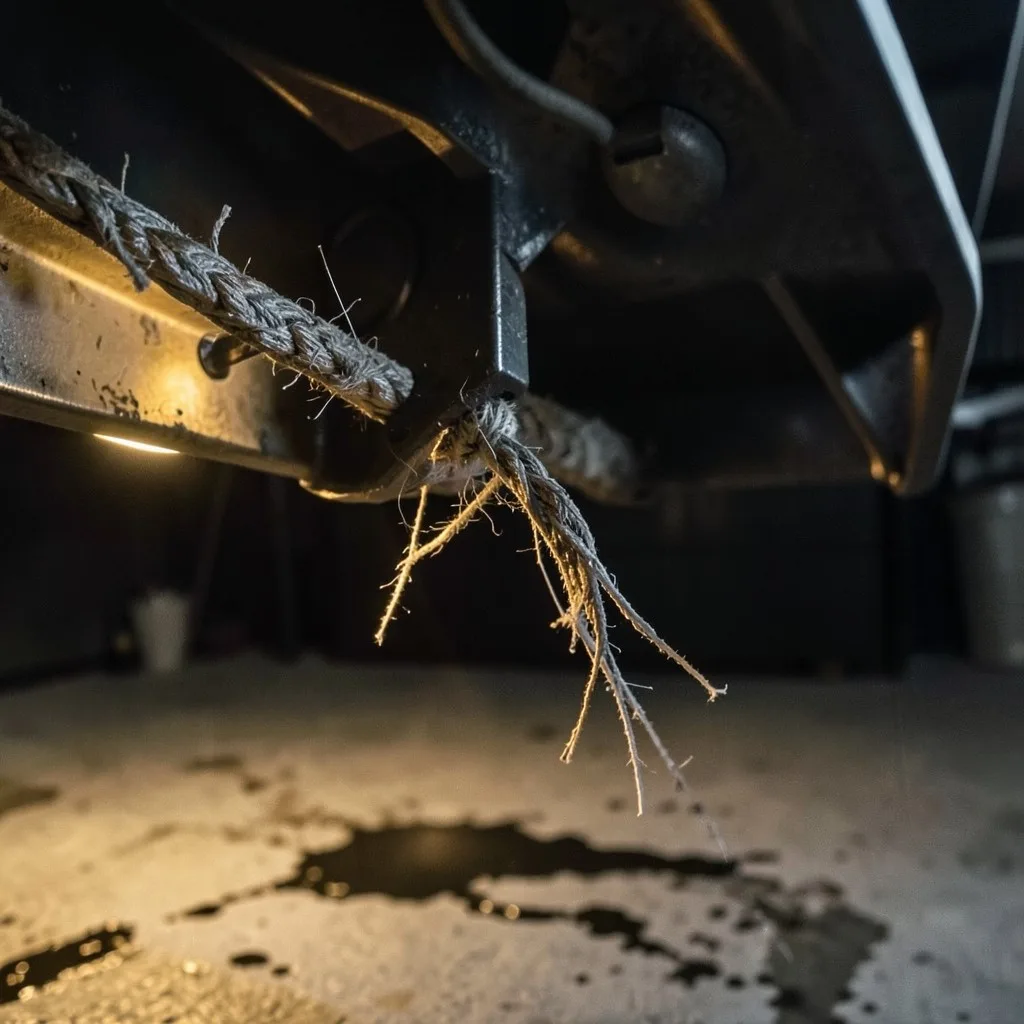
The failure modes are different in kind: barrel spring tension inside a coil housing, slat and endlock wear, guide alignment, and curtain balance interact in ways sectional-door experience does not cover. A telescoping curtain or uneven coil is feeding damage into every slat each cycle. Contractors routed for commercial calls work on coiling systems specifically — it is a distinct hardware family, not a bigger residential door.
Can worn commercial springs be upgraded rather than matched?
Yes, and on busy doors they should be: barrel and torsion assemblies come in cycle classes, and replacing spent 10,000-cycle hardware with 50,000- or 100,000-cycle equivalents is often a modest premium against the next failure’s downtime. The inspection report should state measured daily cycles so the class choice is arithmetic, not guesswork.
How is commercial door repair priced differently from residential?
By inspection and scope rather than flat symptom rates. Commercial systems vary enormously — duty class, curtain construction, operator type, cycle counts in the hundreds per day — so a credible contractor documents the system first: measured wear, cycle class of the springs or barrel, operator condition. The written scope then prices parts to specification. Phone-quoted flat rates on commercial doors are a reliability signal, and not a good one — the honest number does not exist until the system has been measured.
How long do garage door springs last in Rough And Ready?
Expect 8 to 10 years from a standard 10,000-cycle set — the bottom of the national range. Nevada County logs about 4,993 heating degree days a year, and hard winters both stiffen spring steel and concentrate failures into the cold months, with December the peak locally. Higher-cycle springs (15,000–25,000) stretch the window proportionally.
What garage door problems are most common in Rough And Ready homes?
The 1970s-era build wave dominates Rough And Ready, and its doors are on second or third spring sets: expect spring fatigue, drive-gear failures on aging openers, and roller wear. 47% of local homes predate 1980, which is why pros here check the whole system, not just the reported part.
Does CA law require a battery backup on my new garage door opener?
It does — across California, Rough And Ready included. SB-969 has required battery backup on every automatic residential opener sold or installed in the state since July 1, 2019, with a civil penalty per non-compliant unit (Health & Safety Code §§ 19890-19892). The law also blocks connecting a replacement door to a non-compliant opener, which is why installation quotes in Nevada County must address the opener even when only the door is changing.
Do I need a permit for garage door work in Rough And Ready?
It depends on the work. Expect the permit question on any California install: altering the opening is permitted work in every jurisdiction, and some cities extend the requirement to same-size swaps. A licensed contractor checks with the building department first rather than assuming. Like-for-like component repair (springs, cables, rollers, opener swap) generally does not require a permit in most California jurisdictions. The reliable answer comes from the Nevada County building authority — a licensed contractor confirms before ordering a door rather than assuming.
How does the call routing actually work?
This site is a referral service, not a contractor. The number routes your call through eLocal’s network to an independent licensed contractor covering Rough And Ready — matched on your ZIP and the work you describe. The call is free, you are never obligated to book, and the contractor you speak with is the business that would do the work.
What will I be asked when I call?
Have four answers ready and the call is short: where (ZIP), what (door type, single or double), which (opener brand), and how it is failing. Precision on the fourth answer is what loads the right parts — the difference between diagnosis day and repair day.
How fast can a pro actually get there?
Response windows are set by the contractor’s live board, not by marketing copy: acute failures get priority and often same-day response in Rough And Ready; planned work books like any trade visit. The honest window comes on the call — and declining it costs nothing.

 STOP & CALL