How often should a garage door be serviced?
Annually for a typical household door, twice-yearly at heavy use (six-plus cycles a day) or where winters are hard. The interval logic is fatigue-based: springs and cables wear by cycle count, and annual inspection catches drift about half a spring-life before failure. The homeowner’s monthly balance and reversal checks fill the gap between visits — neither replaces the other, and the two together cover the whole failure surface.
What lubricant is right — and what should never be used?
Garage-door-rated lithium or silicone products, applied to springs, hinges, roller bearings and the opener rail contact points. The wrong answer is general-purpose penetrating oil: it strips existing grease, attracts grit, and leaves parts drier than before within weeks. Tracks get cleaned, not lubricated — a greased track collects debris that seizes rollers.
Does maintenance actually extend spring life?
It extends system life and buys warning, which is the point. Spring fatigue itself is cycle-driven, but a balanced, lubricated door lowers peak torque on every lift — and the measured checks date the spring’s decline instead of letting it surprise you. The economic case is straightforward: the same replacement done as scheduled work versus as an emergency call, minus the collateral wear a failing spring inflicts on the opener meanwhile. The arithmetic favours the calendar every time.
What can homeowners maintain themselves safely?
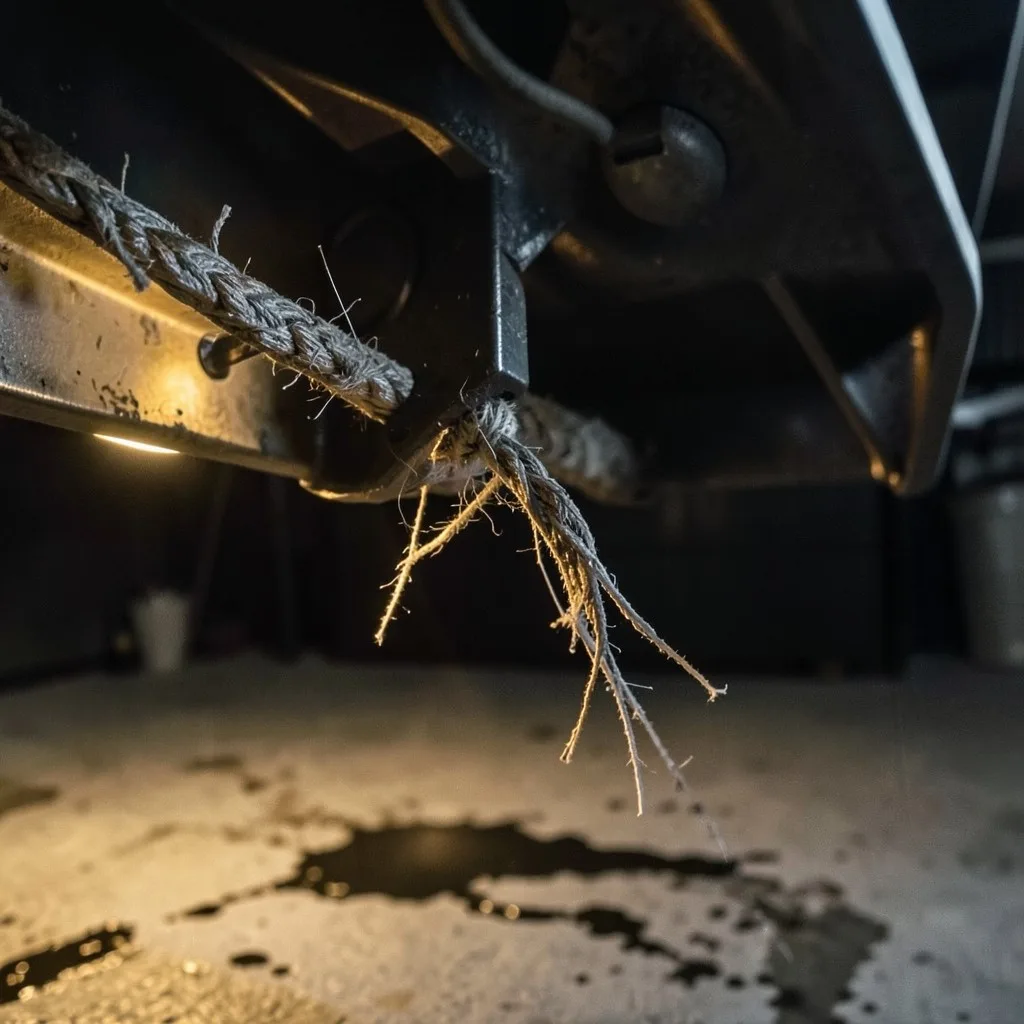
The observational and low-energy layer: monthly balance test (door down, release, half-lift), quarterly reversal test with a board under the door, photo-eye cleaning and alignment, hinge and roller lubrication with the correct product, and visual checks for cable fray and coil gaps. The line not to cross: anything touching spring tension, cable anchors or bottom brackets — that hardware is loaded even at rest.
How long do garage door springs last in Ryde?
Ryde’s mild climate is easy on spring steel: 10 to 13 years from a standard set is typical, the top of the national range. With only 2,404 heating degree days a year in Sacramento County, cycle count — not weather — is what retires springs here, so heavy daily use is the number to watch.
What garage door problems are most common in Ryde homes?
The 1970s-era build wave dominates Ryde, and its doors are on second or third spring sets: expect spring fatigue, drive-gear failures on aging openers, and roller wear. 49% of local homes predate 1980, which is why pros here check the whole system, not just the reported part.
Does CA law require a battery backup on my new garage door opener?
It does — across California, Ryde included. SB-969 has required battery backup on every automatic residential opener sold or installed in the state since July 1, 2019, with a civil penalty per non-compliant unit (Health & Safety Code §§ 19890-19892). The law also blocks connecting a replacement door to a non-compliant opener, which is why installation quotes in Sacramento County must address the opener even when only the door is changing.
Do I need a permit for garage door work in Ryde?
It depends on the work. Expect the permit question on any California install: altering the opening is permitted work in every jurisdiction, and some cities extend the requirement to same-size swaps. A licensed contractor checks with the building department first rather than assuming. Like-for-like component repair (springs, cables, rollers, opener swap) generally does not require a permit in most California jurisdictions. The reliable answer comes from the Sacramento County building authority — a licensed contractor confirms before ordering a door rather than assuming.
How does the call routing actually work?
Think of the number as a switchboard with one job: putting you on the phone with an independent licensed contractor who actually covers Ryde. This site publishes the local facts and takes a network referral fee when calls connect — the work, the pricing and the relationship are entirely between you and the contractor.
What will I be asked when I call?
Four things move the call fastest: your ZIP, the door type (sectional or one-piece, single or double), the opener brand, and the symptom in a sentence. With those, dispatch can route to a contractor whose truck stock matches the likely failure — often turning a diagnostic visit into a same-visit repair.
How fast can a pro actually get there?
It depends on the day’s board: acute failures called in early often see a truck the same day in Sacramento County, while planned work books days out. You will get the contractor’s honest window on the phone — and if nobody can fit the job, the call simply ends there, no obligation.


 DIAGNOSE