Skip to content
Garage Door Repair Line Nationwide Garage Door Dispatch (800) 555-0167
ZIP 91306 +1 · WINNETKA, CA

Garage Door Spring Repair in Winnetka, CA — Los Angeles County Pros

A broken torsion spring in Winnetka means the door is effectively dead weight — do not force it or pull the red release with the door up. A licensed Los Angeles County pro replaces both springs, matched to door weight, usually in one visit. Local spring life runs 10–13 years.

In Winnetka, 43% of the housing stock predates 1960 — hardware from that era fails differently than modern doors. One call here reaches a licensed local pro who works on both.

// LOCAL READOUT

// HAVE READY WHEN YOU CALL

Is your spring near the end of its life in Winnetka?

The dial below is Winnetka specific — rated cycles, real household usage, and the Los Angeles County climate load, combined into the band local doors actually achieve. Check it against your door age before anything fails.

10–13 yrs typical spring life · Winnetka

// THE CYCLE GAUGE · WINNETKA

The dial reads cycles, not birthdays: 10,000 is the standard rating, and four openings a day spends about 1,460 a year. Factor in the mild climate over Los Angeles County (2,346 degree days/yr) and local sets realistically deliver 10–13 years — with the failure count peaking each December. Past the bright arc at ~72% of rating, breakage risk climbs steeply.

What does compliant garage door work look like in Los Angeles County?

Three rules shape this work in Winnetka: state opener law, contractor licensing, and the local permit line. Each is verifiable at the cited source — and each is something a routed contractor should answer without being asked.

Residential garage door exterior at dusk

SB-969 battery-backup law

California's SB-969 took effect on July 1, 2019: no automatic residential opener may be sold or installed in California without battery backup that keeps the door operable when the electricity fails. Each non-compliant unit sold or installed exposes the seller to a four-figure civil penalty (§ 19892) — and the statute also bars connecting a new door to an opener that fails the requirement.

Contractor licensing

California licenses garage door work under the CSLB D-28 'Doors, Gates and Activating Devices' limited specialty classification. Any job above the state's minor-work exemption threshold requires a CSLB-licensed contractor — and nearly every spring, opener or door replacement clears that threshold.

Permits in Los Angeles County

Expect the permit question on any California install: altering the opening is permitted work in every jurisdiction, and some cities extend the requirement to same-size swaps. A licensed contractor checks with the building department first rather than assuming. Like-for-like component repair (springs, cables, rollers, opener swap) generally does not require a permit in most California jurisdictions.

Wildfire-zone construction

California maps Fire Hazard Severity Zones, and inside them the wildland-urban interface building standards govern exterior assemblies — garage doors included — for ember and flame resistance. If the address sits in a mapped zone, the replacement door's materials should be confirmed against the WUI listing.

Wind rating

California's baseline wind design sits at roughly 91-96 mph ultimate (ASCE 7, Risk Category II), with the exception of mapped Special Wind Regions along mountains and passes, where jurisdictions may impose higher door ratings.

What is your garage door symptom telling you?

Doors telegraph their failures. The table below maps the common Winnetka symptoms to root causes, so you can describe the fault precisely when you call.

Separated torsion spring coils on the shaft STOP & CALL

Visible gap in the spring coil above the door

That gap is the break. A torsion spring parts at its weakest coil and the two halves spring apart on the shaft — visible as a clean two-inch separation. The door should be treated as unliftable until the pair is replaced and wound to the door’s measured weight.

Cable drum with wraps jumped out of their grooves BOOK SOON

Door feels heavy on manual lift

Springs losing torque short of outright failure. A balanced door holds at half height and lifts with one hand; one that fights you is running on tired springs. In Los Angeles County, the 10–13 year window is when this shows — the useful moment to replace on schedule.

Unlit opener motor head hanging from its rail DIAGNOSE

Remote range has collapsed to a few feet

Interference or a dying receiver: LED bulb ballast noise inside the opener head is the modern classic, alongside a weak remote battery or an antenna wire tucked out of position. Swapping the bulb and battery first is legitimate self-diagnosis before a service call.

Frost on a steel garage door track and roller DIAGNOSE

New noises in cold weather

Cold mornings raise the effort budget: steel stiffens, grease thickens, and every marginal bearing becomes audible under the extra draw. Treat December squeaks as scheduling advice — the 2,346 degree-day season is exactly when marginal hardware stops being marginal.

Roller hanging out of a bent track, panel edge dropped STOP & CALL

Loud bang from the garage, door now immovable

That crack was stored torque escaping: a fatigued coil parting at its weakest point. Whatever lifted the panels a minute ago no longer exists, so nothing — motor included — should be asked to raise them. Around Winnetka, sets give out near the 10–13 year mark, December being the cruellest stretch.

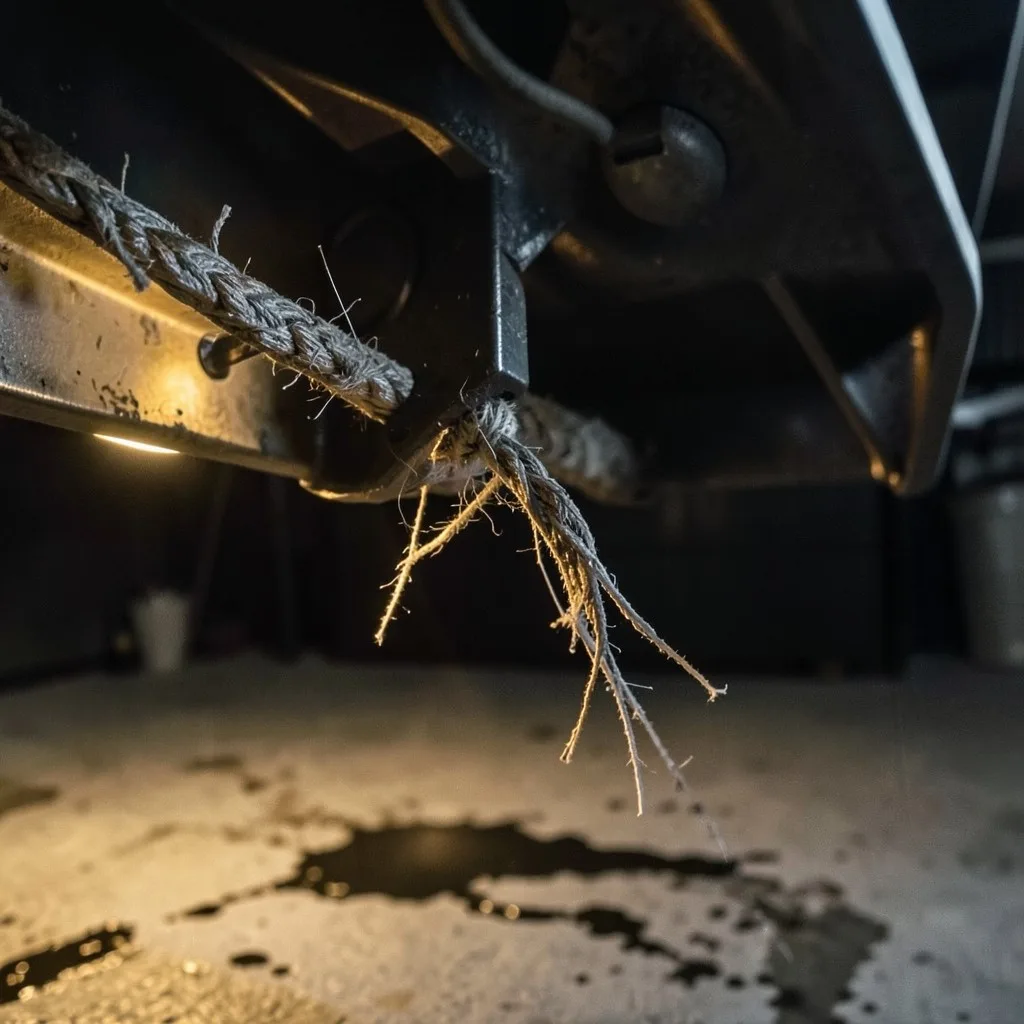
Frayed lift cable at a bottom bracket, strands splaying BOOK SOON

Starts to rise, quits a few inches up, backs down

Two suspects: a failing spring making the door heavier than the opener’s force setting allows, or travel/force calibration drift. The tell is the manual test — if the door is hard to lift by hand, the springs are the issue and the opener is protecting itself.

Garage door remote with a worn button on a workbench DIAGNOSE

Door works by remote but not the wall button (or vice versa)

A one-sided failure is good news: the operating side proves the motor, logic and drive are healthy. Chase the dead side instead — stapled low-voltage runs behind drywall for buttons, pairing memory and receiver health for remotes. Meter work, brief and inexpensive.

Nylon gear shavings dusted over an opener housing BOOK SOON

Opener runs but the door does not move

Listen closer: humming with a stationary curtain of panels points at a sacrificial nylon gear that surrendered — by design — to protect the motor windings. Shavings collect inside the cover as evidence. A bench swap restores drive; weighing the door explains why it happened.

Photo-eye safety sensor with indicator lamp glowing DIAGNOSE

Door closes, then immediately reopens

Reversal logic firing: misaligned or obstructed photo eyes, or a closing-force limit set too low for a door that has stiffened. Check the small lights on both eye sensors first — a steady pair means aligned, a blinking one means the beam is broken or drifted.

Found your symptom? End it today.

Every hour a spring-dead door sits is an hour of the garage held hostage. Routing takes a minute; a licensed Los Angeles County pro takes the rest. Free to call, free to decline — if no Los Angeles County pro fits your window, you owe nothing.

Call (800) 555-0167

What happens after you call about spring repair in Winnetka?

The job runs in a fixed order for safety reasons. This is what each stage involves, and why it exists.

The call goes out

The dispatcher confirms your ZIP, what the door is doing, and whether a vehicle is trapped. A licensed local contractor is matched from the Los Angeles County coverage roster, and the details you give — door width, single or double, opener brand — travel with the ticket, so the crew arrives stocked for the likely failure rather than making a second trip.

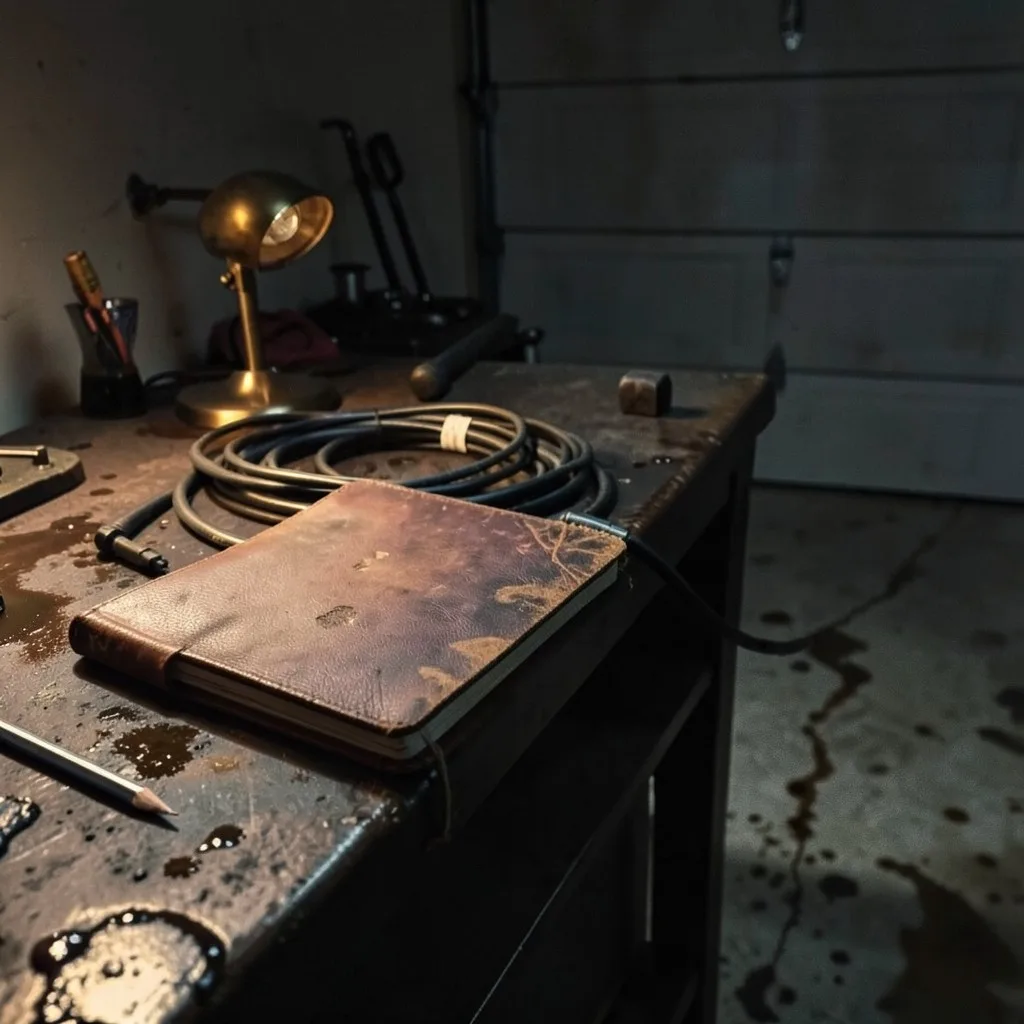
Work journal and pencil on a garage workbench

The door is made safe

Step one at the door is containment: lock the shaft, isolate the opener, clamp the tracks. The failed component decided how dangerous the door is — a snapped spring means full weight unsupported; a frayed cable means the second cable is carrying double load and may follow. The crew removes stored energy from the system before touching anything else.

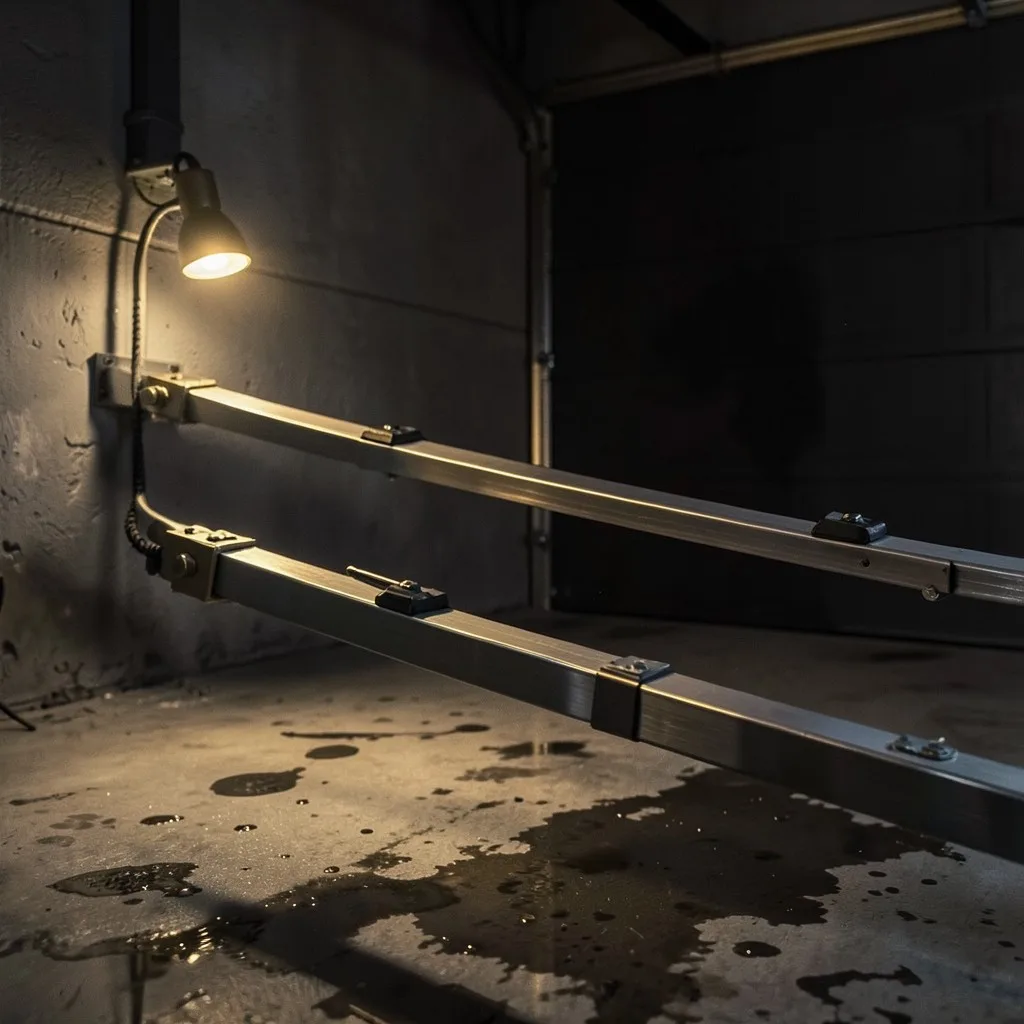
Clamps and winding bar securing a garage door system

Repair and re-tension

Replacement follows measurement, not habit: the crew weighs or calculates the door, matches spring wire and length to that number, and winds to torque with proper bars. Cables, drums and bottom fixtures get inspected under the same visit — the 10–13 year local clock applies to all of it.

New torsion spring aligned on the shaft

Balance test and handback

The proof is the dead-man test: with the opener disconnected, a balanced door should hold still at half height and lift with one hand. The crew runs it, then reconnects the opener, resets travel limits and force settings, and runs the photo-eye reversal test. You get the old parts on request and a straight answer on what else in the load path is close to its limit.

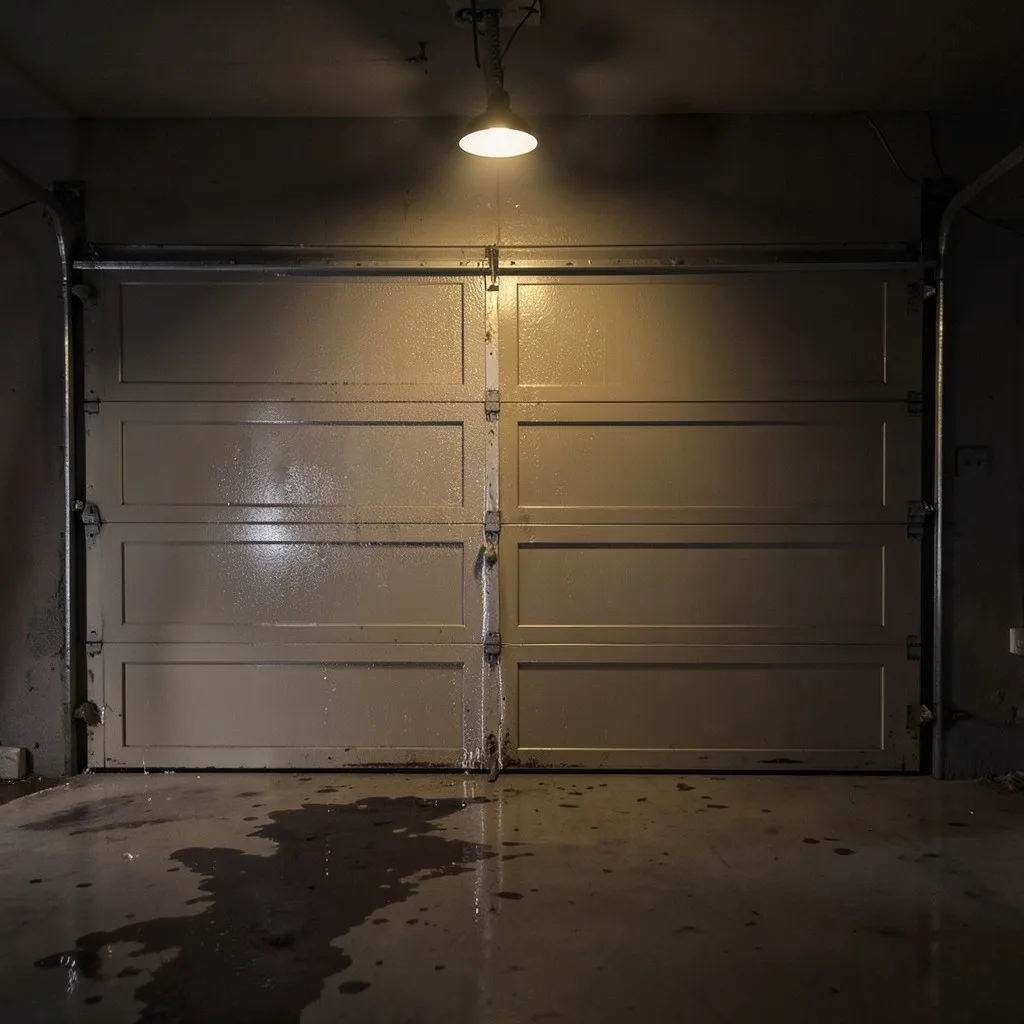
Sectional door balanced at half height

What can you touch safely on this system — and what never?

Garage doors injure thousands of people a year, almost always at the same two components. These are the checks you can do and the ones you must not.

SAFE — DO Lay a 2x4 flat where the door lands and send it down. Contact must produce an immediate retreat — anything less means the entrapment logic has failed and the opener should stay unplugged until a pro resets it.
SAFE — DO Test balance monthly: pull the release with the door DOWN, lift halfway, let go. A balanced door stays put; a heavy one has fading springs.
SAFE — DO Keep the photo eyes clean and aligned — both sensor lights steady, lenses wiped, brackets uncrushed by bikes and bins. It is the one safety component made for homeowner care.
PRO-ONLY — DO NOT Stop using the opener the moment the door racks, jams or hangs crooked. Openers are strong enough to destroy the door they cannot lift.
PRO-ONLY — DO NOT Do not pull the emergency release with the door open — a spring-dead door will free-fall. Release only with the door fully closed.
PRO-ONLY — DO NOT Leave the cables and bottom brackets alone. Both are loaded by the springs even when the door looks at rest; removing the wrong bolt releases that load into the room.

When do garage doors fail in Winnetka?

The local climate writes a failure calendar for every door in Los Angeles County. Here is what it says.

Frost crystals on a torsion spring in a cold garage

Dec – Feb

Cool season

The gentle local winter still concentrates wear: December carries the highest heating load of the year, and tired springs feel it first.

Meltwater droplets on a garage door track in spring light

Mar – May

Spring

Track and roller season: winter’s accumulated drift shows up as noise and bind once doors start cycling more. The cheapest month to book the inspection the winter earned.

Opener motor head in warm dusty summer light

Jun – Aug

Summer

Heat is electronics season: opener logic boards and photo eyes fail more in hot garages, and sun angle glare starts tripping sensors on west-facing openings.

Garage at autumn dusk with toolbox staged for a tune-up

Sep – Nov

Fall

The maintenance window. Servicing before the December load peak is how Los Angeles County doors skip the emergency-call season entirely.

Which factors move a spring repair quote up or down?

No prices on this page by design — this line routes calls, it does not sell work. What follows is what actually moves the number a local pro will quote.

Which component failed

Springs, openers, cables, panels and track all carry different parts-and-labour weights — the symptom decides the band before anyone quotes.

Door size and weight

Weight drives spec: heavier doors take higher-torque springs and longer install time. Measured weight, not door width alone, is what a pro specs from.

Cycle rating of replacement springs

A 10,000-cycle spring and a 25,000-cycle spring are different products. In this climate the upgrade question is worth asking — insist the quote names the rating.

Access and condition

Neglect compounds the bill: seized fasteners add labour hours, a bent rail adds parts, and improvised past fixes add undoing time. The system’s arrival condition is priced in whether the invoice itemises it or not.

Which verifications protect you from the bait-and-switch vans?

A few minutes of verification separates the licensed trade from the toll-free vans. Run every contractor — routed or not — through this list.

The cycle-rating question

One question separates parts-savvy pros from van stock: “what cycle rating are these springs?” Insist the answer — and the rating — appears on the invoice.

Written scope before work

Authorise nothing verbal. The classic complaint-board sequence is a friendly phone figure, a grim on-site discovery, and a tripled invoice — a written scope with parts and ratings breaks the sequence before it starts.

Licence — verify it, don’t ask about it

Two minutes on the CA board site turns a claim into a record: classification, status, bond history. Do it before anyone climbs a ladder — the lookup is public precisely because this trade attracts pretenders.

Insurance and workers’ comp

Ask for the certificate of insurance naming general liability and workers’ comp. An uninsured crew on your property is your liability the moment a spring job goes wrong.

Red flags that end the visit

Immediate full-door replacement pressure on a repairable fault, refusal to state spring ratings, cash-only pricing, no licence number on the vehicle or invoice — any one of these is reason to stop.

Garage Door Spring Repair in Winnetka — the questions that matter

Why did the spring break in cold weather?

Steel loses ductility as temperature drops, and micro-cracks that were stable all summer propagate under cold-morning load. Meanwhile thickened lubricant and stiffer hardware raise the torque demand on every lift. The combination makes the first sustained cold snap the classic spring-failure window — a pattern visible in service data everywhere winters are real, and the reason pre-winter inspections exist.

What is the difference between torsion and extension springs?

Torsion springs mount on a shaft above the door and counterbalance by twisting; extension springs stretch along the horizontal tracks and counterbalance by extending. Torsion is the modern standard — smoother, longer-lived, and contained on its shaft when it breaks. Extension systems, common on older and lighter doors, require safety cables threaded through each spring so a failure doesn’t whip hardware across the garage. Conversions from extension to torsion are a routine upgrade during replacement.

Can a garage door with a broken spring be opened at all?

Physically yes, safely no. The spring exists because the door itself can weigh 150–300 pounds; with the counterbalance gone, that full weight is on whatever lifts it. Two adults can raise a spring-dead door in a genuine emergency — car trapped, medical need — using rigid props and never body parts under the door. Outside an emergency, wait for the pro: the off-balance lift is how tracks bend and hands get caught.

What does a torsion spring’s cycle rating actually mean?

One cycle is one full open-and-close. Standard residential springs are rated 10,000 cycles; upgrades run 15,000 to 25,000 and beyond. The rating is a fatigue-life estimate for the wire at its working torque — not a warranty, but a good actuarial figure. At four cycles a day, 10,000 cycles is roughly seven years of service. Any quote for spring replacement should state the rating; the difference between tiers is modest against the labour cost of the visit.

How long do garage door springs last in Winnetka?

Longer than most of the country: 10–13 years, because Los Angeles County’s 2,346 annual heating degree days impose almost no freeze-thaw stress. Springs here die of cycle count. At four openings a day a 10,000-cycle set runs about seven years; lighter use stretches toward the top of the range.

What garage door problems are most common in Winnetka homes?

Age-related structural wear leads: 43% of Winnetka housing predates 1960, so calls skew to worn tracks, obsolete one-piece and early sectional hardware, and openers several safety-generations old. Any opener without photo eyes fails the post-1993 federal safety bar and belongs in the replacement column regardless of whether it runs.

Does CA law require a battery backup on my new garage door opener?

Yes. Under California’s SB-969 (Health & Safety Code §§ 19890-19892), any powered residential garage door opener sold or installed from July 1, 2019 onward must include battery backup capable of working the door when the grid is down. Selling or installing a non-compliant unit carries a four-figure civil penalty per opener — and a replacement door may not legally be connected to a non-compliant opener. For Winnetka homeowners this makes the opener question part of every door quote.

Do I need a permit for garage door work in Winnetka?

For repairs, generally no; for installation, often yes. Expect the permit question on any California install: altering the opening is permitted work in every jurisdiction, and some cities extend the requirement to same-size swaps. A licensed contractor checks with the building department first rather than assuming. Component repair is different: Like-for-like component repair (springs, cables, rollers, opener swap) generally does not require a permit in most California jurisdictions. When in doubt, the Los Angeles County building department’s answer is the one that counts.

How does the call routing actually work?

This site is a referral service, not a contractor. The number routes your call through eLocal’s network to an independent licensed contractor covering Winnetka — matched on your ZIP and the work you describe. The call is free, you are never obligated to book, and the contractor you speak with is the business that would do the work.

What will I be asked when I call?

Expect the practical minimum: ZIP code, what kind of door, what it is doing, and when someone can look at it. The more precisely you can name the symptom — “bang, then dead weight” beats “broken” — the better the parts loadout that arrives in Winnetka.

How fast can a pro actually get there?

Same-day dispatch is common in Winnetka for morning calls on acute failures — stuck doors and snapped springs get priority. Scheduled work (installs, maintenance, commercial scopes) books by appointment. The routed contractor quotes their real window on the call; nothing here promises times the local schedule cannot keep.


Where else does this coverage reach?

If the diagnosis above did not match your symptom, the related pages below cover the other failure modes seen across Los Angeles County.

// BEFORE YOU DIAL

The routing line will confirm your ZIP, the door type, and two workable time windows — have all three ready and the call runs under three minutes.