Why is downtime the number that matters on commercial doors?
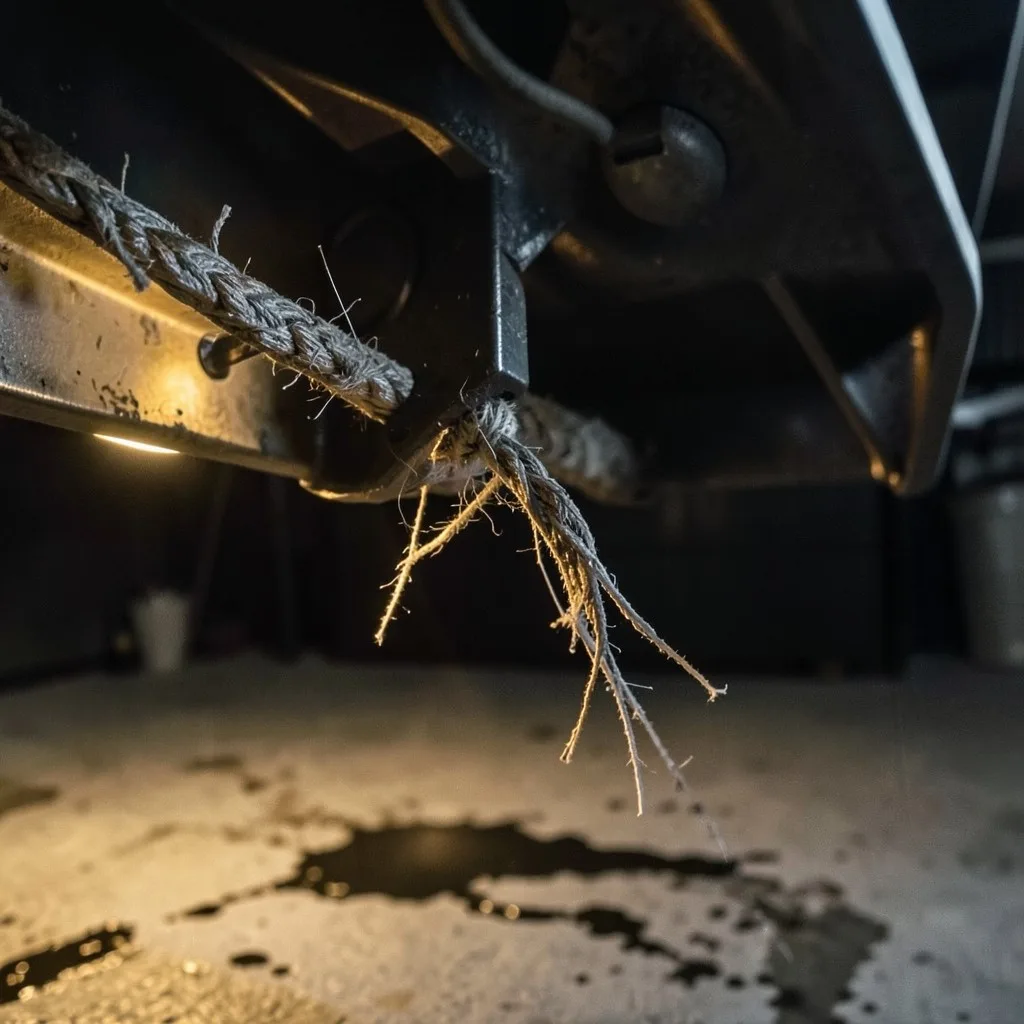
Because the door is usually standing between a business and its revenue: trucks that cannot dock, bays that cannot open, inventory that cannot move. Against that, parts pricing is noise. It is why commercial work is inspection-led and scheduled tight, why make-safe measures exist for lead-time gaps, and why high-cycle hardware — pricier per part — usually wins the total-cost argument on busy openings.
What does a fire door drop test involve?
A certified technician releases the door on its fusible-link mechanism, verifies controlled descent at the rated speed, then resets and re-certifies the assembly. Where rolling fire doors protect rated openings, the periodic drop test is a code obligation with paper behind it — NFPA 80 requires documented testing — and an untested fire door is a finding waiting for an inspection. It is specialist work; routing sends it to contractors who carry the certification.
Can worn commercial springs be upgraded rather than matched?
Yes, and on busy doors they should be: barrel and torsion assemblies come in cycle classes, and replacing spent 10,000-cycle hardware with 50,000- or 100,000-cycle equivalents is often a modest premium against the next failure’s downtime. The inspection report should state measured daily cycles so the class choice is arithmetic, not guesswork.
How is commercial door repair priced differently from residential?
By inspection and scope rather than flat symptom rates. Commercial systems vary enormously — duty class, curtain construction, operator type, cycle counts in the hundreds per day — so a credible contractor documents the system first: measured wear, cycle class of the springs or barrel, operator condition. The written scope then prices parts to specification. Phone-quoted flat rates on commercial doors are a reliability signal, and not a good one — the honest number does not exist until the system has been measured.
How long do garage door springs last in Mansfield?
Expect 8 to 10 years from a standard 10,000-cycle set — the bottom of the national range. Bristol County logs about 5,691 heating degree days a year, and hard winters both stiffen spring steel and concentrate failures into the cold months, with January the peak locally. Higher-cycle springs (15,000–25,000) stretch the window proportionally.
What garage door problems are most common in Mansfield homes?
In a stock where 47% of homes predate 1960, the classic Mansfield call is legacy hardware: tilt-up doors on jamb hardware, extension springs without safety cables, and pre-photo-eye openers. Modernisation — not just repair — is the recurring theme in Bristol County’s older neighbourhoods.
What protections does MA law give me when I hire a garage door contractor?
Massachusetts backs Mansfield homeowners with MGL c.142A: contractor registration requirements, written-contract formalities on jobs above the statutory threshold, state-run arbitration for disputes, and a Guaranty Fund paying provable losses into five figures — all conditioned on one thing, the contractor being HIC-registered when the contract was signed. It is the single strongest reason the registry check comes before the deposit in Bristol County.
Do I need a permit for garage door work in Mansfield?
It depends on the work. Garage door replacement in Massachusetts commonly requires a building permit under the state code (780 CMR) — always when the structural opening changes, and many municipal building departments permit like-size replacements as well. The local inspector of buildings is the deciding voice; a registered contractor confirms before ordering the door. Routine garage door repair in Massachusetts (spring pairs, cables, opener parts) typically needs no permit under the state code's ordinary-repairs provisions. Structural work is the boundary — alter the opening and the job crosses into permitted territory with inspection to follow. The reliable answer comes from the Bristol County building authority — a licensed contractor confirms before ordering a door rather than assuming.
How does the call routing actually work?
Think of the number as a switchboard with one job: putting you on the phone with an independent licensed contractor who actually covers Mansfield. This site publishes the local facts and takes a network referral fee when calls connect — the work, the pricing and the relationship are entirely between you and the contractor.
What will I be asked when I call?
Four things move the call fastest: your ZIP, the door type (sectional or one-piece, single or double), the opener brand, and the symptom in a sentence. With those, dispatch can route to a contractor whose truck stock matches the likely failure — often turning a diagnostic visit into a same-visit repair.
How fast can a pro actually get there?
It depends on the day’s board: acute failures called in early often see a truck the same day in Bristol County, while planned work books days out. You will get the contractor’s honest window on the phone — and if nobody can fit the job, the call simply ends there, no obligation.

 STOP & CALL