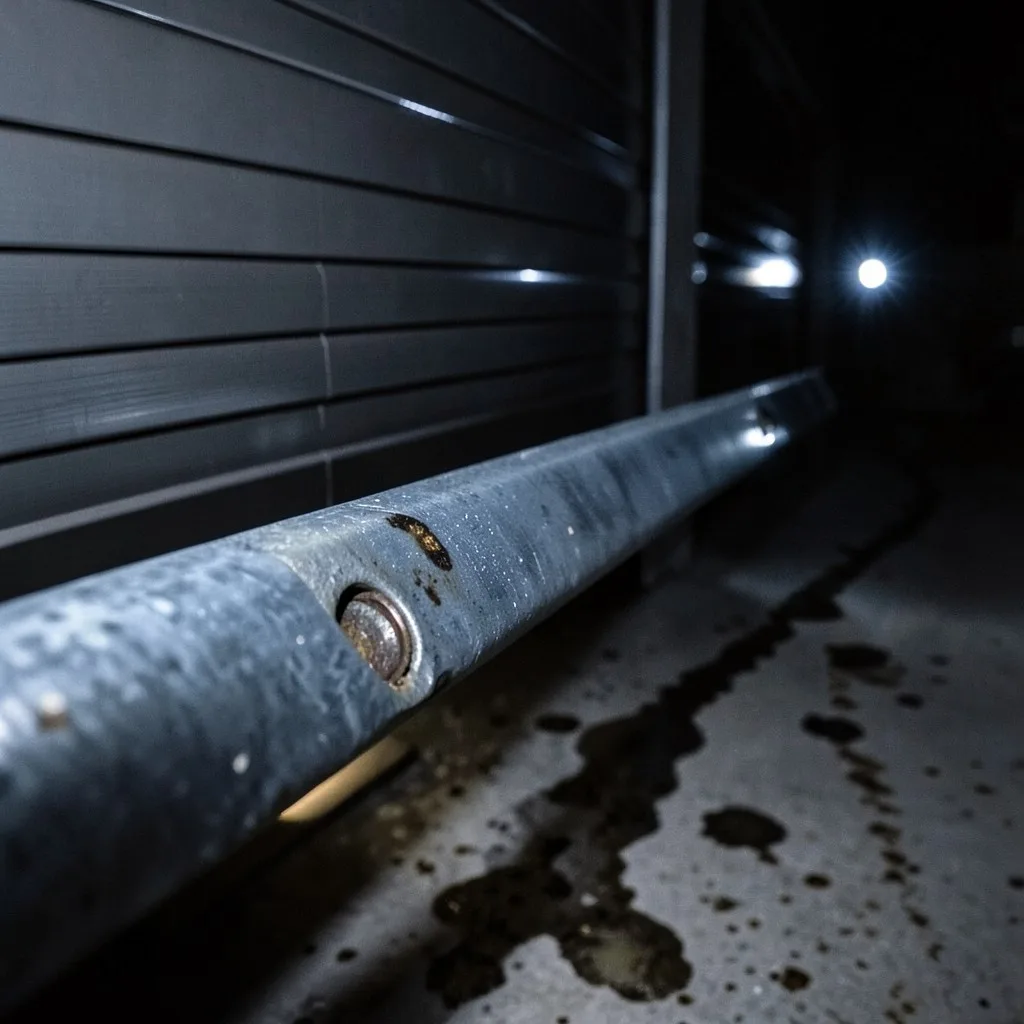
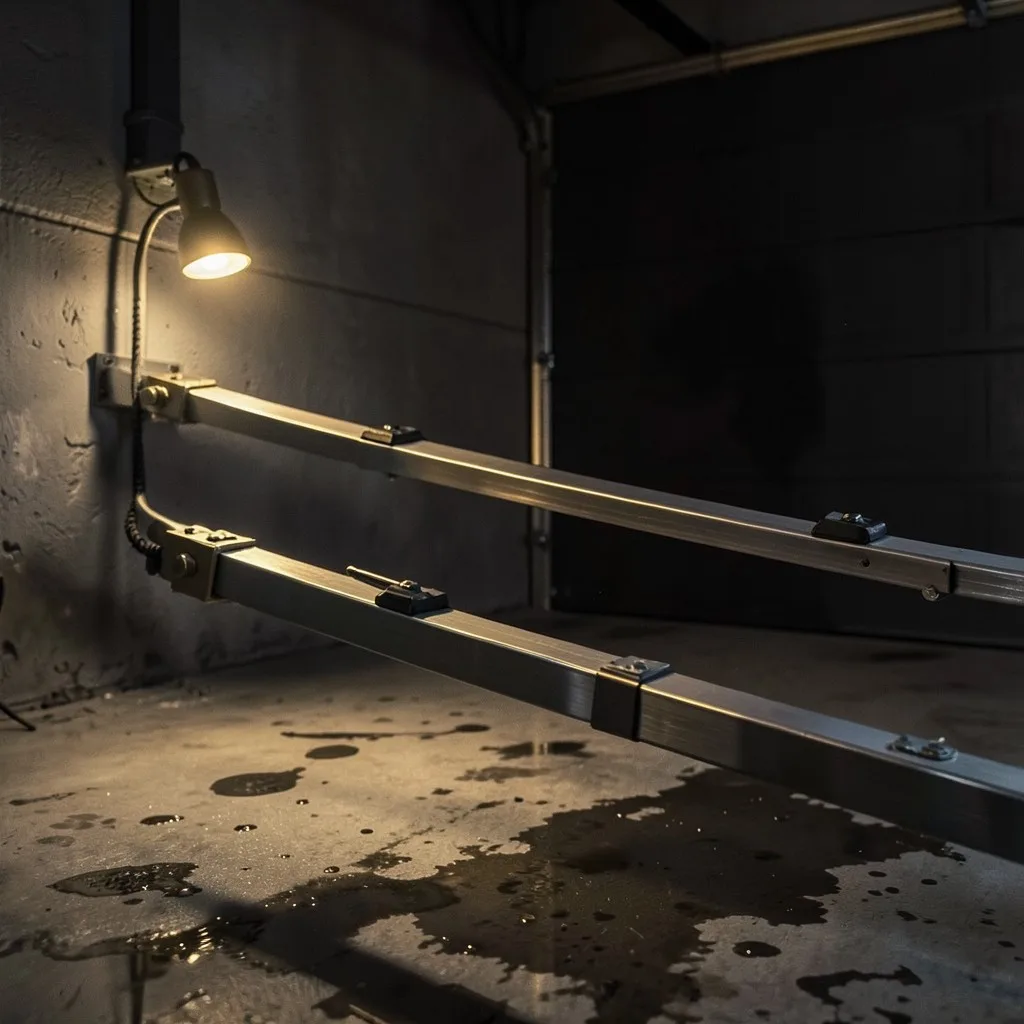
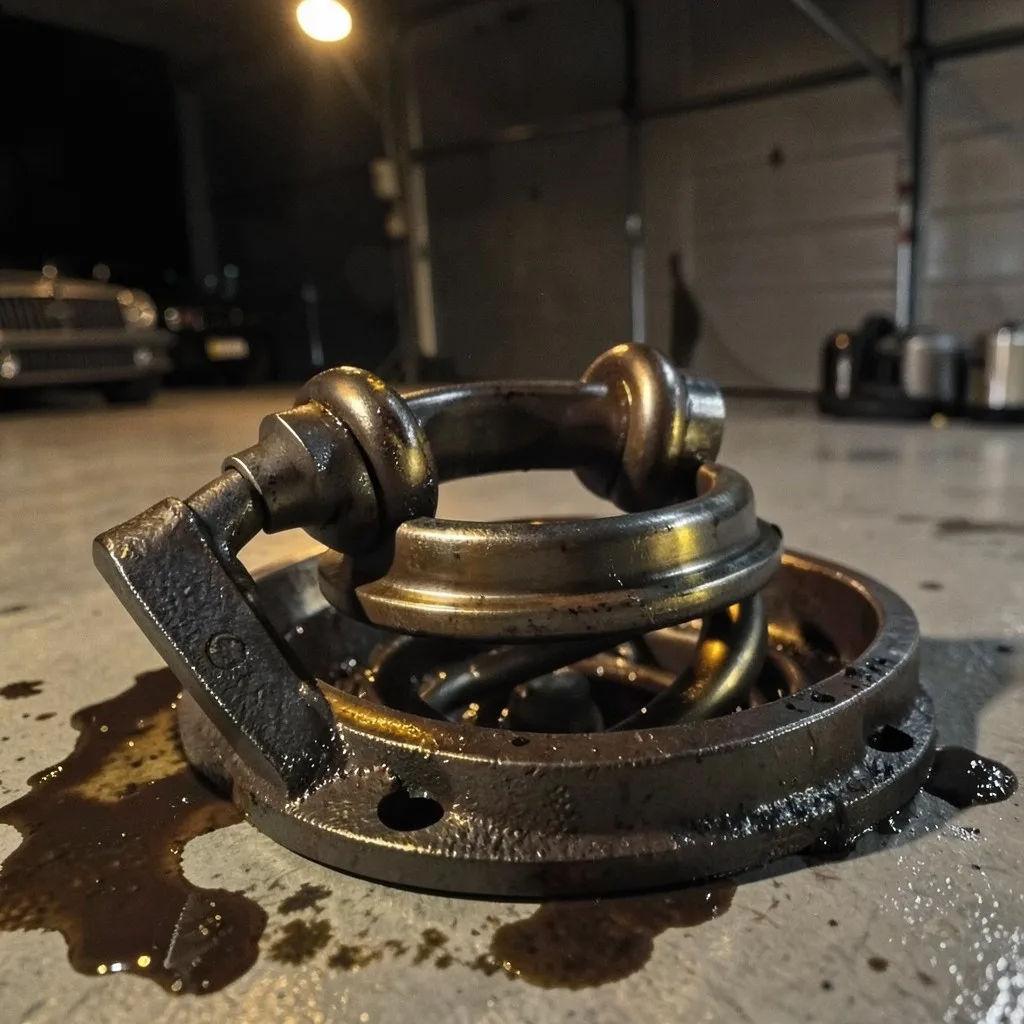
Can bent track be straightened, or does it need replacement?
Minor lips and dents get dressed with proper forming tools; genuinely bent sections get replaced, and that is the better news than it sounds. Track is inexpensive roll-formed steel sold by the section — swapping a damaged run costs far less than the panel and roller damage a “straightened” kink causes over the following year. What matters more than the steel is the re-alignment: gauge, plumb and parallel re-set to the door, which is the measured part of the visit.
The car hit the door — is that an off-track repair or something bigger?
It is an inspection first, because impact damage travels. The visible fault may be a jumped roller or creased rail, but the force went through panels into hinges, rollers, track anchors and sometimes the jamb framing — a door that folded around a bumper often has damage two components away from the dent. A proper assessment prices the honest scope before any re-seat: sometimes it is an hour of track work, sometimes the impact wrote off a panel, and pretending otherwise just phases the discovery.
How long does an off-track recovery actually take?
A clean jump — rollers out, track sound, cause identified — re-seats in one to two hours including the cause correction and the balance test afterward. Add time when the event bent track sections (swap and re-gauge), damaged rollers (replace the set, not the one), or ran under power long enough to crease a panel edge. The one version that never happens fast is the door that kept being cycled after the jump; every extra command adds a line to the scope.
Will the door be weaker after it has jumped the track once?
Not if the recovery was done as a system. Steel rails re-gauged to spec, sound anchors, fresh rollers where the old ones contributed, and a verified balance leave the door mechanically indistinguishable from before the event. What creates repeat offenders is partial recovery: the roller pushed back into a rail that is still spread, the cause never named. Ask the tech what caused the jump — a confident answer is the difference between a repair and a rehearsal.
How long do garage door springs last in North Weymouth?
Expect 8 to 10 years from a standard 10,000-cycle set — the bottom of the national range. Norfolk County logs about 5,935 heating degree days a year, and hard winters both stiffen spring steel and concentrate failures into the cold months, with January the peak locally. Higher-cycle springs (15,000–25,000) stretch the window proportionally.
What garage door problems are most common in North Weymouth homes?
In a stock where 46% of homes predate 1960, the classic North Weymouth call is legacy hardware: tilt-up doors on jamb hardware, extension springs without safety cables, and pre-photo-eye openers. Modernisation — not just repair — is the recurring theme in Norfolk County’s older neighbourhoods.
What protections does MA law give me when I hire a garage door contractor?
Massachusetts backs North Weymouth homeowners with MGL c.142A: contractor registration requirements, written-contract formalities on jobs above the statutory threshold, state-run arbitration for disputes, and a Guaranty Fund paying provable losses into five figures — all conditioned on one thing, the contractor being HIC-registered when the contract was signed. It is the single strongest reason the registry check comes before the deposit in Norfolk County.
Do I need a permit for garage door work in North Weymouth?
It depends on the work. Under 780 CMR, Massachusetts building permits attach to door replacement in most municipalities — without exception when framing or the opening changes, and frequently for straight swaps too. Practice varies town by town, so the building department's answer, obtained before the order, is part of a competent quote. Like-for-like component repairs — springs, cables, rollers, opener service — generally fall under the ordinary-repairs allowance of the Massachusetts code and proceed without a permit. The line is structure: once the opening, header or framing is touched, 780 CMR permitting applies. The reliable answer comes from the Norfolk County building authority — a licensed contractor confirms before ordering a door rather than assuming.
How does the call routing actually work?
Think of the number as a switchboard with one job: putting you on the phone with an independent licensed contractor who actually covers North Weymouth. This site publishes the local facts and takes a network referral fee when calls connect — the work, the pricing and the relationship are entirely between you and the contractor.
What will I be asked when I call?
Expect the practical minimum: ZIP code, what kind of door, what it is doing, and when someone can look at it. The more precisely you can name the symptom — “bang, then dead weight” beats “broken” — the better the parts loadout that arrives in North Weymouth.
How fast can a pro actually get there?
Response windows are set by the contractor’s live board, not by marketing copy: acute failures get priority and often same-day response in North Weymouth; planned work books like any trade visit. The honest window comes on the call — and declining it costs nothing.


 DIAGNOSE