What is R-value and does it matter on a garage door?
R-value measures insulation resistance — higher means less heat transfer through the panels. It matters in proportion to what is behind and above the garage: a conditioned room over the garage or a workshop behind it makes double-digit R-value worthwhile; a detached shell garage does not. Insulated doors are also stiffer and quieter, which is why the spec question deserves a real answer rather than a default.
Should the opener be replaced with the door?
Not automatically, but the install visit is the cheapest moment to do it. The decision hinges on the opener’s age and safety compliance: pre-1993 units without photo eyes should go regardless, and older units may lack the force capacity for a heavier insulated replacement door. A healthy, compliant opener carries over — a competent installer tests it against the new door’s weight rather than quoting a bundle reflexively.
The door has two springs and only one broke — what now?
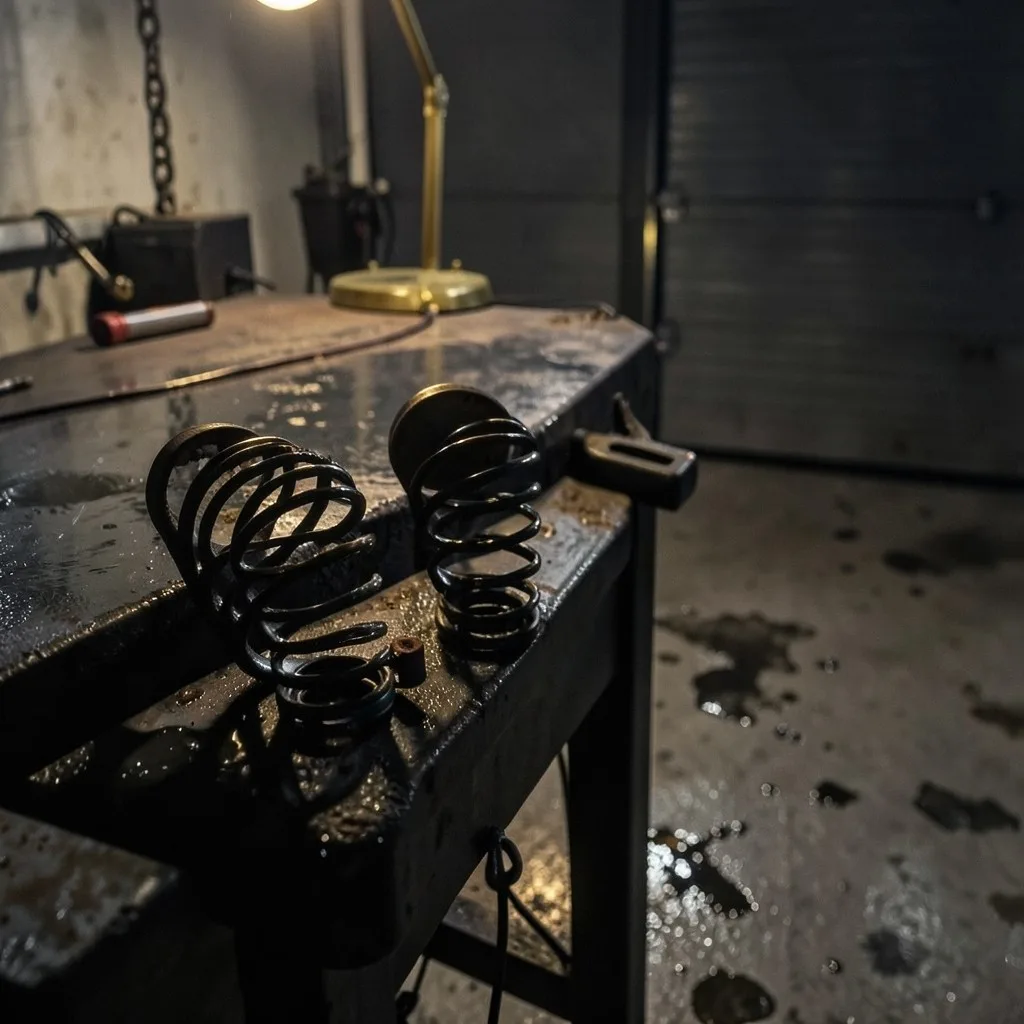
Both get replaced, and it is not an upsell. Springs on the same shaft have identical cycle histories: the survivor is as fatigued as the one that failed, and mixing a new spring with a spent one unbalances the winding across the shaft. The labour is the visit itself — the second spring adds a part, not an appointment. One-spring quotes on two-spring doors are how repeat calls get manufactured.
How dangerous is a torsion spring, really?
Genuinely dangerous — not liability-boilerplate dangerous. A wound residential spring stores serious mechanical energy held back by two set screws; release it wrong and the winding bar, the cone, or the spring itself moves faster than a hand can. Emergency departments see the results every winter: fractures, amputated fingers, facial injuries. Every safe procedure exists downstream of this fact, and so does the licensing.
How long do garage door springs last in Reading?
Shorter than the brochure says: 8–10 years is realistic here. The 6,214 annual heating degree days in Middlesex County put real fatigue load on spring steel, and the failure calendar peaks around January. If replacement is quoted, upgrading the cycle rating is the lever that moves lifespan.
What garage door problems are most common in Reading homes?
Age-related structural wear leads: 51% of Reading housing predates 1960, so calls skew to worn tracks, obsolete one-piece and early sectional hardware, and openers several safety-generations old. Any opener without photo eyes fails the post-1993 federal safety bar and belongs in the replacement column regardless of whether it runs.
What protections does MA law give me when I hire a garage door contractor?
Strong ones — if the contractor is registered. Under the Home Improvement Contractor Act (MGL c.142A, in force since 1992), residential contractors in Reading must hold state HIC registration; hiring registered unlocks the state arbitration program and the Guaranty Fund, which compensates documented losses from unworkmanlike jobs into five figures. Unregistered operators cost their customers every one of those remedies — the registry lookup takes two minutes.
Do I need a permit for garage door work in Reading?
For repairs, generally no; for installation, often yes. Under 780 CMR, Massachusetts building permits attach to door replacement in most municipalities — without exception when framing or the opening changes, and frequently for straight swaps too. Practice varies town by town, so the building department's answer, obtained before the order, is part of a competent quote. Component repair is different: Routine garage door repair in Massachusetts (spring pairs, cables, opener parts) typically needs no permit under the state code's ordinary-repairs provisions. Structural work is the boundary — alter the opening and the job crosses into permitted territory with inspection to follow. When in doubt, the Middlesex County building department’s answer is the one that counts.
How does the call routing actually work?
One number, one hop: your call is routed to an independent, licensed garage door contractor serving Reading — selected by ZIP across the 1 covered code(s) here. This site does not perform work or take a cut of your bill; it is compensated by the network when a call connects. Booking decisions stay entirely yours.
What will I be asked when I call?
Expect the practical minimum: ZIP code, what kind of door, what it is doing, and when someone can look at it. The more precisely you can name the symptom — “bang, then dead weight” beats “broken” — the better the parts loadout that arrives in Reading.
How fast can a pro actually get there?
It depends on the day’s board: acute failures called in early often see a truck the same day in Middlesex County, while planned work books days out. You will get the contractor’s honest window on the phone — and if nobody can fit the job, the call simply ends there, no obligation.


 STOP & CALL