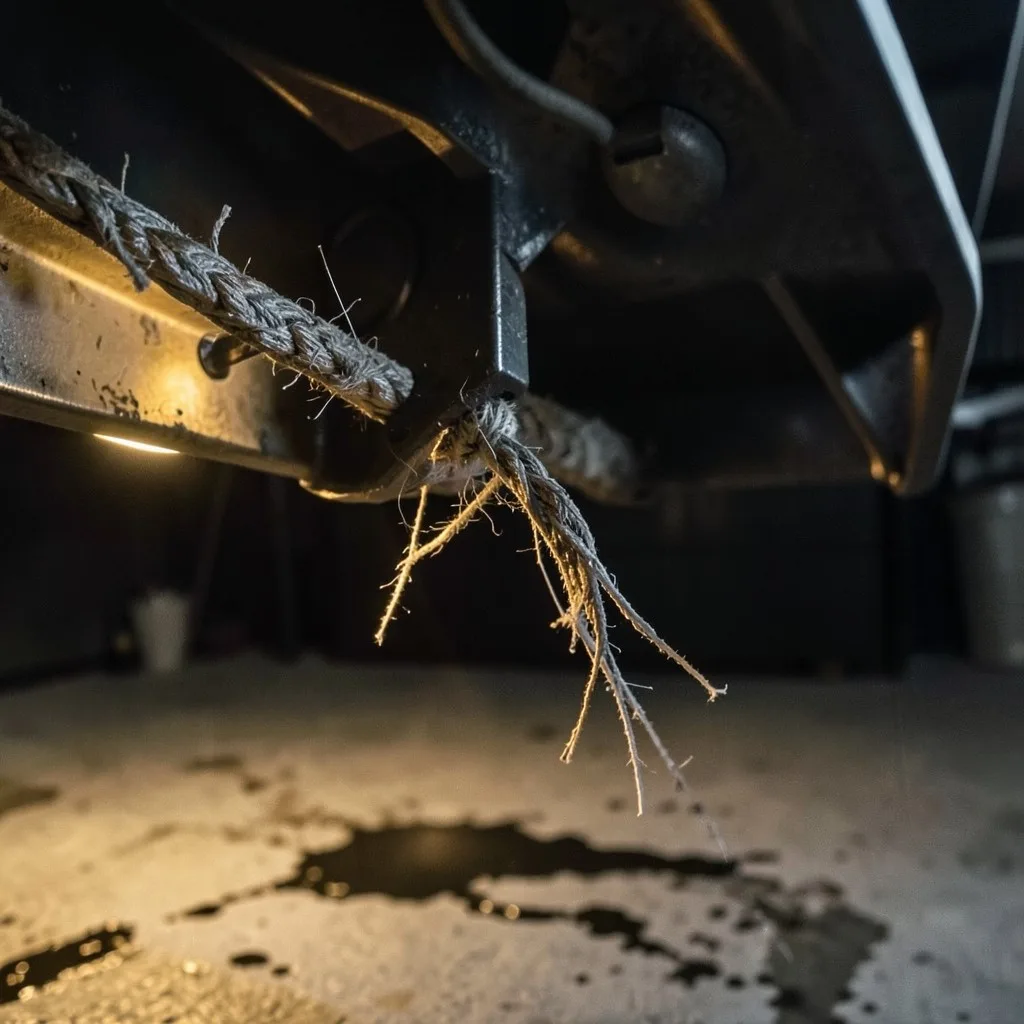
Can a failed commercial door be secured without full repair?
Yes — make-safe is standard practice when parts carry lead time. The door is secured against movement and the opening against intrusion: curtain locked or blocked, operator isolated, temporary barriers where the opening must stay passable. Documented make-safe protects both safety and insurance position while the specified parts ship. It is the interim step, not the repair.
What records should a commercial repair produce?
A findings report with photographs, the measured condition of springs or barrel, operator duty class and condition, the executed scope with parts specifications, and post-repair verification results. Facilities carrying insurance or fire-code obligations need the paper trail — and the next contractor to touch the door works twice as fast against a documented baseline. Paper is cheap; rediscovery is not.
What does “duty cycle” mean on a commercial operator?
The operator’s rated frequency of use — how many cycles per hour, sustained, the motor and gearing are built for. A standard-duty operator on a high-traffic dock door overheats, trips breakers and fails early; the fix is matching the operator class to real traffic, not upsizing horsepower. Duty class is on the operator plate, and a repair visit should confirm it against how the door actually gets used — traffic counts change, and yesterday’s correct class quietly becomes today’s undersized one.
Why do rolling steel doors need specialist attention?
The failure modes are different in kind: barrel spring tension inside a coil housing, slat and endlock wear, guide alignment, and curtain balance interact in ways sectional-door experience does not cover. A telescoping curtain or uneven coil is feeding damage into every slat each cycle. Contractors routed for commercial calls work on coiling systems specifically — it is a distinct hardware family, not a bigger residential door.
How long do garage door springs last in Westborough?
Expect 7 to 9 years from a standard 10,000-cycle set — the bottom of the national range. Worcester County logs about 6,597 heating degree days a year, and hard winters both stiffen spring steel and concentrate failures into the cold months, with January the peak locally. Higher-cycle springs (15,000–25,000) stretch the window proportionally.
What garage door problems are most common in Westborough homes?
In a stock where 75% of homes predate 1960, the classic Westborough call is legacy hardware: tilt-up doors on jamb hardware, extension springs without safety cables, and pre-photo-eye openers. Modernisation — not just repair — is the recurring theme in Worcester County’s older neighbourhoods.
What protections does MA law give me when I hire a garage door contractor?
Massachusetts backs Westborough homeowners with MGL c.142A: contractor registration requirements, written-contract formalities on jobs above the statutory threshold, state-run arbitration for disputes, and a Guaranty Fund paying provable losses into five figures — all conditioned on one thing, the contractor being HIC-registered when the contract was signed. It is the single strongest reason the registry check comes before the deposit in Worcester County.
Do I need a permit for garage door work in Westborough?
It depends on the work. Expect the permit question to be real in Massachusetts: the state code makes structural changes permitted work everywhere, and many towns extend permits to any door replacement. Coastal municipalities add wind-provision review. The contractor should name the town's answer unprompted — it is verifiable at the local building department. Routine garage door repair in Massachusetts (spring pairs, cables, opener parts) typically needs no permit under the state code's ordinary-repairs provisions. Structural work is the boundary — alter the opening and the job crosses into permitted territory with inspection to follow. The reliable answer comes from the Worcester County building authority — a licensed contractor confirms before ordering a door rather than assuming.
How does the call routing actually work?
Think of the number as a switchboard with one job: putting you on the phone with an independent licensed contractor who actually covers Westborough. This site publishes the local facts and takes a network referral fee when calls connect — the work, the pricing and the relationship are entirely between you and the contractor.
What will I be asked when I call?
Four things move the call fastest: your ZIP, the door type (sectional or one-piece, single or double), the opener brand, and the symptom in a sentence. With those, dispatch can route to a contractor whose truck stock matches the likely failure — often turning a diagnostic visit into a same-visit repair.
How fast can a pro actually get there?
Same-day dispatch is common in Westborough for morning calls on acute failures — stuck doors and snapped springs get priority. Scheduled work (installs, maintenance, commercial scopes) books by appointment. The routed contractor quotes their real window on the call; nothing here promises times the local schedule cannot keep.

 STOP & CALL