What does a torsion spring’s cycle rating actually mean?
One cycle is one full open-and-close. Standard residential springs are rated 10,000 cycles; upgrades run 15,000 to 25,000 and beyond. The rating is a fatigue-life estimate for the wire at its working torque — not a warranty, but a good actuarial figure. At four cycles a day, 10,000 cycles is roughly seven years of service. Any quote for spring replacement should state the rating; the difference between tiers is modest against the labour cost of the visit.
Can a garage door with a broken spring be opened at all?
Physically yes, safely no. The spring exists because the door itself can weigh 150–300 pounds; with the counterbalance gone, that full weight is on whatever lifts it. Two adults can raise a spring-dead door in a genuine emergency — car trapped, medical need — using rigid props and never body parts under the door. Outside an emergency, wait for the pro: the off-balance lift is how tracks bend and hands get caught.
What is the difference between torsion and extension springs?
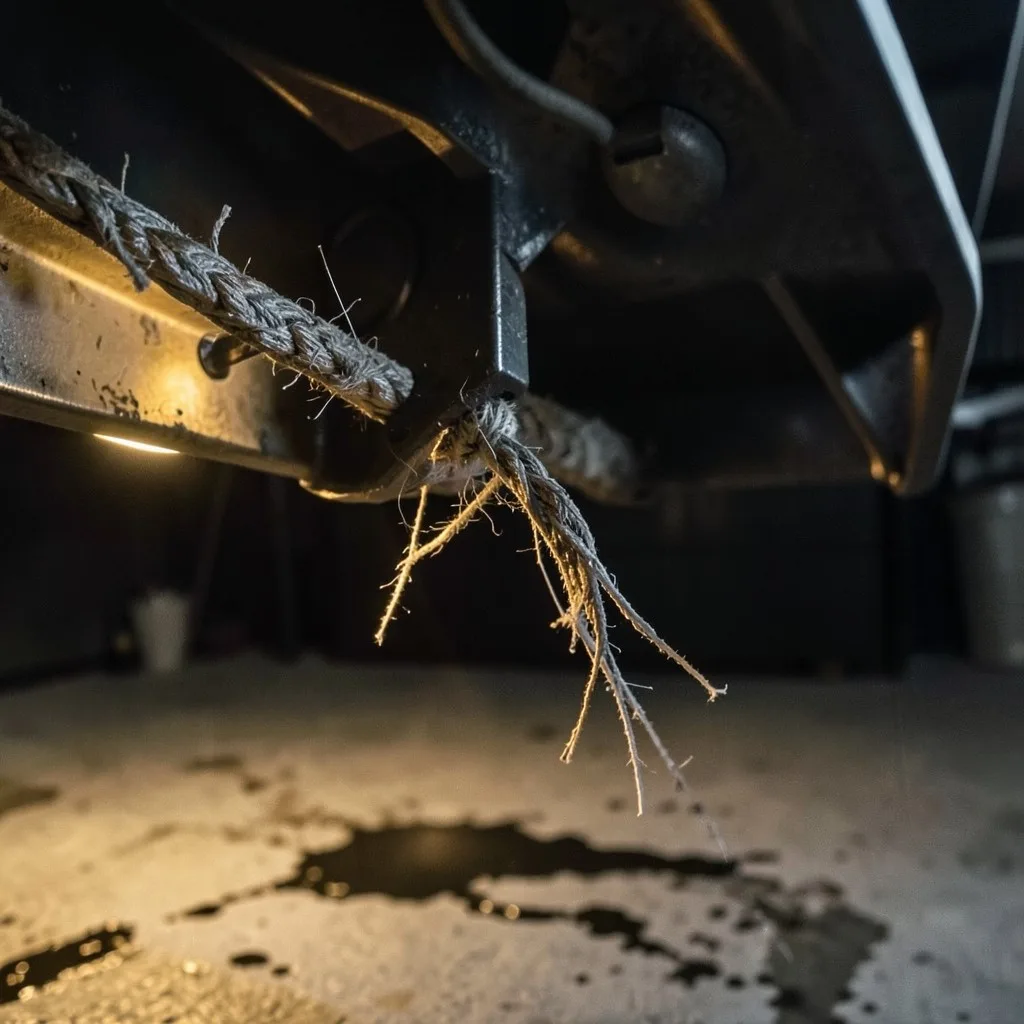
Torsion springs mount on a shaft above the door and counterbalance by twisting; extension springs stretch along the horizontal tracks and counterbalance by extending. Torsion is the modern standard — smoother, longer-lived, and contained on its shaft when it breaks. Extension systems, common on older and lighter doors, require safety cables threaded through each spring so a failure doesn’t whip hardware across the garage. Conversions from extension to torsion are a routine upgrade during replacement.
Why did the spring break in cold weather?
Steel loses ductility as temperature drops, and micro-cracks that were stable all summer propagate under cold-morning load. Meanwhile thickened lubricant and stiffer hardware raise the torque demand on every lift. The combination makes the first sustained cold snap the classic spring-failure window — a pattern visible in service data everywhere winters are real, and the reason pre-winter inspections exist.
How long do garage door springs last in Wheelwright?
Expect 7 to 9 years from a standard 10,000-cycle set — the bottom of the national range. Worcester County logs about 6,597 heating degree days a year, and hard winters both stiffen spring steel and concentrate failures into the cold months, with January the peak locally. Higher-cycle springs (15,000–25,000) stretch the window proportionally.
What garage door problems are most common in Wheelwright homes?
In a stock where 45% of homes predate 1960, the classic Wheelwright call is legacy hardware: tilt-up doors on jamb hardware, extension springs without safety cables, and pre-photo-eye openers. Modernisation — not just repair — is the recurring theme in Worcester County’s older neighbourhoods.
What protections does MA law give me when I hire a garage door contractor?
Massachusetts backs Wheelwright homeowners with MGL c.142A: contractor registration requirements, written-contract formalities on jobs above the statutory threshold, state-run arbitration for disputes, and a Guaranty Fund paying provable losses into five figures — all conditioned on one thing, the contractor being HIC-registered when the contract was signed. It is the single strongest reason the registry check comes before the deposit in Worcester County.
Do I need a permit for garage door work in Wheelwright?
It depends on the work. Under 780 CMR, Massachusetts building permits attach to door replacement in most municipalities — without exception when framing or the opening changes, and frequently for straight swaps too. Practice varies town by town, so the building department's answer, obtained before the order, is part of a competent quote. Like-for-like component repairs — springs, cables, rollers, opener service — generally fall under the ordinary-repairs allowance of the Massachusetts code and proceed without a permit. The line is structure: once the opening, header or framing is touched, 780 CMR permitting applies. The reliable answer comes from the Worcester County building authority — a licensed contractor confirms before ordering a door rather than assuming.
How does the call routing actually work?
Think of the number as a switchboard with one job: putting you on the phone with an independent licensed contractor who actually covers Wheelwright. This site publishes the local facts and takes a network referral fee when calls connect — the work, the pricing and the relationship are entirely between you and the contractor.
What will I be asked when I call?
Four things move the call fastest: your ZIP, the door type (sectional or one-piece, single or double), the opener brand, and the symptom in a sentence. With those, dispatch can route to a contractor whose truck stock matches the likely failure — often turning a diagnostic visit into a same-visit repair.
How fast can a pro actually get there?
It depends on the day’s board: acute failures called in early often see a truck the same day in Worcester County, while planned work books days out. You will get the contractor’s honest window on the phone — and if nobody can fit the job, the call simply ends there, no obligation.


 STOP & CALL