What actually makes a garage door jump its tracks?
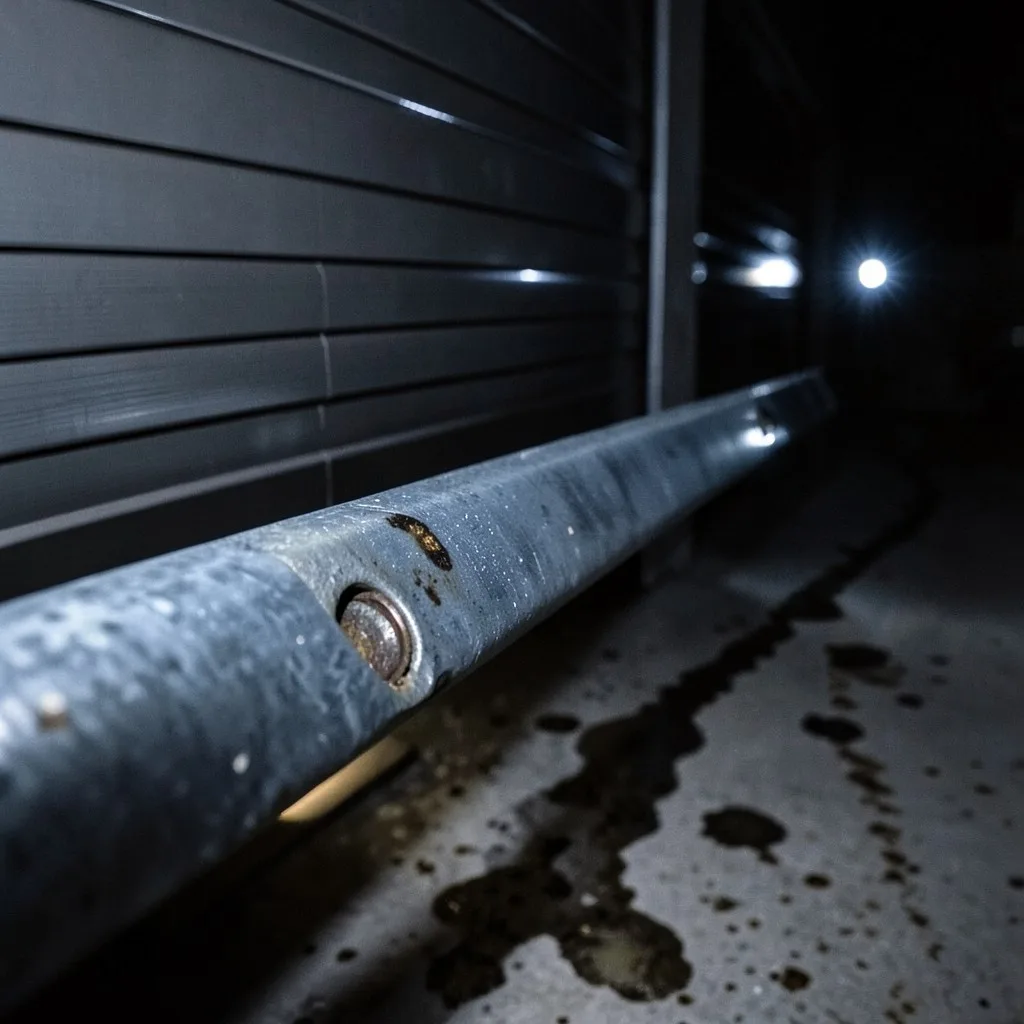
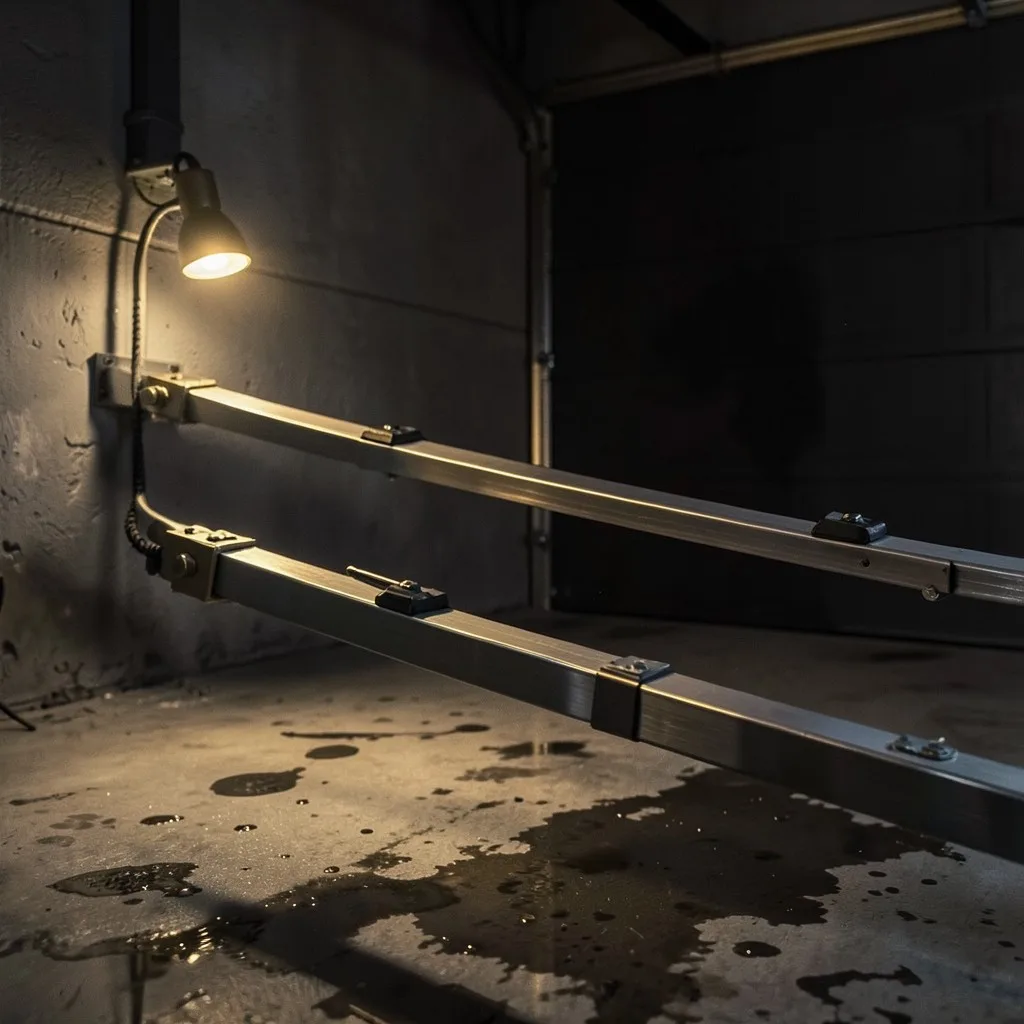
Four causes account for nearly all of it: impact (a bumper tap while the door moves is the classic), a slack-cable event that momentarily unloads one side, track gauge spreading as jamb fasteners work loose, and rollers so worn they drop out of the rail under ordinary travel. The recovery visit matters more than the re-seat itself — a door put back without the cause corrected jumps again, usually harder, because the geometry that failed is still failing.
The door came off its track — can I push it back in?
No — and this is the fault where good intentions do the most damage. An off-track door is still connected to its counterbalance: the springs are pulling on cables that expect the door to be square in its rails, and the door’s weight is sitting on hardware improvising support. Muscling a panel back toward the rail can release that standoff without warning. The professional version unloads the tension first, re-seats every roller, corrects what caused the jump, and re-gauges the track — in that order, because the order is the safety.
Why does one side of the door drop before a track jump?
That sag is the pre-jump warning: one side is lifting later or lower than the other because a cable has stretched, a drum has slipped, or the track on that side has drifted out of gauge. The racking loads the rollers diagonally — exactly the direction the rail cannot hold them — and a jump follows within cycles. A door that sits visibly crooked is a stop-and-call fault; the repair at that stage is cables and alignment, not the full recovery job.
Is an off-track door dangerous just sitting there?
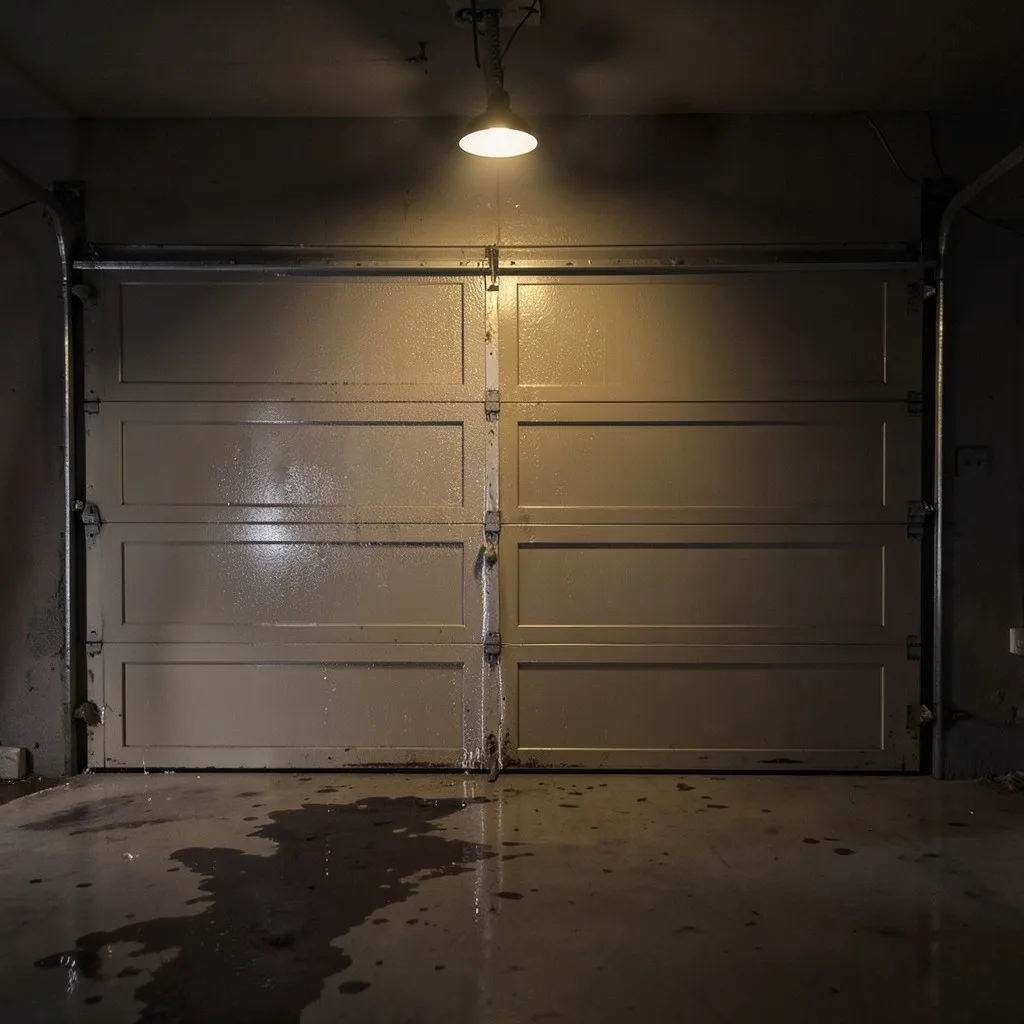
Treat it as suspended load, because that is what it is. The door may look stable wedged in its opening, but its weight is distributed across hardware that was never meant to hold it — a few rollers, a racked rail, a binding hinge line — and the wound springs are still applying force through the cables. Doors in this state can shift or drop when disturbed. Keep people, pets and vehicles out of the opening, do not operate the opener, and leave the release cord alone until a pro has the door secured.
How long do garage door springs last in Winthrop?
Shorter than the brochure says: 8–10 years is realistic here. The 5,816 annual heating degree days in Suffolk County put real fatigue load on spring steel, and the failure calendar peaks around January. If replacement is quoted, upgrading the cycle rating is the lever that moves lifespan.
What garage door problems are most common in Winthrop homes?
Age-related structural wear leads: 58% of Winthrop housing predates 1960, so calls skew to worn tracks, obsolete one-piece and early sectional hardware, and openers several safety-generations old. Any opener without photo eyes fails the post-1993 federal safety bar and belongs in the replacement column regardless of whether it runs.
What protections does MA law give me when I hire a garage door contractor?
Strong ones — if the contractor is registered. Under the Home Improvement Contractor Act (MGL c.142A, in force since 1992), residential contractors in Winthrop must hold state HIC registration; hiring registered unlocks the state arbitration program and the Guaranty Fund, which compensates documented losses from unworkmanlike jobs into five figures. Unregistered operators cost their customers every one of those remedies — the registry lookup takes two minutes.
Do I need a permit for garage door work in Winthrop?
For repairs, generally no; for installation, often yes. Expect the permit question to be real in Massachusetts: the state code makes structural changes permitted work everywhere, and many towns extend permits to any door replacement. Coastal municipalities add wind-provision review. The contractor should name the town's answer unprompted — it is verifiable at the local building department. Component repair is different: Massachusetts treats component-level repair as ordinary maintenance under 780 CMR — no permit for the standard spring, cable or opener visit. The permit trigger is structural: opening changes, header work, or anything the building inspector would call an alteration. When in doubt, the Suffolk County building department’s answer is the one that counts.
How does the call routing actually work?
Think of the number as a switchboard with one job: putting you on the phone with an independent licensed contractor who actually covers Winthrop. This site publishes the local facts and takes a network referral fee when calls connect — the work, the pricing and the relationship are entirely between you and the contractor.
What will I be asked when I call?
Four things move the call fastest: your ZIP, the door type (sectional or one-piece, single or double), the opener brand, and the symptom in a sentence. With those, dispatch can route to a contractor whose truck stock matches the likely failure — often turning a diagnostic visit into a same-visit repair.
How fast can a pro actually get there?
It depends on the day’s board: acute failures called in early often see a truck the same day in Suffolk County, while planned work books days out. You will get the contractor’s honest window on the phone — and if nobody can fit the job, the call simply ends there, no obligation.


 DIAGNOSE