Should the opener be replaced with the door?
Not automatically, but the install visit is the cheapest moment to do it. The decision hinges on the opener’s age and safety compliance: pre-1993 units without photo eyes should go regardless, and older units may lack the force capacity for a heavier insulated replacement door. A healthy, compliant opener carries over — a competent installer tests it against the new door’s weight rather than quoting a bundle reflexively.
What is R-value and does it matter on a garage door?
R-value measures insulation resistance — higher means less heat transfer through the panels. It matters in proportion to what is behind and above the garage: a conditioned room over the garage or a workshop behind it makes double-digit R-value worthwhile; a detached shell garage does not. Insulated doors are also stiffer and quieter, which is why the spec question deserves a real answer rather than a default.
What should a written installation quote include?
Door make, model and panel construction; insulation R-value if any; wind rating where applicable; spring type and cycle rating; track radius; opener handling (keep, service or replace); permit responsibility; tear-out and haul-away; and the safety tests to be run at commissioning. A quote that names those items is comparable against other quotes; one that says “new door, installed” is not.
What actually determines whether the job needs a permit?
Jurisdiction, and what changes. Like-for-like replacement in the existing opening is exempt in many places; altering the opening size, header or framing is permitted work almost everywhere; and some jurisdictions require permits for any door replacement. The deciding voice is the local building department, not the installer’s habit — a licensed contractor confirms rather than assumes, because unpermitted structural work surfaces at inspection when the house sells.
How long do garage door springs last in Abbott?
Longer than most of the country: 10–13 years, because Hill County’s 2,122 annual heating degree days impose almost no freeze-thaw stress. Springs here die of cycle count. At four openings a day a 10,000-cycle set runs about seven years; lighter use stretches toward the top of the range.
What garage door problems are most common in Abbott homes?
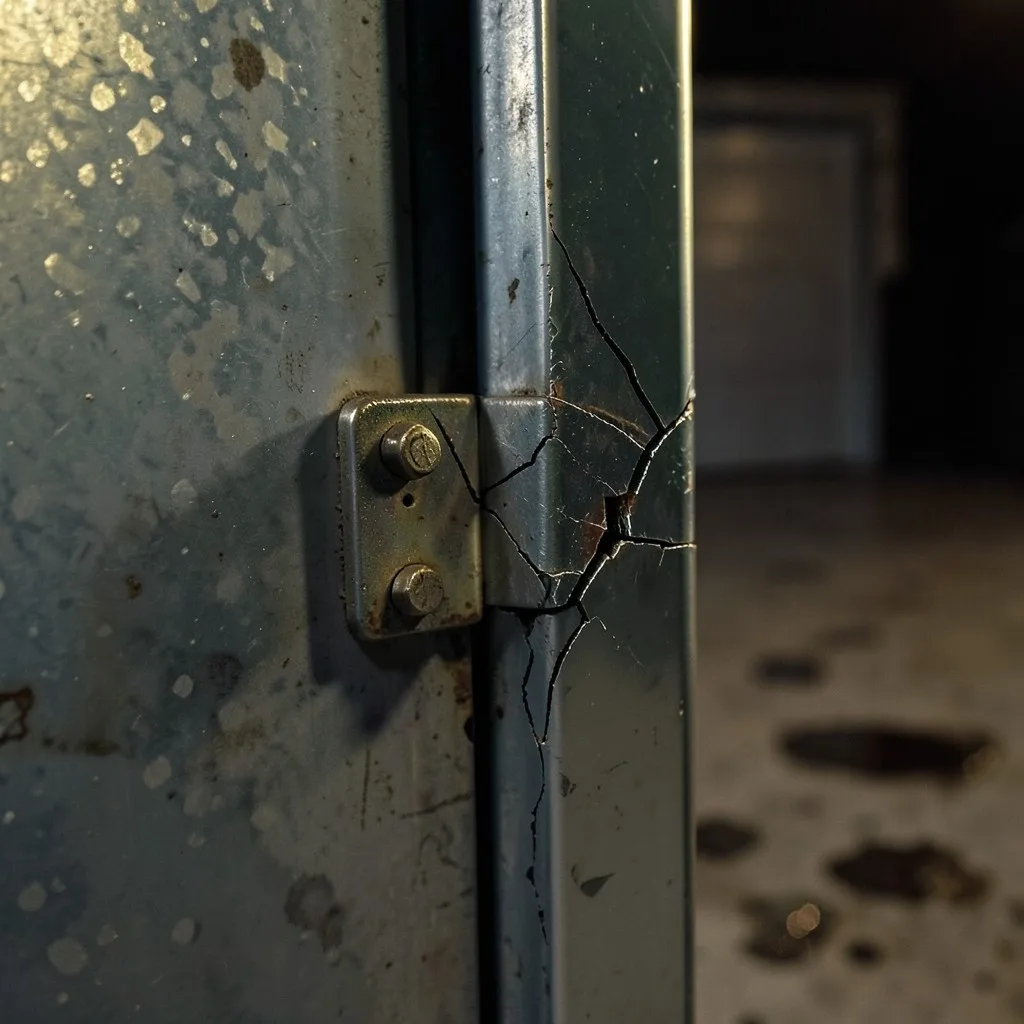
With 67% of Abbott homes built before 1980 and the 1970s the dominant era, original and second-generation hardware failures lead: fatigued springs, stretched cables, seized steel rollers, and openers due safety-generation upgrades. Whole-load-path inspections pay off in this cohort — parts age together.
Do I need a permit for garage door work in Abbott?
For repairs, generally no; for installation, often yes. Expect city-by-city answers on Texas permits: municipal building departments own the question, structural alterations trigger permits statewide practice-wise, and the biggest metros add contractor registration requirements of their own. On the seacoast, TDI windstorm certification — the WPI-8 chain — is the second regulatory track a coastal install must satisfy. Component repair is different: In Texas, spring, cable and opener repairs run permit-free as ordinary upkeep. The lines that matter sit elsewhere: municipal permits attach to structural changes, and in the TDI seacoast counties a repair that touches windstorm-certified construction is also a certification event — the insurance file cares even when the city does not. When in doubt, the Hill County building department’s answer is the one that counts.
How does the call routing actually work?
Think of the number as a switchboard with one job: putting you on the phone with an independent licensed contractor who actually covers Abbott. This site publishes the local facts and takes a network referral fee when calls connect — the work, the pricing and the relationship are entirely between you and the contractor.
What will I be asked when I call?
Have four answers ready and the call is short: where (ZIP), what (door type, single or double), which (opener brand), and how it is failing. Precision on the fourth answer is what loads the right parts — the difference between diagnosis day and repair day.
How fast can a pro actually get there?
Response windows are set by the contractor’s live board, not by marketing copy: acute failures get priority and often same-day response in Abbott; planned work books like any trade visit. The honest window comes on the call — and declining it costs nothing.


 BOOK SOON