Does a stronger motor fix a struggling opener?
No — and the belief causes real damage. Residential openers contribute modest force by design; the springs carry the weight. An opener straining against a heavy door signals counterbalance failure, and installing a bigger motor just moves the failure downstream to gears, brackets and panels while defeating the force limits that make the system safe. Fix the weight problem and the existing opener is usually fine.
Why does one side of the door drop before a track jump?
That sag is the pre-jump warning: one side is lifting later or lower than the other because a cable has stretched, a drum has slipped, or the track on that side has drifted out of gauge. The racking loads the rollers diagonally — exactly the direction the rail cannot hold them — and a jump follows within cycles. A door that sits visibly crooked is a stop-and-call fault; the repair at that stage is cables and alignment, not the full recovery job.
Why does the opener hum but not move the door?
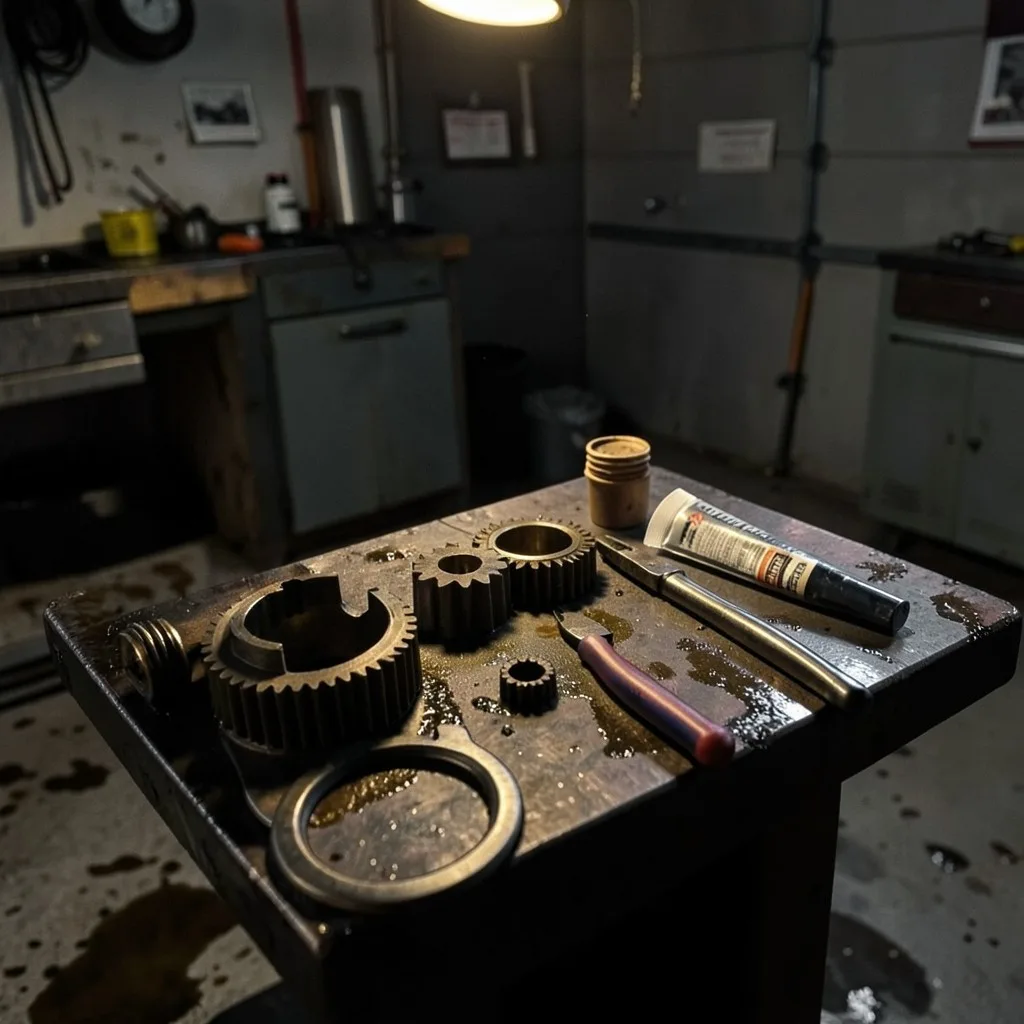
The motor is running with nothing attached to the load — almost always a stripped main drive gear. The gear is nylon by design, a sacrificial part meant to fail before the motor burns out, and it announces itself with white shavings inside the cover. It is a standard bench repair. The follow-up question matters more: gears usually strip because the door got heavy, so a balance check on the springs belongs to the same visit.
Is a smart opener upgrade worth it during a repair?
Sometimes — and the honest version depends on what is failing. If the logic board is already the failed part on an aging unit, stepping to a current model with app control, battery backup and rolling-code security often beats sourcing an obsolete board. If the fault is a gear or an eye on an otherwise healthy opener, the repair wins and the smart features can wait. The math changes where state law requires battery backup on any newly installed unit.
How long do garage door springs last in Caldwell?
Longer than most of the country: 10–13 years, because Burleson County’s 1,693 annual heating degree days impose almost no freeze-thaw stress. Springs here die of cycle count. At four openings a day a 10,000-cycle set runs about seven years; lighter use stretches toward the top of the range.
What garage door problems are most common in Caldwell homes?
Newer stock, newer failure profile: Caldwell skews post-1980, so calls run to builder-grade springs hitting their 10,000-cycle limit on schedule, opener electronics (boards, eyes, remotes), and panel damage. The springs installed by production builders are the minimum rating — their first failure is the moment to buy the upgrade.
Do I need a permit for garage door work in Caldwell?
For repairs, generally no; for installation, often yes. Expect city-by-city answers on Texas permits: municipal building departments own the question, structural alterations trigger permits statewide practice-wise, and the biggest metros add contractor registration requirements of their own. On the seacoast, TDI windstorm certification — the WPI-8 chain — is the second regulatory track a coastal install must satisfy. Component repair is different: Routine garage door repair needs no permit in Texas cities — maintenance-class work stays below the permitting line everywhere. Two caveats earn attention: anything structural belongs to the city building department, and coastal repairs on WPI-8-certified openings should keep the paperwork intact, because TWIA eligibility rides on it. When in doubt, the Burleson County building department’s answer is the one that counts.
How does the call routing actually work?
Think of the number as a switchboard with one job: putting you on the phone with an independent licensed contractor who actually covers Caldwell. This site publishes the local facts and takes a network referral fee when calls connect — the work, the pricing and the relationship are entirely between you and the contractor.
What will I be asked when I call?
Have four answers ready and the call is short: where (ZIP), what (door type, single or double), which (opener brand), and how it is failing. Precision on the fourth answer is what loads the right parts — the difference between diagnosis day and repair day.
How fast can a pro actually get there?
Response windows are set by the contractor’s live board, not by marketing copy: acute failures get priority and often same-day response in Caldwell; planned work books like any trade visit. The honest window comes on the call — and declining it costs nothing.


 STOP & CALL