Skip to content
Garage Door Repair Line Nationwide Garage Door Dispatch (800) 555-0167
ZIP 77444 · GUY, TX

Garage Door Installation for Guy — Fort Bend County, TX

A Guy door installation done right is mostly preparation: exact measurement of the opening, a written specification, the permit question answered with the Fort Bend County building authority, then a one-day build with commissioning tests at the end. The routed contractor handles the sequence; the spec sheet stays with the house.

In Guy, the housing stock is comparatively new, and the most common failure is a builder-grade spring or opener finishing its rated life. This page routes your call to a licensed Fort Bend County pro.

// LOCAL READOUT

// BEFORE YOU DIAL, GATHER

Is your spring near the end of its life in Guy?

A torsion spring fails on a schedule set by cycle count and climate — and both numbers for Guy are on this dial. If the door is on its original set and older than the low end of the band, it is inside the failure window now.

11–15 yrs typical spring life · Guy

// THE CYCLE GAUGE · GUY

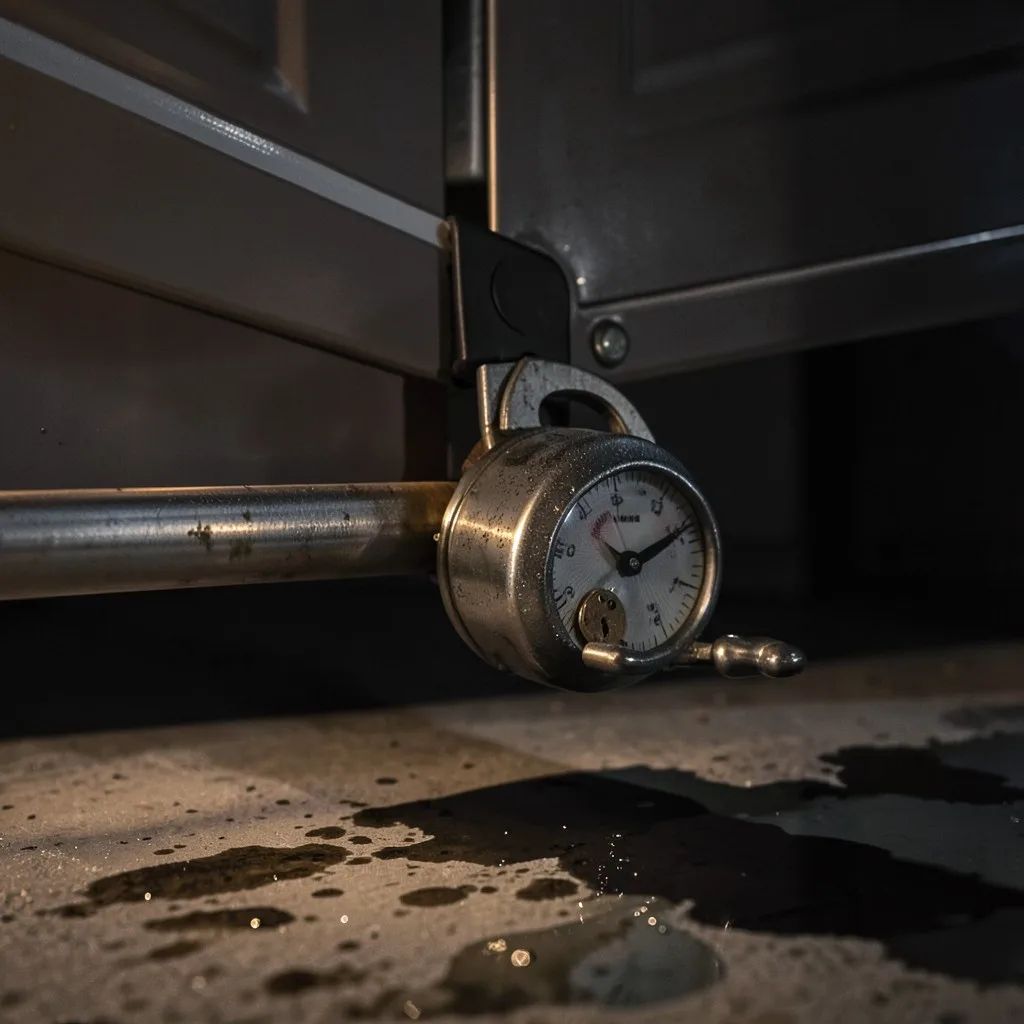
The dial reads cycles, not birthdays: 10,000 is the standard rating, and four openings a day spends about 1,460 a year. Factor in the no-freeze climate over Fort Bend County (1,240 degree days/yr) and local sets realistically deliver 11–15 years — with the failure count peaking each January. Past the bright arc at ~72% of rating, breakage risk climbs steeply.

What does compliant garage door work look like in Fort Bend County?

Three rules shape this work in Guy: state opener law, contractor licensing, and the local permit line. Each is verifiable at the cited source — and each is something a routed contractor should answer without being asked.

Residential garage door exterior at dusk

TDI windstorm certification

The Texas Insurance Code's windstorm chapter makes coastal garage doors an insurance matter: in the designated first-tier counties and the Harris County strip east of SH 146, work performed since 1988 requires certification under the TDI windstorm program (the WPI-8 family) before TWIA coverage attaches. Certified products and inspection are how the door keeps the policy valid.

Contractor licensing

There is no Texas state license to look up for garage door work: the state regulates specific trades through TDLR, and door contracting is not among them. The verifiable substitutes are the ones that matter here — city contractor registration in many larger municipalities, liability insurance in force, and TDI windstorm-program credentials on the seacoast.

Permits in Fort Bend County

Permit authority in Texas is municipal: most cities permit garage door replacement when the structural opening changes, and several large metros — Houston and Dallas among them — extend permit or registration requirements further. In TDI's seacoast territory — the first-tier counties plus Harris County east of State Highway 146 — windstorm certification runs alongside the city permit. The local building department's answer belongs on the quote. In Texas, spring, cable and opener repairs run permit-free as ordinary upkeep. The lines that matter sit elsewhere: municipal permits attach to structural changes, and in the TDI seacoast counties a repair that touches windstorm-certified construction is also a certification event — the insurance file cares even when the city does not.

Wildfire-zone construction

With no state license in play, Texas cities set their own bar: Houston, Dallas, San Antonio and many suburbs require contractor registration with the municipal building department before permitted work, each with its own insurance and renewal rules. The city's contractor-search page is the Texas equivalent of a license lookup.

Wind rating

The wind map is the second building code on the Texas coast: design speeds rise sharply from inland standards to the seacoast's top bands, and the fourteen first-tier counties layer TDI windstorm certification over the local code. Inland, wind rating is a judgment purchase; on the coast it is the specification the whole quote is built around.

What does that noise, stall or slam actually mean?

Doors telegraph their failures. The table below maps the common Guy symptoms to root causes, so you can describe the fault precisely when you call.

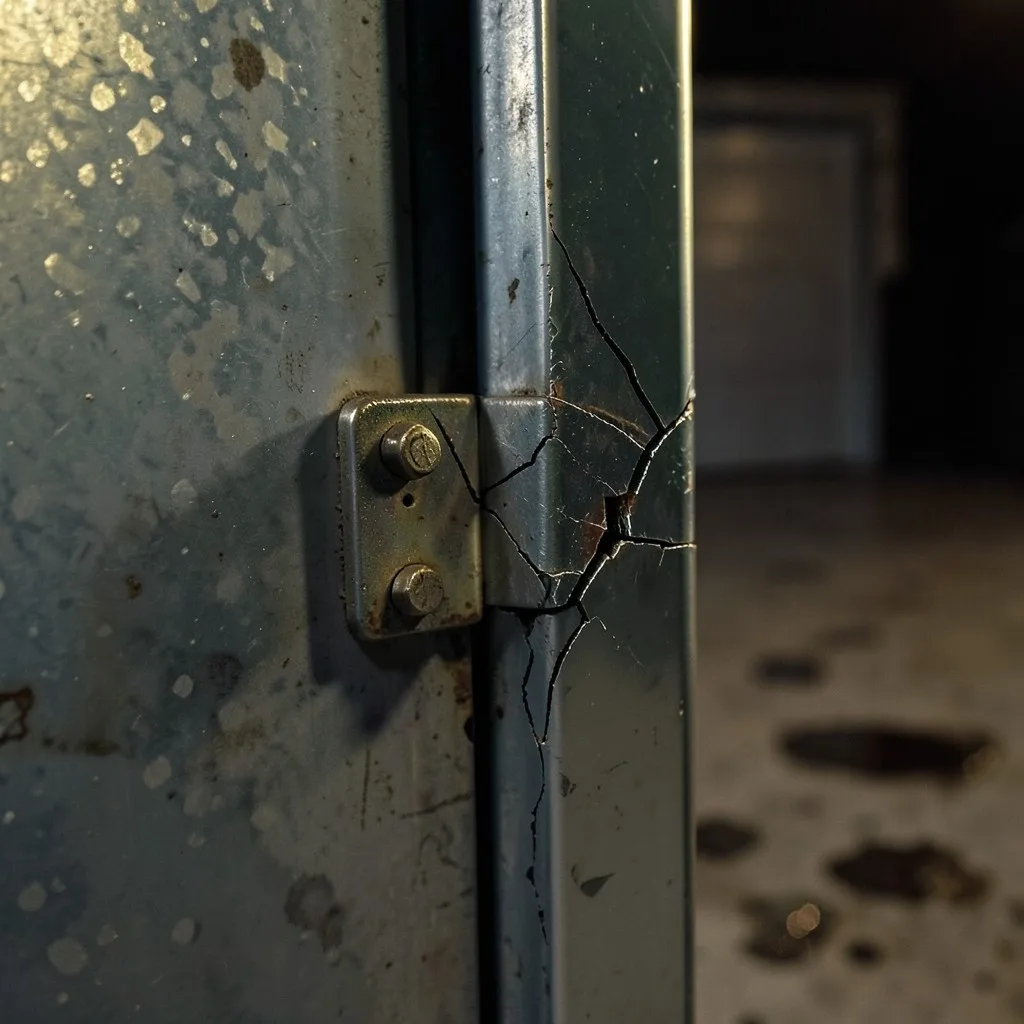
Cracked hinge at a garage door panel joint BOOK SOON

Panels cracked, delaminating or rusted through

When the sections themselves fail, the door has aged out: replacement panels for older models are scarce, mismatched, and often cost most of a new door. A full replacement resets springs, track and seals in one job — with the code questions answered up front.

Crushed bottom weather seal with light leaking beneath the door DIAGNOSE

Daylight visible around the closed door

Either the seals have flattened with age or the geometry has moved — settled jambs, a bowed header, stretched cables letting the door sit unevenly. An installer measures before recommending: seal kits fix the first, only a properly specified new install fixes the second.

Roller hanging out of a bent track, panel edge dropped BOOK SOON

Drops hard through the final stretch of travel

Fading springs. As torsion springs wear, they lose the stored torque that eases the door down, and gravity wins the final section of travel. With local spring life at 11–15 years, a slamming 2010s-era door is typically running on its original set — inspection-due.

Sectional door sitting crooked in its opening with slack cable STOP & CALL

One side hangs higher — the door sits cocked

A cable has come off its drum or snapped on one side, so the door is lifting unevenly — and the remaining cable plus the tracks are carrying loads they were not designed for. Stop using the door; a cocked door can jump the tracks entirely and wedge or fall.

Worn steel roller with an ovalled bearing BOOK SOON

Grinding or scraping during travel

Usually a roller or track fault: rollers past their service life stop spinning and start scraping, and a track knocked out of plumb rubs the door edge. In Guy’s older stock the original steel rollers are often decades past their intended life — a full roller swap is routine.

Photo-eye safety sensor with indicator lamp glowing DIAGNOSE

Reaches the floor and pops straight back up

Reversal logic firing: misaligned or obstructed photo eyes, or a closing-force limit set too low for a door that has stiffened. Check the small lights on both eye sensors first — a steady pair means aligned, a blinking one means the beam is broken or drifted.

Nylon gear shavings dusted over an opener housing BOOK SOON

Motor sound, zero door movement

Motor noise without motion means the power is not reaching the door — stripped drive gear, snapped chain or belt, or a disengaged trolley. On 2010s-era openers the nylon gear is the usual casualty and is a standard repair, cheaper than the replacement unit a cold call might push.

Garage door remote with a worn button on a workbench DIAGNOSE

Wall button dead but the remote works (or the reverse)

This splits the diagnosis cleanly. Working remote + dead wall button points to the low-voltage wire run; working button + dead remote points to pairing or the receiver board. Either way the motor and drive are healthy — a short, cheap visit for a pro with a meter.

Cable drum with wraps jumped out of their grooves BOOK SOON

Door lifts a few inches, stops, reverses

Two suspects: a failing spring making the door heavier than the opener’s force setting allows, or travel/force calibration drift. The tell is the manual test — if the door is hard to lift by hand, the springs are the issue and the opener is protecting itself.

Found your symptom? End it today.

Measure, quote, permit, install — in that order. Start the sequence with one routed call to a licensed local pro. The call commits you to nothing: no fee, no booking pressure, no callback list.

Call (800) 555-0167

What does a competent installation job look like, start to finish?

What happens after you call, stage by stage — the version a good contractor would describe unprompted.

Measurement and specification

A door order lives or dies on measurement: opening width and height, headroom, backroom, side clearance, and the state of the framing all get measured before anything is specified. The spec then matches door to duty — insulation value against the 1,240 annual heating degree days here, spring cycle rating against household use, opener class against door weight.

Tape measure clamped across a door opening

The permit question, answered

The contractor, not the homeowner, carries the permit question: whether Guy exempts like-for-like swaps, what triggers structural review, and what the state requires of the connected opener. Written answers precede the door order — retrofitting compliance after installation is the expensive version.

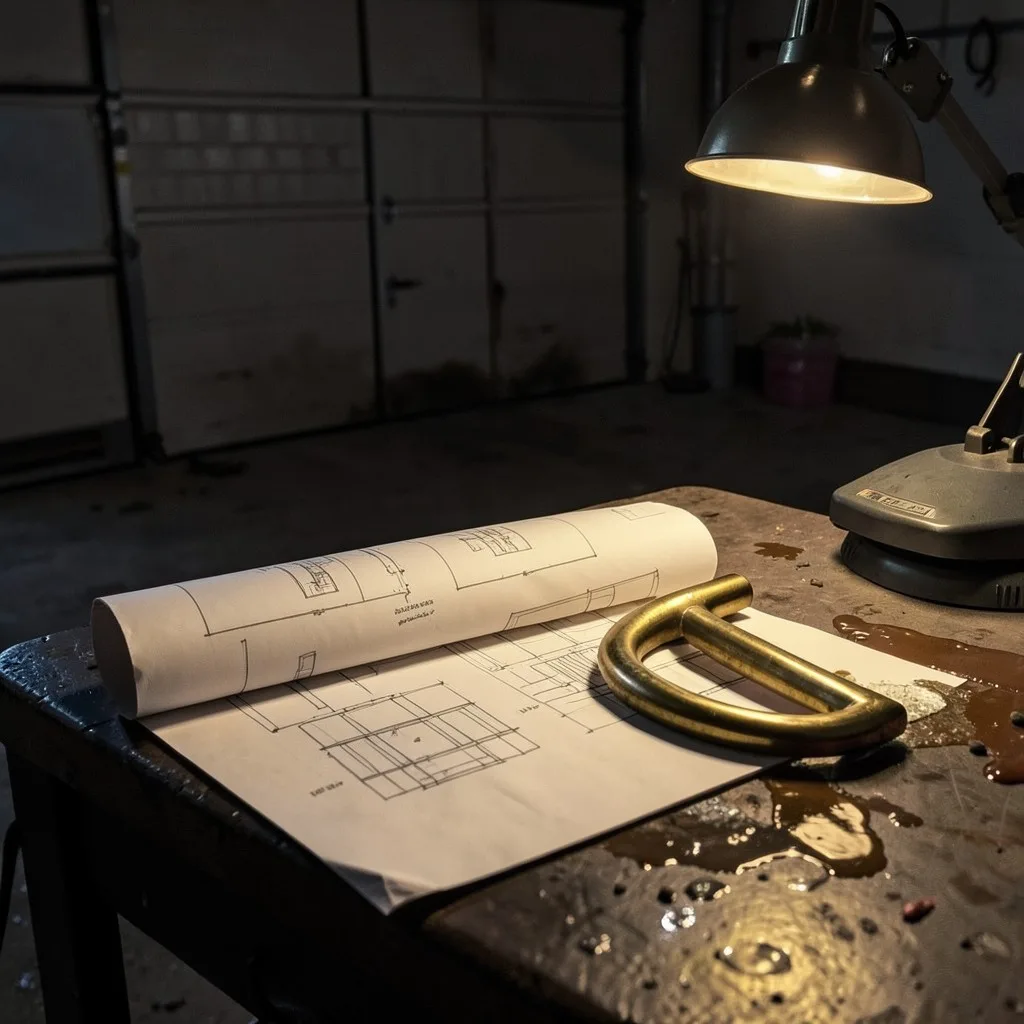
Rolled drawings and hardware sample on a workbench

Tear-out and installation

Replacement is demolition plus precision assembly: controlled de-tensioning of the old counterbalance, tear-out, then new track, sections, springs and operator installed to the spec sheet. Where TX requirements apply to the opener or wind rating, the installed hardware matches the spec that was quoted — verifiable against the labels.

New track and spring hardware being set

Commissioning and code close-out

The final hour is verification: manual lift effort, hold at mid-travel, opener force at minimum, photo eyes proven, weather seal continuous. Permitted jobs get their inspection scheduled and the sign-off filed. The crew leaves the spring cycle rating and spec sheet with you — the numbers the next service call will want.

Finished door seal line at the concrete

Which checks are safe to do yourself — and which are not?

Garage doors injure thousands of people a year, almost always at the same two components. These are the checks you can do and the ones you must not.

SAFE — DO Run the manual balance check monthly — door down, release pulled, one-hand lift to half height. Drift from “holds steady” is your early warning.
SAFE — DO Test the reversal system quarterly: a board flat under the closing door must trigger reverse on contact. If it does not, stop using the opener until adjusted.
SAFE — DO Look and listen: fraying cables, gaps in spring coils, rollers that slide instead of spin, new noises in cold weather. Eyes-only inspection is safe and useful.
PRO-ONLY — DO NOT The manual release exists for outages, used with the door DOWN. Pulled mid-travel on a failed spring, it hands hundreds of pounds to gravity with nothing underneath but whatever was underneath.
PRO-ONLY — DO NOT Do not run the opener against a door that visibly binds or sits crooked — the motor will convert a cheap cable repair into bent track and damaged panels.
PRO-ONLY — DO NOT The coiled steel over the opening holds enough energy to break bones after months of sitting still. No video makes winding-bar work safe for a first-timer; every serious garage door injury statistic starts here.

What does Guy’s failure calendar look like?

Failures in Guy are not evenly distributed across the calendar — the climate loads the dice. Here is the local pattern, month by month.

Frost crystals on a torsion spring in a cold garage

Dec – Feb

Cool season

Even in a mild winter, Guy sees its modest failure peak now — cool mornings stiffen aging springs, and January is the month local hardware works hardest.

Meltwater droplets on a garage door track in spring light

Mar – May

Spring

Post-winter reckoning — doors that groaned through the cold get diagnosed now. Roller and hinge wear from the heavy season surfaces as travel noise.

Opener motor head in warm dusty summer light

Jun – Aug

Summer

Peak season for opener faults — board failures and sensor glare rise with garage temperatures. Mechanical hardware coasts; the electronics do not.

Garage at autumn dusk with toolbox staged for a tune-up

Sep – Nov

Fall

Book tune-ups now: the pre-winter service visit catches the springs and cables that would otherwise fail in the January cluster.

What hardware do the routed Fort Bend County pros work on?

Whatever is on the front of your garage, the local pros this line reaches service it. The common types in Fort Bend County housing:

What actually drives the price of installation in Guy?

What drives the cost of this work — the factors, not the figures. For researched ranges, see the cost guides.

Timing

Clock and calendar both bill: overnight and same-day dispatch carry premiums everywhere, and the January rush concentrates demand. The fall inspection is, financially, the cheapest emergency call never made.

Access and condition

Neglect compounds the bill: seized fasteners add labour hours, a bent rail adds parts, and improvised past fixes add undoing time. The system’s arrival condition is priced in whether the invoice itemises it or not.

Cycle rating of replacement springs

A 10,000-cycle spring and a 25,000-cycle spring are different products. In this climate the upgrade question is worth asking — insist the quote names the rating.

Door size and weight

Doubles outweigh singles, timber outweighs steel, insulated outweighs hollow — and the spring bill scales with every pound. Accurate weight is why good installers measure instead of quoting from a doorway glance.

How do you vet a garage door contractor in Texas?

A few minutes of verification separates the licensed trade from the toll-free vans. Run every contractor — routed or not — through this list.

Trade-practice alignment

Mention DASMA and watch the reaction: technicians who train on the industry standards recognise the name instantly. Blankness is not disqualifying, but familiarity is a genuinely good sign.

Red flags that end the visit

Walk away from: unsolicited whole-door quotes for a spring symptom, prices that moved dramatically from the phone, missing licence numbers, or a crew that will not put the scope in writing.

Insurance and workers’ comp

Proof of liability insurance and workers’ comp is a yes/no question with paperwork. No certificate, no spring work — that is the trade’s own standard.

Licence — verify it, don’t ask about it

Two minutes on the TX board site turns a claim into a record: classification, status, bond history. Do it before anyone climbs a ladder — the lookup is public precisely because this trade attracts pretenders.

Written scope before work

Get the scope in writing before authorisation — parts, ratings, labour. Verbal “while we’re here” additions are the mechanism behind most complaint-board stories in this trade.

Garage Door Installation in Guy — the questions that matter

What actually determines whether the job needs a permit?

Jurisdiction, and what changes. Like-for-like replacement in the existing opening is exempt in many places; altering the opening size, header or framing is permitted work almost everywhere; and some jurisdictions require permits for any door replacement. The deciding voice is the local building department, not the installer’s habit — a licensed contractor confirms rather than assumes, because unpermitted structural work surfaces at inspection when the house sells.

What should a written installation quote include?

Door make, model and panel construction; insulation R-value if any; wind rating where applicable; spring type and cycle rating; track radius; opener handling (keep, service or replace); permit responsibility; tear-out and haul-away; and the safety tests to be run at commissioning. A quote that names those items is comparable against other quotes; one that says “new door, installed” is not.

What is R-value and does it matter on a garage door?

R-value measures insulation resistance — higher means less heat transfer through the panels. It matters in proportion to what is behind and above the garage: a conditioned room over the garage or a workshop behind it makes double-digit R-value worthwhile; a detached shell garage does not. Insulated doors are also stiffer and quieter, which is why the spec question deserves a real answer rather than a default.

Should the opener be replaced with the door?

Not automatically, but the install visit is the cheapest moment to do it. The decision hinges on the opener’s age and safety compliance: pre-1993 units without photo eyes should go regardless, and older units may lack the force capacity for a heavier insulated replacement door. A healthy, compliant opener carries over — a competent installer tests it against the new door’s weight rather than quoting a bundle reflexively.

How long do garage door springs last in Guy?

Guy’s mild climate is easy on spring steel: 11 to 15 years from a standard set is typical, the top of the national range. With only 1,240 heating degree days a year in Fort Bend County, cycle count — not weather — is what retires springs here, so heavy daily use is the number to watch.

What garage door problems are most common in Guy homes?

In Guy’s comparatively young housing stock the pattern is cycle-limit failures: builder-spec springs aging out in year 11-plus, sensor and logic-board faults, and impact damage. Rust and legacy-hardware calls are rare; specification quality is the local variable that matters.

Do I need a permit for garage door work in Guy?

It depends on the work. Permit authority in Texas is municipal: most cities permit garage door replacement when the structural opening changes, and several large metros — Houston and Dallas among them — extend permit or registration requirements further. In TDI's seacoast territory — the first-tier counties plus Harris County east of State Highway 146 — windstorm certification runs alongside the city permit. The local building department's answer belongs on the quote. In Texas, spring, cable and opener repairs run permit-free as ordinary upkeep. The lines that matter sit elsewhere: municipal permits attach to structural changes, and in the TDI seacoast counties a repair that touches windstorm-certified construction is also a certification event — the insurance file cares even when the city does not. The reliable answer comes from the Fort Bend County building authority — a licensed contractor confirms before ordering a door rather than assuming.

How does the call routing actually work?

Think of the number as a switchboard with one job: putting you on the phone with an independent licensed contractor who actually covers Guy. This site publishes the local facts and takes a network referral fee when calls connect — the work, the pricing and the relationship are entirely between you and the contractor.

What will I be asked when I call?

Expect the practical minimum: ZIP code, what kind of door, what it is doing, and when someone can look at it. The more precisely you can name the symptom — “bang, then dead weight” beats “broken” — the better the parts loadout that arrives in Guy.

How fast can a pro actually get there?

Same-day dispatch is common in Guy for morning calls on acute failures — stuck doors and snapped springs get priority. Scheduled work (installs, maintenance, commercial scopes) books by appointment. The routed contractor quotes their real window on the call; nothing here promises times the local schedule cannot keep.


Where else does this coverage reach?

The same routed call covers every service below — pick the page that matches what your door is doing.

// BEFORE YOU DIAL

Expect three questions on the routed call: your ZIP, what kind of door, and when a pro can be there. Answers ready = connected faster.