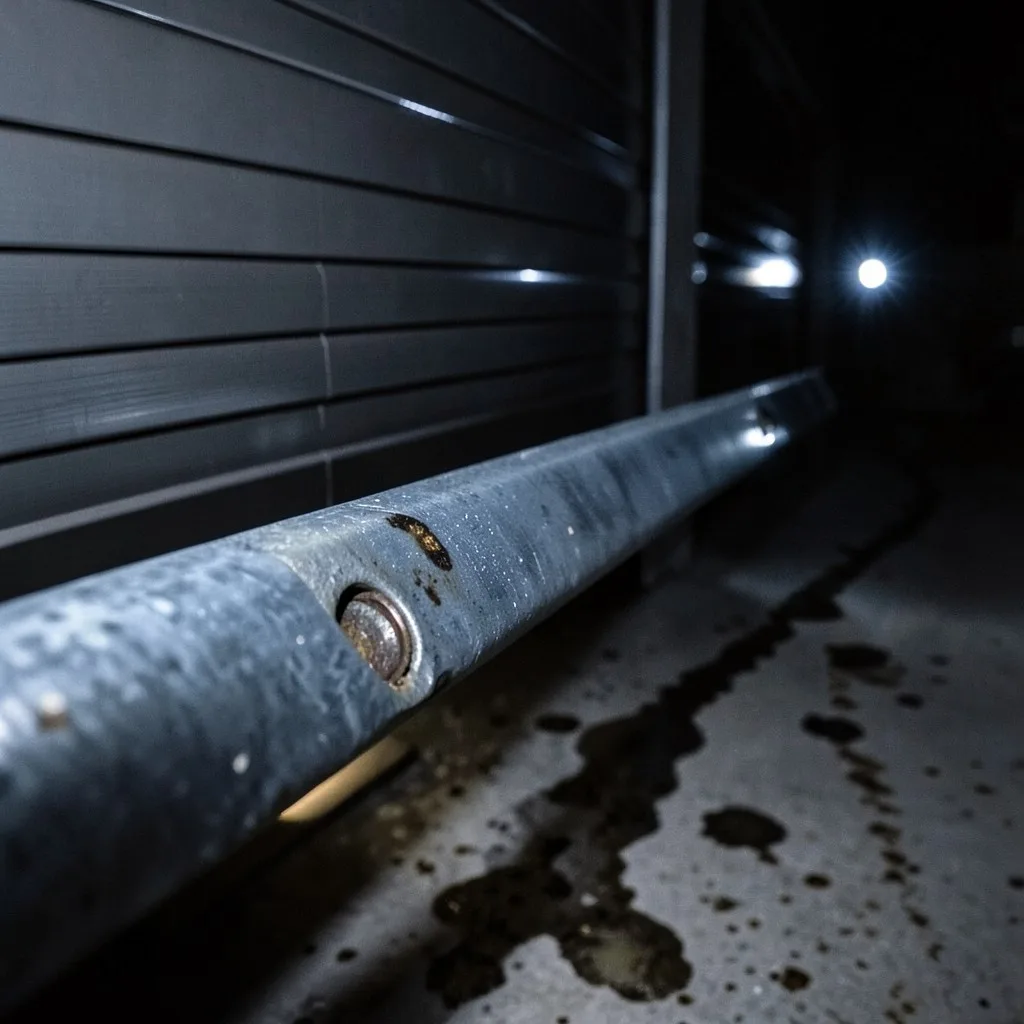
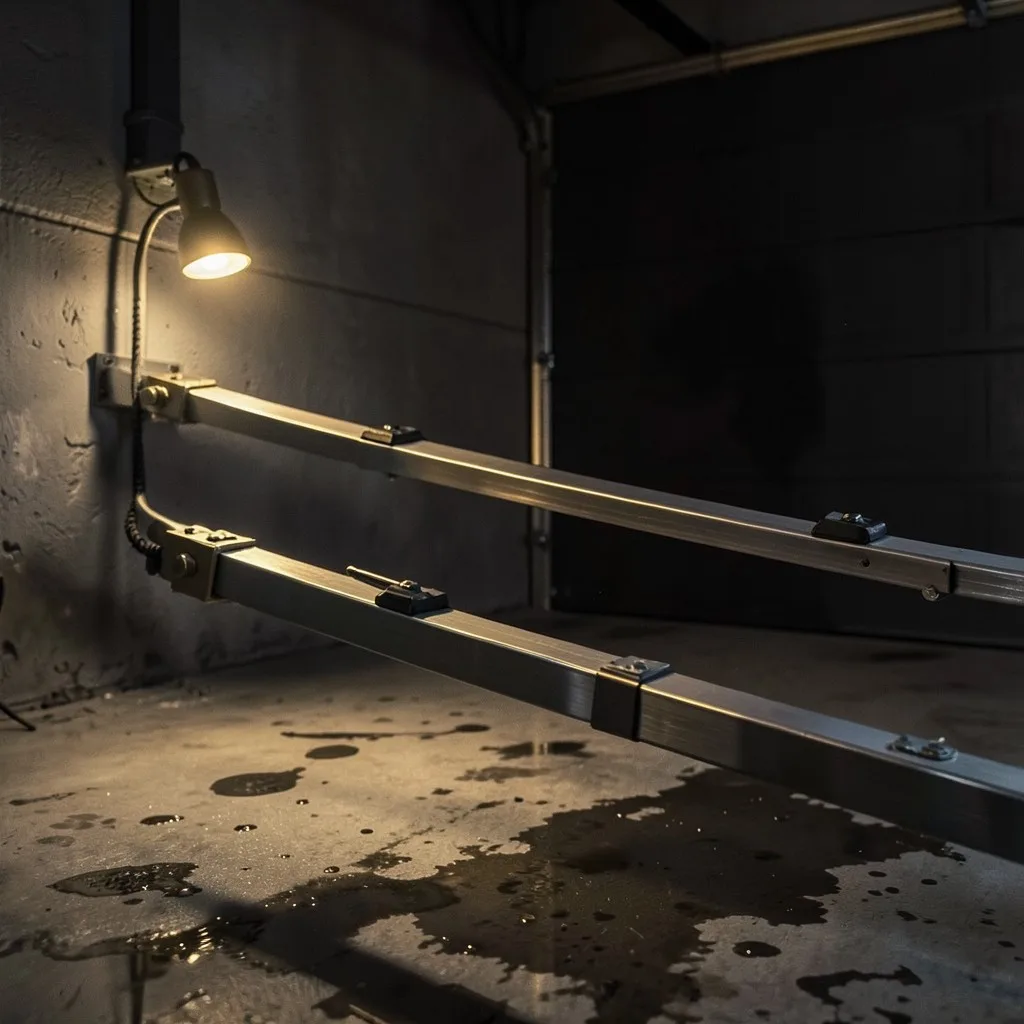
Why does one side of the door drop before a track jump?
That sag is the pre-jump warning: one side is lifting later or lower than the other because a cable has stretched, a drum has slipped, or the track on that side has drifted out of gauge. The racking loads the rollers diagonally — exactly the direction the rail cannot hold them — and a jump follows within cycles. A door that sits visibly crooked is a stop-and-call fault; the repair at that stage is cables and alignment, not the full recovery job.
Is an off-track door dangerous just sitting there?
Treat it as suspended load, because that is what it is. The door may look stable wedged in its opening, but its weight is distributed across hardware that was never meant to hold it — a few rollers, a racked rail, a binding hinge line — and the wound springs are still applying force through the cables. Doors in this state can shift or drop when disturbed. Keep people, pets and vehicles out of the opening, do not operate the opener, and leave the release cord alone until a pro has the door secured.
What actually makes a garage door jump its tracks?
Four causes account for nearly all of it: impact (a bumper tap while the door moves is the classic), a slack-cable event that momentarily unloads one side, track gauge spreading as jamb fasteners work loose, and rollers so worn they drop out of the rail under ordinary travel. The recovery visit matters more than the re-seat itself — a door put back without the cause corrected jumps again, usually harder, because the geometry that failed is still failing.
The door came off its track — can I push it back in?
No — and this is the fault where good intentions do the most damage. An off-track door is still connected to its counterbalance: the springs are pulling on cables that expect the door to be square in its rails, and the door’s weight is sitting on hardware improvising support. Muscling a panel back toward the rail can release that standoff without warning. The professional version unloads the tension first, re-seats every roller, corrects what caused the jump, and re-gauges the track — in that order, because the order is the safety.
How long do garage door springs last in Missouri City?
Longer than most of the country: 11–15 years, because Fort Bend County’s 1,240 annual heating degree days impose almost no freeze-thaw stress. Springs here die of cycle count. At four openings a day a 10,000-cycle set runs about seven years; lighter use stretches toward the top of the range.
What garage door problems are most common in Missouri City homes?
Newer stock, newer failure profile: Missouri City skews post-1980, so calls run to builder-grade springs hitting their 10,000-cycle limit on schedule, opener electronics (boards, eyes, remotes), and panel damage. The springs installed by production builders are the minimum rating — their first failure is the moment to buy the upgrade.
Do I need a permit for garage door work in Missouri City?
For repairs, generally no; for installation, often yes. Expect city-by-city answers on Texas permits: municipal building departments own the question, structural alterations trigger permits statewide practice-wise, and the biggest metros add contractor registration requirements of their own. On the seacoast, TDI windstorm certification — the WPI-8 chain — is the second regulatory track a coastal install must satisfy. Component repair is different: In Texas, spring, cable and opener repairs run permit-free as ordinary upkeep. The lines that matter sit elsewhere: municipal permits attach to structural changes, and in the TDI seacoast counties a repair that touches windstorm-certified construction is also a certification event — the insurance file cares even when the city does not. When in doubt, the Fort Bend County building department’s answer is the one that counts.
How does the call routing actually work?
Think of the number as a switchboard with one job: putting you on the phone with an independent licensed contractor who actually covers Missouri City. This site publishes the local facts and takes a network referral fee when calls connect — the work, the pricing and the relationship are entirely between you and the contractor.
What will I be asked when I call?
Four things move the call fastest: your ZIP, the door type (sectional or one-piece, single or double), the opener brand, and the symptom in a sentence. With those, dispatch can route to a contractor whose truck stock matches the likely failure — often turning a diagnostic visit into a same-visit repair.
How fast can a pro actually get there?
Same-day dispatch is common in Missouri City for morning calls on acute failures — stuck doors and snapped springs get priority. Scheduled work (installs, maintenance, commercial scopes) books by appointment. The routed contractor quotes their real window on the call; nothing here promises times the local schedule cannot keep.


 DIAGNOSE