How long does an off-track recovery actually take?
A clean jump — rollers out, track sound, cause identified — re-seats in one to two hours including the cause correction and the balance test afterward. Add time when the event bent track sections (swap and re-gauge), damaged rollers (replace the set, not the one), or ran under power long enough to crease a panel edge. The one version that never happens fast is the door that kept being cycled after the jump; every extra command adds a line to the scope.
Will the door be weaker after it has jumped the track once?
Not if the recovery was done as a system. Steel rails re-gauged to spec, sound anchors, fresh rollers where the old ones contributed, and a verified balance leave the door mechanically indistinguishable from before the event. What creates repeat offenders is partial recovery: the roller pushed back into a rail that is still spread, the cause never named. Ask the tech what caused the jump — a confident answer is the difference between a repair and a rehearsal.
Can bent track be straightened, or does it need replacement?
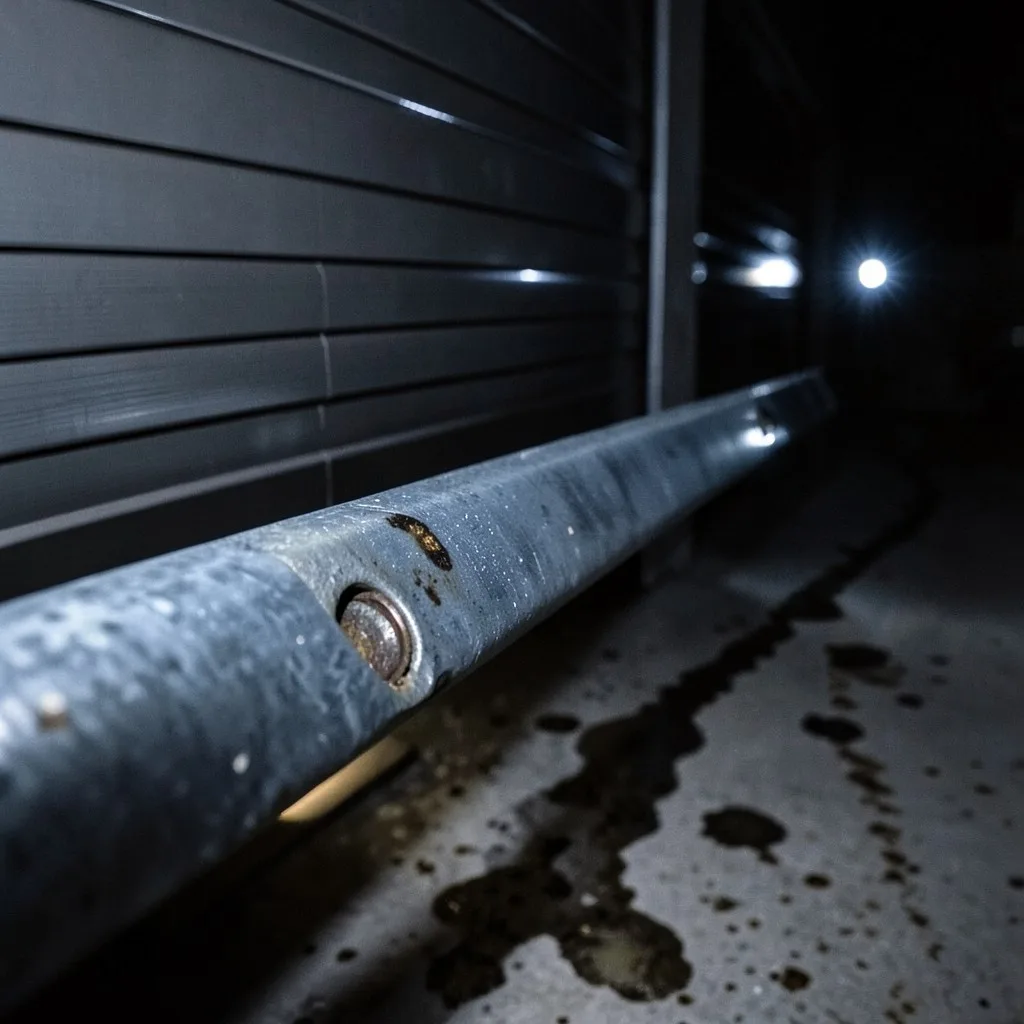
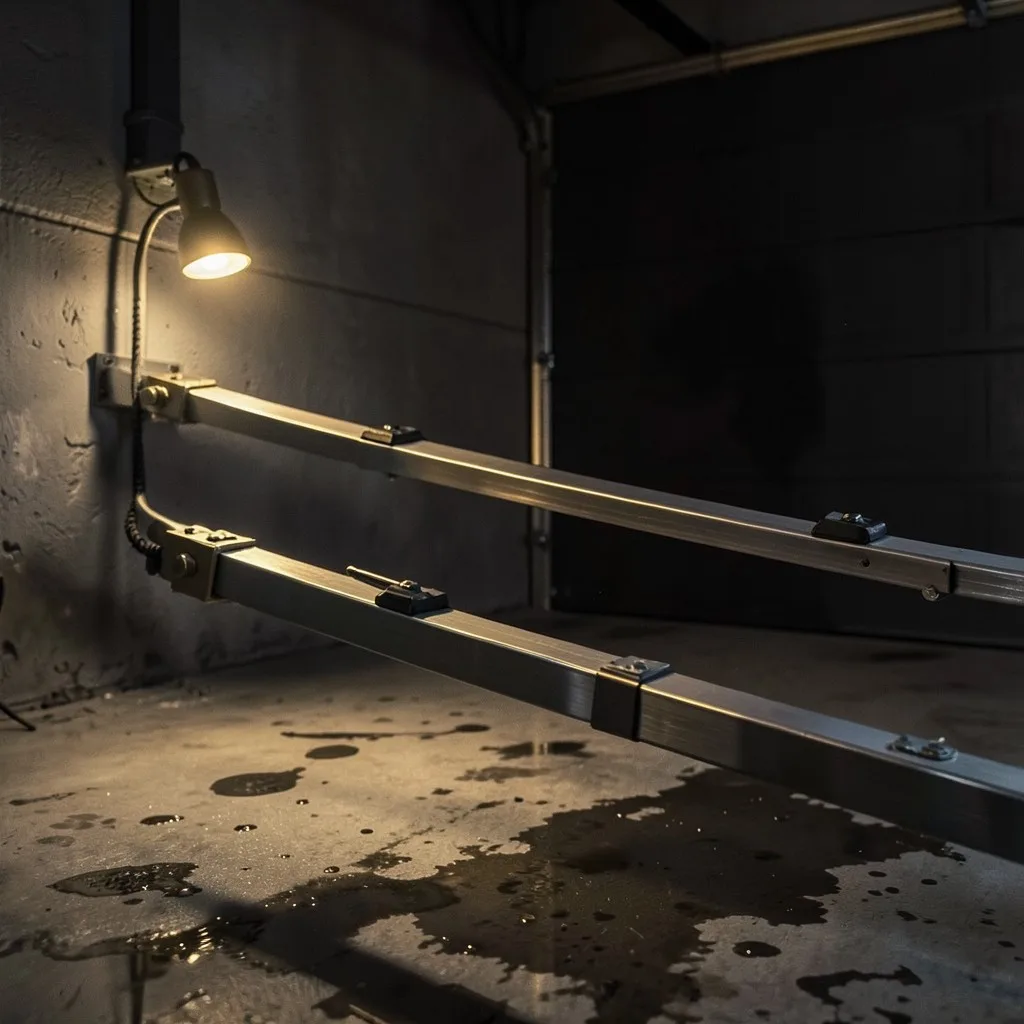
Minor lips and dents get dressed with proper forming tools; genuinely bent sections get replaced, and that is the better news than it sounds. Track is inexpensive roll-formed steel sold by the section — swapping a damaged run costs far less than the panel and roller damage a “straightened” kink causes over the following year. What matters more than the steel is the re-alignment: gauge, plumb and parallel re-set to the door, which is the measured part of the visit.
The car hit the door — is that an off-track repair or something bigger?
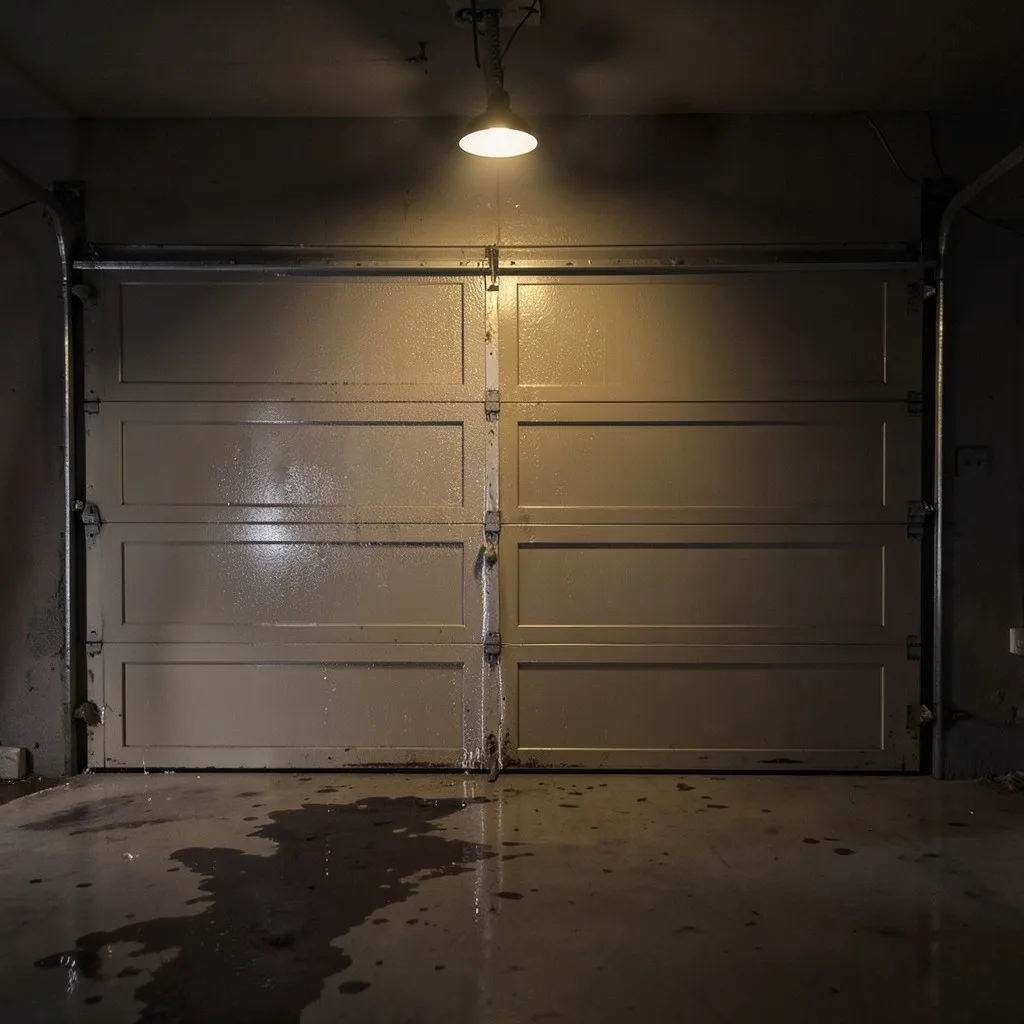
It is an inspection first, because impact damage travels. The visible fault may be a jumped roller or creased rail, but the force went through panels into hinges, rollers, track anchors and sometimes the jamb framing — a door that folded around a bumper often has damage two components away from the dent. A proper assessment prices the honest scope before any re-seat: sometimes it is an hour of track work, sometimes the impact wrote off a panel, and pretending otherwise just phases the discovery.
How long do garage door springs last in Bodega?
Around 9 to 12 years for a standard 10,000-cycle set. Sonoma County sees roughly 3,045 heating degree days annually — enough freeze-thaw to matter, with failures clustering toward December. Usage is the other axis: at six or more cycles a day, shave years off any estimate.
What garage door problems are most common in Bodega homes?
The 2010s-era build wave dominates Bodega, and its doors are on second or third spring sets: expect spring fatigue, drive-gear failures on aging openers, and roller wear. 74% of local homes predate 1980, which is why pros here check the whole system, not just the reported part.
Does CA law require a battery backup on my new garage door opener?
It does — across California, Bodega included. SB-969 has required battery backup on every automatic residential opener sold or installed in the state since July 1, 2019, with a civil penalty per non-compliant unit (Health & Safety Code §§ 19890-19892). The law also blocks connecting a replacement door to a non-compliant opener, which is why installation quotes in Sonoma County must address the opener even when only the door is changing.
Do I need a permit for garage door work in Bodega?
It depends on the work. Door installation is frequently permitted work in California: any change to the structural opening triggers a permit everywhere, and a number of cities permit even like-for-like replacements. The local building department's answer is the one that counts — confirm before the door is ordered. Like-for-like component repair (springs, cables, rollers, opener swap) generally does not require a permit in most California jurisdictions. The reliable answer comes from the Sonoma County building authority — a licensed contractor confirms before ordering a door rather than assuming.
How does the call routing actually work?
One number, one hop: your call is routed to an independent, licensed garage door contractor serving Bodega — selected by ZIP across the 1 covered code(s) here. This site does not perform work or take a cut of your bill; it is compensated by the network when a call connects. Booking decisions stay entirely yours.
What will I be asked when I call?
Expect the practical minimum: ZIP code, what kind of door, what it is doing, and when someone can look at it. The more precisely you can name the symptom — “bang, then dead weight” beats “broken” — the better the parts loadout that arrives in Bodega.
How fast can a pro actually get there?
Same-day dispatch is common in Bodega for morning calls on acute failures — stuck doors and snapped springs get priority. Scheduled work (installs, maintenance, commercial scopes) books by appointment. The routed contractor quotes their real window on the call; nothing here promises times the local schedule cannot keep.


 DIAGNOSE