Why does one side of the door drop before a track jump?
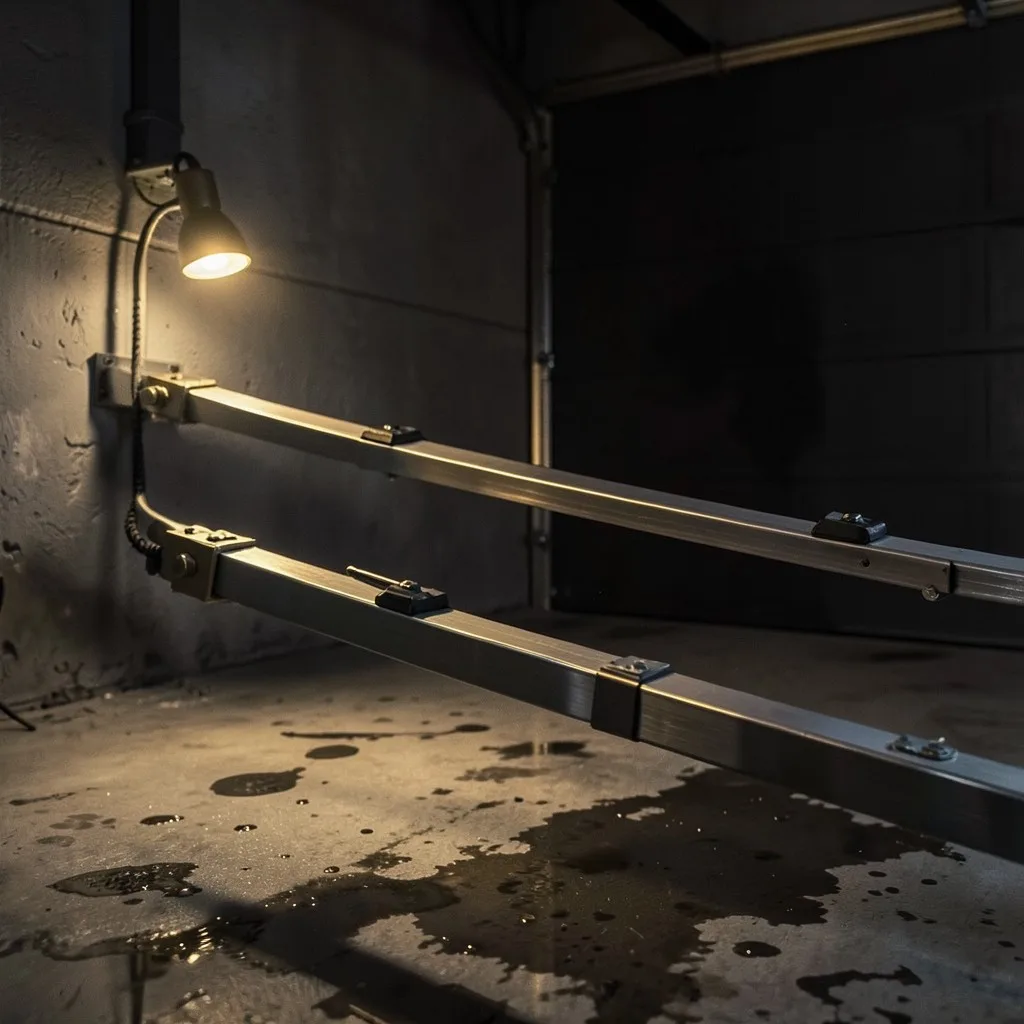
That sag is the pre-jump warning: one side is lifting later or lower than the other because a cable has stretched, a drum has slipped, or the track on that side has drifted out of gauge. The racking loads the rollers diagonally — exactly the direction the rail cannot hold them — and a jump follows within cycles. A door that sits visibly crooked is a stop-and-call fault; the repair at that stage is cables and alignment, not the full recovery job.
Is an off-track door dangerous just sitting there?
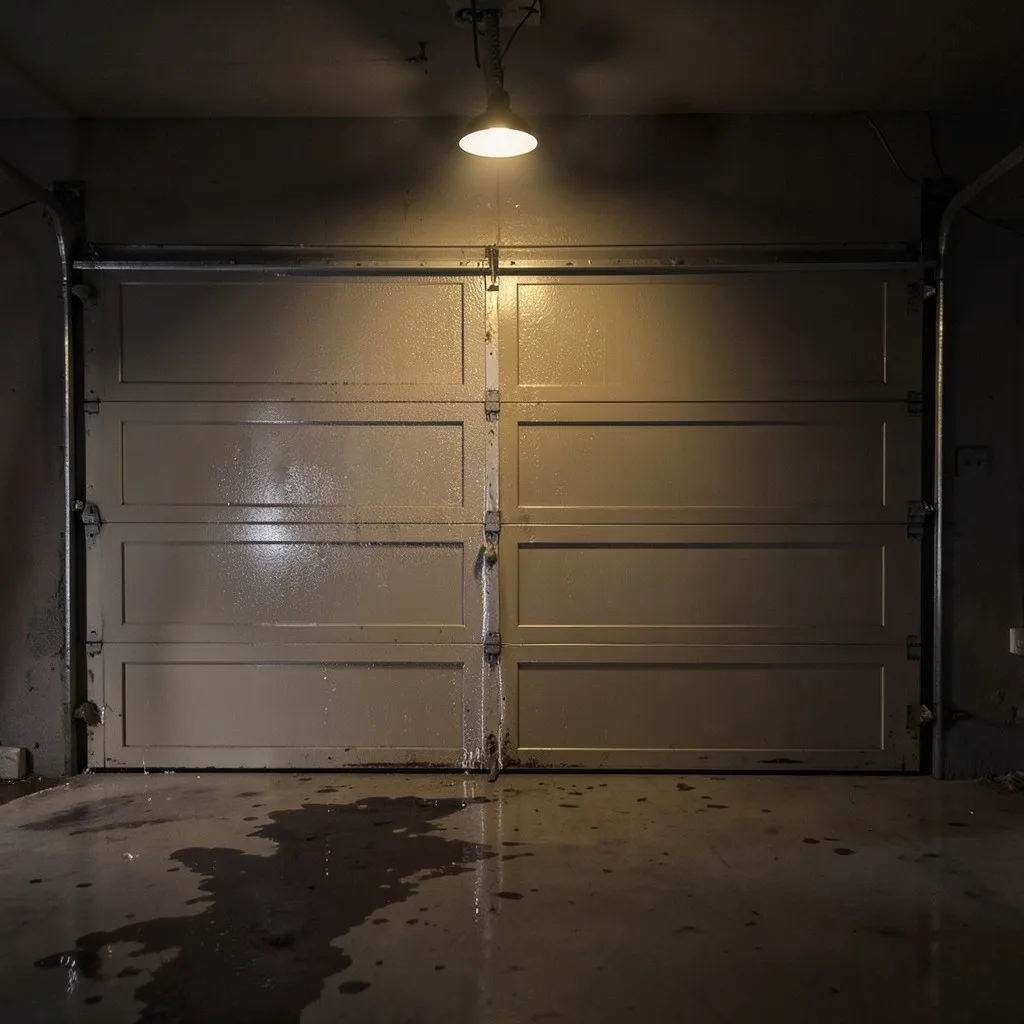
Treat it as suspended load, because that is what it is. The door may look stable wedged in its opening, but its weight is distributed across hardware that was never meant to hold it — a few rollers, a racked rail, a binding hinge line — and the wound springs are still applying force through the cables. Doors in this state can shift or drop when disturbed. Keep people, pets and vehicles out of the opening, do not operate the opener, and leave the release cord alone until a pro has the door secured.
What actually makes a garage door jump its tracks?
Four causes account for nearly all of it: impact (a bumper tap while the door moves is the classic), a slack-cable event that momentarily unloads one side, track gauge spreading as jamb fasteners work loose, and rollers so worn they drop out of the rail under ordinary travel. The recovery visit matters more than the re-seat itself — a door put back without the cause corrected jumps again, usually harder, because the geometry that failed is still failing.
The door came off its track — can I push it back in?
No — and this is the fault where good intentions do the most damage. An off-track door is still connected to its counterbalance: the springs are pulling on cables that expect the door to be square in its rails, and the door’s weight is sitting on hardware improvising support. Muscling a panel back toward the rail can release that standoff without warning. The professional version unloads the tension first, re-seats every roller, corrects what caused the jump, and re-gauges the track — in that order, because the order is the safety.
How long do garage door springs last in Valley Ford?
9–12 years is the honest local range. The 3,045 degree-day climate in Sonoma County applies moderate seasonal stress, so doors near the end of that window are worth testing before December, the hardest month on local hardware.
What garage door problems are most common in Valley Ford homes?
With 52% of Valley Ford homes built before 1980 and the 1970s the dominant era, original and second-generation hardware failures lead: fatigued springs, stretched cables, seized steel rollers, and openers due safety-generation upgrades. Whole-load-path inspections pay off in this cohort — parts age together.
Does CA law require a battery backup on my new garage door opener?
Yes. Under California’s SB-969 (Health & Safety Code §§ 19890-19892), any powered residential garage door opener sold or installed from July 1, 2019 onward must include battery backup capable of working the door when the grid is down. Selling or installing a non-compliant unit carries a four-figure civil penalty per opener — and a replacement door may not legally be connected to a non-compliant opener. For Valley Ford homeowners this makes the opener question part of every door quote.
Do I need a permit for garage door work in Valley Ford?
For repairs, generally no; for installation, often yes. Replacing or installing a garage door commonly requires a building permit in California jurisdictions — always when the structural opening changes, and many cities require one for like-size replacement as well. Verify with the city or county building department before work begins. Component repair is different: Component-level work — spring pairs, cables, rollers, a straight opener swap — is generally exempt from permitting across California jurisdictions. When in doubt, the Sonoma County building department’s answer is the one that counts.
How does the call routing actually work?
Think of the number as a switchboard with one job: putting you on the phone with an independent licensed contractor who actually covers Valley Ford. This site publishes the local facts and takes a network referral fee when calls connect — the work, the pricing and the relationship are entirely between you and the contractor.
What will I be asked when I call?
Have four answers ready and the call is short: where (ZIP), what (door type, single or double), which (opener brand), and how it is failing. Precision on the fourth answer is what loads the right parts — the difference between diagnosis day and repair day.
How fast can a pro actually get there?
It depends on the day’s board: acute failures called in early often see a truck the same day in Sonoma County, while planned work books days out. You will get the contractor’s honest window on the phone — and if nobody can fit the job, the call simply ends there, no obligation.


 DIAGNOSE